Discover engaging, kid-friendly sound books that turn read-aloud time into an interactive adventure. These titles pair vivid illustrations with hands-on sound buttons, helping toddlers connect words to animal calls while building vocabulary, memory, and focus. The following five picks are designed for curious preschoolers and come from trusted kids’ brands. Read on for a concise overview and in-depth looks at each title.
Summary of chosen products
| Product | Brand | Key Features | Age Range |
|---|---|---|---|
| Around the Farm 30-Button Animal Sound Book | PI Kids | 30 animal sounds, first words focus, durable | 3+ years |
| Hear Bear Roar 30-Button Animal Sound Book | PI Kids | Hands-on interaction, vocabulary building, multisensory | 3+ years |
| Fun Touch and Feel Sound Book | ZICOTO | 5 farm animals, touch-and-feel textures, sensory learning | 3+ years |
| Farm Animals Figures with Sound Books | iGRATENS | 10 animals, interactive pages, durable materials | 3-5 years |
| Listen & Learn: 30 Animal Sounds Book | Gzsbaby | 30 animal sounds, large pages, sturdy board book | 2-6 years |
Around the Farm 30-Button Animal Sound Book
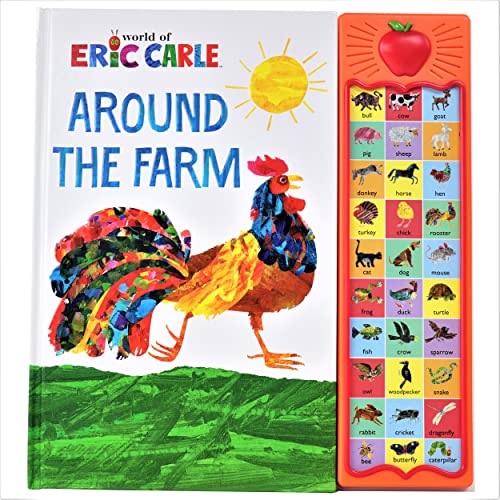
The Around the Farm title from PI Kids invites toddlers to press one of 30 sound buttons to hear animal names and their sounds. Designed to support early vocabulary, this book pairs bright farm imagery with accessible audio prompts. The format encourages independent exploration, while caregivers can prompt association between pictured animals and their sounds. Suitable for children aged 3 and up, this title emphasizes word-referencing through interactive play, a core skill for early literacy development.
Hear Bear Roar 30-Button Animal Sound Book

Hear Bear Roar emphasizes connecting words with pictures through a hands-on, multisensory experience. The 30-button setup encourages active participation as children learn to pair animal names with corresponding sounds. This title supports vocabulary expansion, picture-word linkage, and memory recall—key early literacy competencies. The interactive format is well-suited for shared reading and solo exploration alike, making it a versatile option for classrooms or home libraries.
Fun Touch and Feel Sound Book for Babies and Toddlers

This interactive farm-themed book combines sound with texture. Five farm animals are featured with distinct sounds, while touch-and-feel textures on each page invite tactile exploration. The enhanced sensory experience supports motor skills, sensory processing, and early language development. Aimed at toddlers in the 3+ range, the book emphasizes independent play while also lending itself to caregiver-guided sessions that reinforce animal recognition and sound association.
iGRATENS Farm Animals Figures With Sound Books
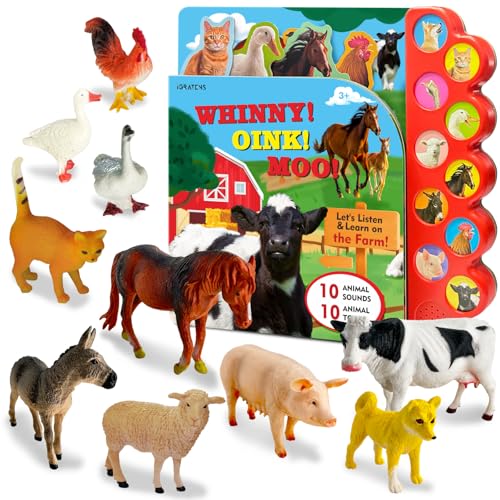
This combined set pairs farm animal figurines with a sound book to create a multi-sensory learning experience. The set includes ten popular animals with realistic features and an on/off switch on the back for battery efficiency. The die-cut pages and engaging sound buttons encourage interactive storytelling and animal identification. Built for durability, it suits preschool classrooms and homes, supporting both imaginative play and foundational language skills as children learn animal names and sounds.
Listen & Learn: 30 Animal Sounds Book

Listen & Learn focuses on a broad range of animals with realistic sounds to stimulate auditory discrimination and memory. The large, colorful pages and sturdy board construction are designed for repeated handling by young learners. The 30-sound feature set supports introductory vocabulary development, helping toddlers connect animal-specific words with their noises. The book is well-suited for home libraries and early learning centers aiming to balance entertainment with educational value.
Buying Guide: Key Purchase Considerations
- Age suitability: Look for titles labeled 2-5 or 3+ to ensure content and button interaction match your child’s capabilities.
- Number of sounds: More sounds provide a broader vocabulary, but consider whether a simpler set may be easier for beginners.
- Durability: Board books or thick pages with sturdy buttons are ideal for rough handling and longer use.
- Text-to-sound alignment: Ideally, each button activates a distinct animal sound paired with a clear name to reinforce word recognition.
- Textures and sensory features: Touch-and-feel pages add a tactile dimension that supports fine motor skills and sensory exploration.
- Battery considerations: Books with on/off switches extend battery life and reduce accidental button presses during play.
- Play experience: Decide between single-animal focus vs. a whole-zoo approach to fit your child’s interests and attention span.
- Size and portability: Larger formats are visually engaging but may be less portable; consider where the book will be used most often.
- Learning goals: If vocabulary building is a priority, prioritize titles that explicitly connect words with sounds and visuals.
- Care and cleaning: Check material quality for easy wipe-downs, especially for infants and toddlers who explore with hands and mouths.
Comparative Considerations
- Interactivity: All five selections emphasize hands-on listening, but some also integrate textures or figurines for kinesthetic learning.
- Educational focus: Several titles highlight vocabulary expansion and animal recognition; others emphasize multisensory stimulation and practical skills like memory and attention.
- Durability: Board-style pages, die-cut shapes, and protective covers vary; durability is a key factor for daily use and shared reading in busy homes or classrooms.
- Overall value: When selecting a set, consider whether the combination of sounds, visuals, and extras (like figurines) aligns with your child’s interests and your teaching goals.