Discover the top button boards that combine fine motor practice, sensory exploration, and portable play for toddlers. These Montessori-inspired busy boards use buttons, switches, lights, and zips to spark curiosity while developing hand-eye coordination and problem-solving skills. The following selections emphasize safety, durable materials, and age-appropriate design for 1- to 3-year-olds, with travel-ready options for car rides and family outings.
| Product | Brand | Key Feature |
|---|---|---|
| Busy Board with LED Light Switches | HarVow | 13 switches, 24 LED lights, compact travel size |
| Busy Board Montessori Toys for Toddler | TINTECUSA | 12 LED lights, shape sorter, durable wood |
| Busy Board with 19 LED Light Switches | iHarPro | 19 switches, 40 LEDs, larger play area |
| AMOSTING Button Art Toy | AMOSTING | Color matching mosaic, pegboard-style play |
| WakeInsa Busy Board with LED Light | wakeInsa | 8 styles, 14 LEDs, Montessori-inspired |
These options provide varied layouts and learning approaches—from color recognition and alphabet exposure on the back, to cause-and-effect with lights and switches. Each product emphasizes safety for little hands and portability for family life on the go. Use this guide to compare features, materials, and age suitability, helping caregivers pick a board that aligns with a toddler’s growth milestones and daily routines.
Busy Board With LED Light Switches

HarVow presents a compact, kid-friendly busy board that integrates 13 switches with 24 LED lights. Each LED reveals color patterns when activated, inviting experimentation and color recognition. A master switch allows quick power-off to conserve batteries, and the board is sized for small hands at 6.7 x 5.3 x 1.1 inches. It requires 2 AAA batteries (not included). The back includes A-Z letters and 0-9 numbers for early literacy and numeracy exposure, making playtime educational as well as entertaining.
Busy Board Montessori Toys for Toddler

TINTECUSA combines light-up play with a shape sorter and mirror in a wooden sensory board. Featuring 12 LED lights and a mix of buttons, knobs, and plugs, this board supports recognition, motor skills, and problem-solving. The natural wood construction with smooth edges ensures safe handling during busy play sessions, travel, or calm-down moments after a busy day. It emphasizes durable materials and long-lasting use in a small-format design.
Busy Board With 19 LED Light Switches

iHarPro’s larger busy board adds 30% more play area and 19 interactive switches with 40 LEDs. The board promotes fine motor development, cause-and-effect learning, and alphabet and number exposure on the back for early literacy and numeracy. A master switch manages battery life, and the design is robust enough to withstand daily wear and travel use. It’s especially suitable for toddlers who crave extended, varied activities during car rides and playdates.
AMOSTING Button Art Toy

AMOSTING offers a creative color-matching mosaic pegboard with mushroom nails and pattern cards. This educational toy supports color recognition, sequencing, and fine motor skills. The set encourages imaginative play through pattern building and design creation. Easy cleanup is aided by a storage tray (cards and buttons are kept organized), enhancing classroom-like or home learning routines. A strong option for preschoolers and toddlers ready for more intricate puzzles in a guided activity format.
WakeInsa Busy Board With LED Light

WakeInsa’s busy board features eight switch styles and 14 LED lights. The design emphasizes Montessori principles with diverse switches that hold toddlers’ attention while supporting color recognition and hand-eye coordination. Battery needs are standard (2 AAA, not included), and the board’s size makes it suitable for travel and everyday use. The wooden construction adds durability for repeated handling, drops, and car trips, providing long-lasting value in a compact package.
Nene Toys Wooden Color Matching Puzzle
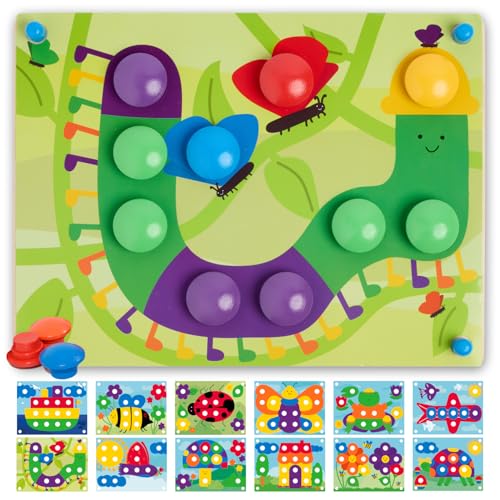
Nene Toys offers a Montessori-inspired pegboard puzzle that emphasizes color matching and fine motor practice. Toddlers place wooden nails into color-coded cards to complete designs, promoting independent play, color sorting, and early math concepts. The board encourages problem-solving and sequencing through a tactile, hands-on approach, making it a solid option for children who enjoy structured yet creative activities within a calm learning environment.
Buying Guide: Key Purchase Considerations
- Age range and safety: Look for boards designed for 1–3 year olds with smooth edges, non-toxic finishes, and sturdy construction to withstand rough handling.
- Motor skill development: Choose boards with a mix of buttons, zips, switches, and shape sorters to support fine motor skills, hand-eye coordination, and dexterity.
- Learning features: Consider boards that integrate educational elements such as color recognition, alphabet exposure, numbers, and simple cause-and-effect tasks through lights and sounds.
- Portability: For travel-friendly options, prioritize compact dimensions, lightweight builds, and storage solutions that fit in a diaper bag or car seat pocket.
- Materials and durability: Wood-based boards offer durability and a natural feel, while high-contrast colors and LED lights can boost engagement. Ensure safe battery compartments and secure fastenings.
- Clean-up and maintenance: Boards with simple components and included trays or organizers help keep play areas tidy and ready for next use.
- Storage and portability: Multi-piece or foldable designs can be easier to store; consider handles or carry compartments for busy families on the go.
- Play value vs. learning depth: Balance interactive features with age-appropriate challenges to avoid frustration while encouraging sustained engagement.
- Battery considerations: Check whether batteries are included or required, and plan for the replacement availability and cost over time.
- Safety certifications: Look for products with child-safe certifications and compliance with toy safety standards appropriate for the target market.
When selecting a button board, consider your child’s current interests and developmental stage. A board that offers a variety of sensory outputs and activities can adapt as a toddler grows, from basic cause-and-effect exploration to more complex problem-solving and early literacy exposure. Evaluate how each model fits with your daily routine, travel needs, and available play space to maximize its educational value and enjoyment.