Explore the world of chemistry with engaging, age-appropriate science kits designed to spark curiosity in young learners. The following selections cover a range of ages and interests—from beginner experiments using common household items to more advanced, multi-experiment kits that introduce real lab concepts. Each product emphasizes easy-to-follow instructions, colorful results, and safe, hands-on exploration that supports early scientific thinking.
| Product | Brand | Age Range | Key Benefit |
|---|---|---|---|
| National Geographic Junior Chemistry Set | Blue Marble | 4+ | 50 hands-on experiments with simple at-home materials |
| National Geographic Stunning Chemistry Set | National Geographic | 8-12 | 45 experiments including volcanoes and rockets |
| National Geographic Magic Chemistry Set | Blue Marble | 8-12 | Magic-themed experiments and attractive presentation |
| National Geographic Gross Science Kit | Blue Marble | 8-12 | Gross-out experiments with clear instructions |
| National Geographic Mega Science Lab | Blue Marble | 8+ | 130+ experiments across chemistry, earth science, and magic |
National Geographic Junior Chemistry Set — 50 Experiments

The National Geographic Junior Chemistry Set offers a complete beginner lab experience designed for ages 4 and up. It includes 50 hands-on experiments that use common household items such as baking soda and vinegar to illustrate foundational chemistry concepts. The kit comes with easy-to-follow, illustrated instructions that young scientists can read and perform with minimal supervision, fostering independent exploration while building confidence in the lab environment.
National Geographic Stunning Chemistry Set — 45 Easy Experiments

This kit inspires curiosity with 45 kid-friendly experiments that emphasize bubbly reactions, volcano building, geysers, and rocket launches. It includes clear, illustrated instructions that guide young scientists through each step while offering insight into the chemistry behind the experiments. The emphasis on easy-to-conduct activities helps maintain engagement and introduces basic scientific inquiry.
National Geographic Magic Chemistry Set — 10 Magic Tricks
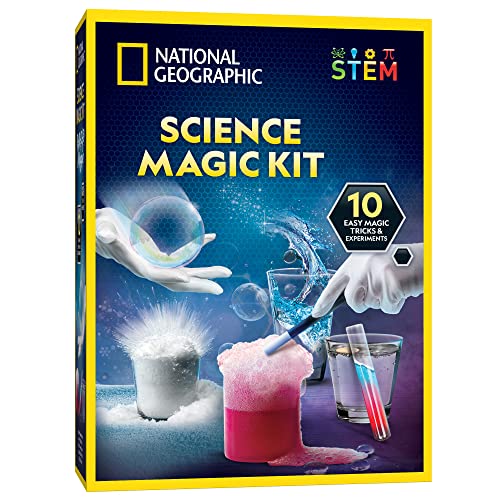
In this magic-themed chemistry set, kids perform 10 science experiments that double as magic tricks. The included wand and gloves enhance the illusion while teaching core chemistry ideas. The illustrated guide provides kid-friendly explanations of the science behind the tricks, making learning engaging and memorable while preserving a sense of wonder.
National Geographic Gross Science Kit — 45 Gross Experiments

This set leans into playful “gross-out” science with 15 core experiments and 30 additional ideas using common household items. Instructions are kid-friendly and visually clear, helping children understand the science behind reactions while keeping the experience level-appropriate and entertaining. It offers a strong balance between curiosity and safe experimentation in the home.
National Geographic Mega Science Lab — 130+ Experiments

Designed for ongoing exploration, this mega kit includes 45 popular experiments plus a bonus guide with 85 additional experiments using everyday items. It covers earth science, chemistry, and science magic, and includes real rock, mineral, and crystal specimens. The broad scope encourages extended projects and higher curiosity about how different scientific disciplines connect.
National Geographic Amazing Chemistry Set — 100+ Experiments

With over 100 experiments, this kit emphasizes color-changing solutions, glowing test tubes, crystal growth, and other engaging chemistry activities. It includes a substantial number of materials to perform 15 featured experiments and a bonus guide with 85 additional ideas, encouraging extended learning and iterative experimentation using everyday items.
Doctor Jupiter Ultimate Science Kit — 135+ Experiments
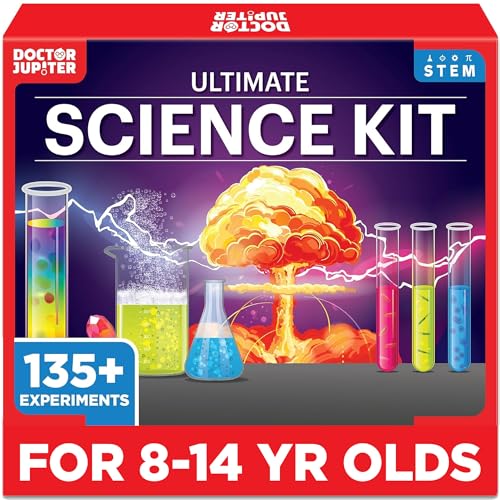
The Doctor Jupiter kit offers a comprehensive collection with more than 135 experiments. It guides kids through color changes, glowing experiments, underwater volcanoes, and potions, supported by easy-to-follow instructions. The kit emphasizes STEM learning and creative problem-solving, presenting a broad spectrum of activities to sustain interest and build foundational science skills.
UNGLINGA 150 Experiments Science Kit

UNGLINGA’s kit presents 150 experiments spanning earth science, chemistry, and physics. It includes a well-illustrated, step-by-step manual and a collection of kid-friendly lab tools and materials. This option supports a broad curriculum of hands-on science, with emphasis on safe, practical lab practices for home learning environments.
Buying Guide: Key Considerations For Chemistry Toys For Kids
- Age appropriateness: Choose kits aligned with the child’s age and reading level. Some sets are suited for younger children with simple experiments, while others target tweens with more complex setups.
- Experiment breadth vs. depth: Decide whether you want a large number of quick activities or a smaller set of more involved projects that teach deeper concepts.
- Safety and materials: Look for non-toxic, child-safe components and clear safety instructions. Some kits provide goggles, gloves, and lab tools for an authentic experience.
- Educational focus: Identify whether the kit emphasizes observation, hypothesis testing, or hands-on building. Some kits include scientific explanations and real-world context to enhance learning.
- Presentation and engagement: Visual manuals, color-coded parts, and illustrated steps help sustain interest and reduce frustration during experiments.
- Expansion potential: Check if the kit offers optional add-ons or bonus experiments to extend learning beyond the initial set.
- Storage and organization: Consider whether the kit provides compartments or organizers to keep components sorted for future projects.
- Budget and value: Compare the number of experiments, included tools, and the quality of materials to evaluate overall value for money.
- Long-term learning trajectory: For ongoing interest, select a kit that introduces progressively challenging topics or supports a multi-field science approach (chemistry, physics, earth science).