Time-telling is a foundational skill that blends math, literacy, and daily routines. The right teaching clocks help children visualize hours and minutes, building confidence through hands-on practice. This guide spotlights five effective clocks that support multi-sensory learning, durability, and classroom-ready demonstrations. Each selection emphasizes clear time concepts, engaging designs, and practical features for teachers and parents alike.
| Product | Brand | Key Benefit |
|---|---|---|
| Learning Resources Time Activity Set | Learning Resources | Multi-sensory time learning with synchronized hands and activity cards |
| BEST LEARNING Learning Clock | BEST LEARNING | Interactive talking clock with quiz and Sleep Mode |
| Learning Resources Big Time Mini Clock | Learning Resources | Compact, color-coded hands with hidden gears |
| Oyster&Pop Learning Clock | Oyster&Pop | Silent, 10″ wall clock with labeled minute/quarter indicators |
| hand2mind Plastic Mini Geared Clock | hand2mind | Color-coded movable hands for easy time relationships |
Learning Resources Time Activity Set
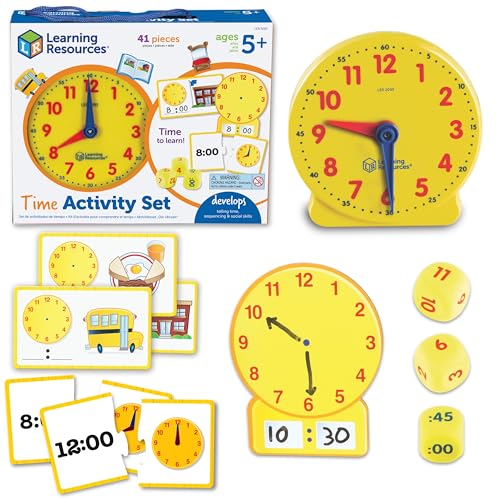
The Learning Resources Time Activity Set provides a realistic teaching clock with synchronized hour and minute hands to reflect how time works in real life. A multi-sensory approach engages learners through color-coded hands, numbers, and additional activities like puzzles, dice games, and supportive cards. The kit includes a durable clock, double-sided activity cards, a dry-erase board, matching puzzles, and foam dice, offering multiple pathways to mastering time-telling.
Features cited include hands-on time learning, a multi-sensory design, and a comprehensive teaching system. These elements support varied learning styles, including kinesthetic, visual, and auditory approaches, making the set suitable for classroom use or at-home practice.
BEST LEARNING Learning Clock

The BEST LEARNING Learning Clock is an award-winning interactive teaching clock designed to help children learn to tell time. It features a user-friendly interface for aligning hour and minute hands, with quiz modes to reinforce learning. Sleep Mode offers 10 classical tunes and a night-light function with a timer, creating a calm bedtime routine while reinforcing time concepts.
Key attributes include easy hand alignment, engaging quiz activities, and a Sleep Mode that doubles as a night-light. This combination supports continuous skill-building through play and routine, especially beneficial for early learners who thrive on structured feedback and predictable cues.
Learning Resources Big Time Mini Clock

The Learning Resources Big Time Mini Clock is a compact teaching clock ideal for small-group activities and individual practice. It helps learners start telling time with hands-on manipulation, and its hidden gears maintain correct time as the hands move. Color-coded hands align with hour and minute markings for quick visual reference, supporting independent practice and guided instruction.
Highlights include hands-on learning, concealed gearing for accurate movement, and color-coded hands. Its smaller footprint makes it versatile for desks, centers, or small classrooms, enabling frequent practice without crowding space.
Oyster&Pop Learning Clock

The Oyster&Pop Learning Clock is a 10″ non-ticking analog teaching clock designed for classrooms and kids’ rooms. It features labeled minute hands and quarters to help children interpret time more easily. The colorful, rainbow design inspires learning, and the clock is accompanied by a free e-book with ideas to build confidence in understanding analog time. Its silent mechanism makes it suitable for study or sleep spaces.
Considerations include the silent operation for focused learning, clear labeling of time components, and an engaging appearance that motivates children to practice regularly.
hand2mind Plastic Mini Geared Clock
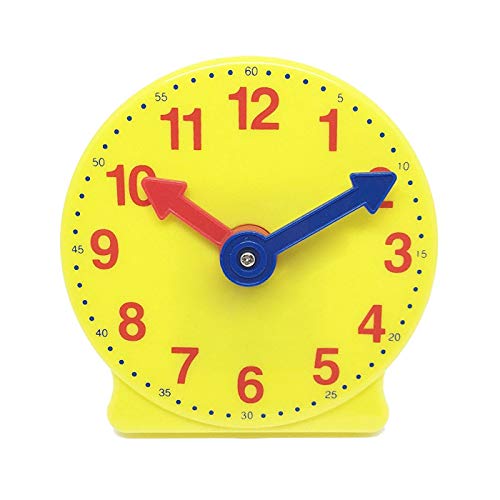
The hand2mind Plastic Mini Geared Clock provides an easy entry into telling time with a 12-hour clock face. Large red hour numbers and edge dots aid minute reading, and color-coded movable hands help learners understand the relationship between hours and minutes. The clock is designed for classroom use, supporting guided instruction and independent practice with a simple, durable build.
Crucial aspects include the clear analog display, color-coded hands for quick comprehension, and the gear mechanism to illustrate time progression accurately as hands move.
Buying Guide: How To Choose The Best Clock For Learning Time
Purpose and setting: Assess whether the clock will be used primarily in a classroom, homeschool, or as a family learning tool. Classroom clocks should be durable, easy to read from a distance, and compatible with group activities. Home learning clocks can prioritize silent operation and child-friendly designs for bedtime routines.
Clock type: Decide between analog versus digital emphasis. Analog clocks with labeled hands help learners connect minutes to hours, while digital displays can reinforce numeric recognition and time-telling in different contexts.
Hands and labeling: Look for color-coded or clearly labeled hour and minute hands. Some clocks use vertical or horizontal alignment cues, silhouetted hands, or additional minute markers for gradual mastery.
Interactivity: Consider whether a clock offers interactive features such as quizzes, songs, or a sleep/night-light mode. Such features can sustain engagement for young learners and support routine building.
Durability and size: In busy classrooms, choose sturdy construction and appropriate size for visibility at the back of a room. Wall clocks should have a quiet mechanism for uninterrupted focus, while desk or mini clocks suit small-group activities.
Supplementary materials: Some sets include activity cards, dice, or lesson guides. Additional resources like e-books or teaching guides can help educators integrate the clock into daily math routines and time-reading progression.
Accessibility: Ensure the clock design accommodates accessibility needs, such as high-contrast colors, large numerals, and simple instructions. Multi-sensory options can enhance inclusion for diverse learners.