For young beginners, the right drone blends simple controls, sturdy design, and engaging lights to spark imagination while prioritizing safety. Below are five kid-friendly options that are easy to fly, feature protective gear, and include beginner-friendly modes like altitude hold and headless mode. Each selection offers colorful LEDs, durable construction, and short indoor-outdoor flight times suitable for young children with parental supervision.
| Product | Brand | Key Safety Features | Approximate Battery Life (typical) |
|---|---|---|---|
| Q9s Drones for Kids | HASAKEE | Propeller guards, one-button takeoff/landing, altitude hold, headless mode | 2x batteries; up to ~9-12 minutes per battery |
| Mini Drone for Kids and Beginners (C68) | Redrie | Propeller guards, one-key takeoff/landing, altitude hold | Multiple batteries; ~8-10 minutes per battery |
| KB KAIBO Drone for Kids | KB KAIBO | Two batteries, altitude hold, 360° flips, auto hover | Two batteries; ~10-20 minutes total |
| Flymevac Drone with Camera | Flymevac | Gesture control, multiple lighting modes, app and remote control | Typical flight time ~8-12 minutes |
| X-shop Foldable Drone with 1080P Camera | X-shop | One-key start, altitude hold, 3 speed modes, 2 batteries | Two batteries; up to ~15-20 minutes |
Note: Always supervise young children during drone play. Check local regulations and ensure the drone operates within a safe, open area with clear ceilings and obstacles.
HASAKEE Q9s Drones for Kids
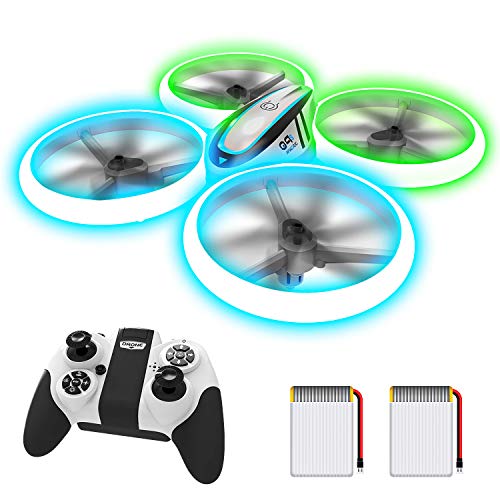
The Q9s model emphasizes bright LED illumination that runs along the frame in neon green and blue. The design includes four sturdy propeller guards to reduce injury risk during crashes, and it uses durable ABS material to withstand routine kid-friendly use. Designed for beginners, it offers one-button takeoff/landing, altitude hold, and headless mode to simplify orientation for new pilots. With multiple lighting modes, this drone can deliver a playful, easy-to-follow flight experience suitable for young flyers. The package typically includes two batteries to extend playtime for learning in short sessions.
Mini Drone for Kids and Beginners (C68) by Redrie
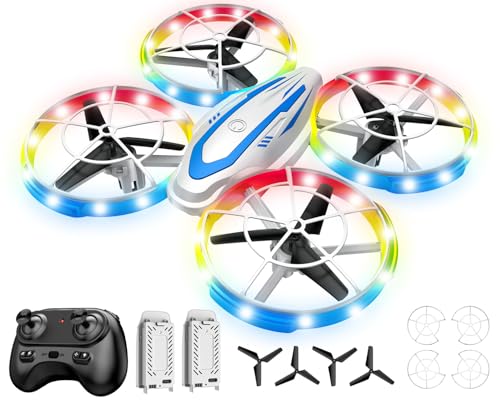
The Redrie C68 mini drone focuses on user-friendliness with a one-key takeoff/landing and altitude hold to keep the craft hovering at a steady height. It features a bright, multi-color LED lighting system and a protective frame to shield children from propeller contact. Its crash-resistant ABS body helps it endure inevitable bumps during indoor flights. The drone aims at beginners and young flyers, offering a compact option that’s easy to control and designed for family playtime.
KB KAIBO Drone for Kids and Beginners
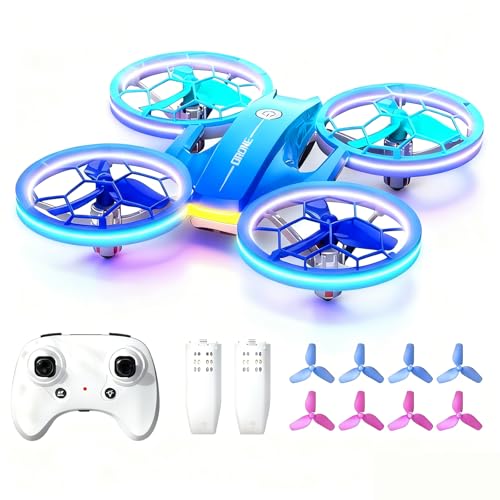
KB KAIBO offers a balanced feature set for young pilots. Two modular batteries support longer play sessions, and the drone includes altitude hold for stable hovering. It also features 360° flips and three speed levels to scale with a child’s growing control skills. Its lightweight, safe design helps prevent injuries and makes it a practical option for beginners exploring aerial play while providing opportunities to learn basic flight dynamics in small spaces.
Flymevac Drone with Camera

Flymevac emphasizes gesture control and camera-enabled flights. The drone responds to hand gestures for taking photos or starting video recordings, making it engaging for kids who enjoy capturing moments from the air. It offers multiple lighting modes to enhance visual appeal and can be controlled via both the remote and a companion app, broadening how a child interacts with the drone. Gesture control and a kid-friendly app experience may appeal to families seeking a more interactive flying experience.
X-shop Foldable Drone with 1080P Camera
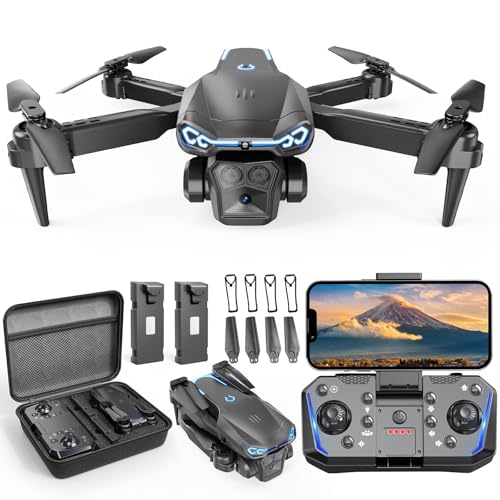
The X-shop foldable drone is designed with beginner-friendliness in mind, including one-key start/landing and altitude hold to maintain stable flight. It includes a 1080P HD camera and real-time FPV via an app, letting kids see what the drone sees and share moments with family. The two included batteries extend playtime, while foldable design supports portability for quick indoor or outdoor sessions. Three speed modes help children progress from slow, controlled flights to more confident maneuvers.
Buying Guide: Key Purchase Considerations And Comparisons
- Age-appropriate safety features: Look for propeller guards, durable ABS frames, and automatic landing or low-battery auto-return to minimize risk during play. For younger children, prioritize models with simple one-button takeoff/landing and headless mode to reduce the complexity of orientation.
- Control simplicity and modes: Altitude hold helps beginners hover with minimal input. Headless mode, fixed hover, and gradual speed options let kids grow with the toy. Amount of parental supervision recommended varies by model; choose accordingly.
- LED lighting and visibility: Bright multi-color LEDs improve visibility and engagement during playtime. Colorful illumination can also help keep track of the drone’s position in a room or yard.
- Durability and design: A robust, crash-resistant shell and propeller guards reduce breakage and injuries during inevitable bumps. A lightweight frame is easier to recover after a stumble.
- Battery life and charging: Two-battery kits extend play sessions, which is important for kids to stay engaged without frequent interruptions. Look for models with safe charging and simple battery swaps where possible.
- Camera options and FPV features: If capturing moments matters, select a model with a kid-friendly camera and straightforward app controls. For younger children, consider whether FPV or gesture controls enhance the experience without adding complexity.
- Indoor vs outdoor suitability: Smaller, lighter drones are generally better for indoor use. If outdoor use is common, ensure the drone is stable in light breezes and that there’s space to operate safely.
- Parental controls and app compatibility: Some drones pair with mobile apps for additional features. Check age-appropriate guidance within the app and ensure it’s accessible on the family’s devices.
- Size, weight, and portability: Foldable designs travel well and reduce the risk of damage when stored. Compact size also minimizes the chance of interfering with furniture or indoor obstacles.
- Price and value: A balanced approach considers safety features, durability, and playtime relative to cost. More features aren’t always better for the youngest users; prioritize simple, reliable devices first.
In summary, the best drone for a 4-year-old should combine safety-first construction, straightforward controls, and engaging visuals. The options above balance these needs with age-appropriate features, enabling safe exploration of aerial play while building early interest in technology and science.