Parents and caregivers seek toys that blend play with early learning. The following selections emphasize vocabulary, numeracy, problem solving, and fine motor skills, while prioritizing safety and kid-friendly design. Each product supports toddlers ages 1 to 5 with hands-on activities that strengthen cognitive development, language, and motor coordination. Below you’ll find concise overviews, a quick comparison table, and a buying guide to help you choose the best educational toy for toddlers.
| Product | Key Focus | Age Range |
|---|---|---|
| Beestech Alphabet ABC Learning | Letter recognition, word building, wooden puzzle | 2-5 |
| Kuovei Talking Flash Cards | Vocabulary, phonics, no screen | 1-5 |
| Educational Insights GeoSafari Jr. Kidnoculars | Exploration, science basics, observational skills | 3+ |
| NASHRIO Magnetic Fishing Game | Color, number, letters through play | 3-5 |
| Oomloid Counting Animals | Counting, sorting, early math | 3-5 |
Beestech Alphabet ABC Learning Toy
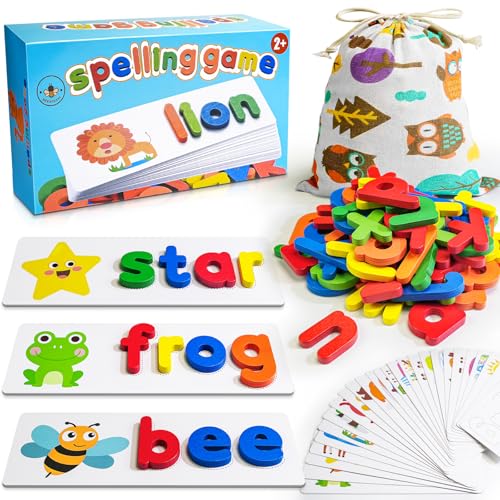
The Beestech Alphabet ABC Learning Toy provides an engaging way for toddlers to match wooden letters to corresponding flash cards. This activity supports early literacy by encouraging letter recognition, word formation, and vocabulary growth. The letters are crafted from sturdy wood with careful polishing to remove sharp edges, prioritizing safety during interactive play. A beautiful storage bag is included to help keep the letters and cards organized, making cleanups quick and simple for busy caregivers. Suitable for children around ages 2 to 5, this toy promotes hands-on exploration and helps build foundational language skills through repetitive, tactile play.
Kuovei Talking Flash Cards

Kuovei’s talking flash cards deliver a broad range of topics—from animals and foods to shapes and professions—designed to boost vocabulary and listening comprehension. The device reads the pronunciation of each card, and a cycling feature allows repeated exposure without reinserting cards. Importantly, these cards are a screen-free option that helps limit screen time, supporting eye health while introducing early literacy concepts. The set is well-suited for toddlers and preschoolers ages 1 through 5 and is compatible with simple, interactive learning routines at home or in a classroom setting.
Educational Insights GeoSafari Jr. Kidnoculars

Educational Insights GeoSafari Jr. Kidnoculars put kid-friendly exploration into focus. These binoculars are designed for young explorers with oversized, adjustable eyepieces and a stable, comfortable grip. They encourage curiosity about the natural world, astronomy, and everyday science, supporting observational skills, early scientific inquiry, and guided discovery. The durable build is made to withstand real-world play, and the focus-free design simplifies use for preschoolers, making it a reliable accessory for curious minds aged three and up.
NASHRIO Magnetic Fishing Game
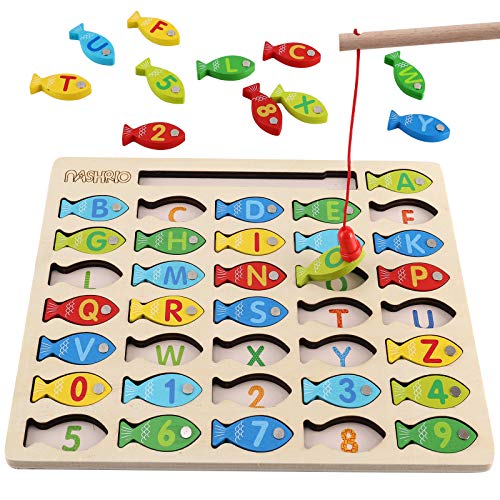
NASHRIO’s Magnetic Fishing Game blends fine motor practice with early math and literacy skills. The wooden board features colorful fish pieces labeled with letters and numbers. Toddlers use a magnetic pole to catch fish, promoting hand-eye coordination, color recognition, and basic counting. The toy emphasizes safe, durable wooden construction with non-toxic, water-based finishes, ensuring a kid-friendly experience. The activity supports collaborative play and independent problem-solving, making it a versatile option for homes and classrooms alike.
Oomloid Counting Animals

Oomloid Counting Animals brings a Montessori-inspired counting challenge to toddlers. The set includes 36 colorful animal figures, color-matching bowls, and tweezers to encourage precise motor control. Children sort by color, count objects, and pair animals with corresponding quantities, reinforcing early math concepts in a tactile format. The wooden construction and non-toxic finishes align with safety standards for active young learners, while the interactive elements foster concentration and problem-solving through play.
Buying Guide
- <strongLearning goals: Choose toys that align with your child’s development stage—letter recognition and vocabulary for early preschoolers; counting, color sorting, and shape recognition for age 3-5; exploration tools like kid-friendly binoculars to foster scientific curiosity.
- <strongMaterial and safety: Prioritize natural wood or durable plastics with rounded edges, non-toxic finishes, and easy cleaning. Screen-free options reduce exposure to screens and support eye health.
- <strongDurability and age range: Look for sturdy construction that stands up to rough handling. Ensure the toy’s recommended age range matches your child’s current development to maximize engagement and safety.
- <strongPortability and storage: Compact designs with organized storage help with on-the-go learning and tidy rooms. Bags or cases included with some sets add convenience for families on the move.
- <strongSkill diversification: Multi-skill toys (e.g., counting, color sorting, vocabulary, and fine motor tasks) offer broader developmental benefits and can grow with a child as they age.
- <strongEngagement and pedagogy: Interactive elements such as flaps, cards, or manipulatives help sustain attention and encourage active participation, which supports long-term learning gains.
- <strongBudget considerations: For a balanced set, mix a few durable wooden toys with interactive or electronic ones that emphasize different domains (language vs. math). Always verify repairability and replacement parts availability.