If you weigh up to 300 pounds and want a dependable electric skateboard for daily commutes, campus rides, or weekend adventures, you’re looking for models that combine durability, ample power, and steady range. The following five boards are selected for their solid load capacity, robust motors, and reliable battery systems. This guide compares performance features to help you pick a board that suits your riding style and terrain while keeping safety and control in mind.
| Product | Brand | Range | Top Speed |
|---|---|---|---|
| VeyMax Roadster X4 Electric Skateboard | VeyMax | 13-15 miles | 29 Mph |
| Askate A1 Electric Skateboard | ASKATE | Up to 28 KM (17.3 miles) | 25 KPH (15.5 mph) |
| VeyMax Mini 2 Electric Skateboard | VeyMax | 13-15 miles | 30 Mph |
| isinwheel V8 Electric Skateboard | isinwheel | Varies by setup | 28-30 Mph |
| JKING Electric Skateboard (3300W Dual) | JKING | 18-21 miles | 24 mph |
VeyMax Roadster X4 Electric Skateboard

Durable construction combines 8 layers of Canadian maple with a fiberglass layer for added toughness and corrosion resistance. Dual 550W hub motors deliver up to 1100W peak power and 30% hill climbing capability, enabling speeds up to 29 mph. The deck includes anti-collision pads and tail lights for enhanced safety during urban rides. A 216Wh battery supports a 13-15 mile range, per rider data at a 25-30 km/h cruising speed. This model aims to balance performance with reliability for commuters and weekend explorers alike.
Askate A1 Electric Skateboard

The MR remote with a high-definition screen provides battery, speed, and mileage readouts with four speed and brake modes, aiding beginners and teens in safe operation. Battery life supports up to 28 km (≈17 miles) under steady speeds, with UL2272-certified lithium power for reliable performance. The board measures about 31.5 inches and uses a single 350W motor to reach up to 25 kph (≈15.5 mph). Suitability leans toward new riders seeking ease of use and clear feedback from the ride.
VeyMax Mini 2 Electric Skateboard

Compact yet powerful, the Mini 2 uses 8-ply maple with fiberglass for durability and a 1200W peak power from dual hub motors. Top speed reaches 30 mph, with a 13-15 mile range supported by an 187Wh battery. The deck retains strength and flexibility for city commuting and casual rides, while a lightweight profile helps with portability without sacrificing stability at speed.
isinwheel V8 Electric Skateboard

The V8 features removable batteries, enabling longer mileage through quick swaps. Dual 600W hub motors propel speeds up to 28-30 mph. The design emphasizes versatility for riders who want modular battery options, a sporty aesthetic, and robust performance on varied terrains, including uphill and uneven surfaces. The remote modes and ambient lighting add practicality and visibility for urban riding into low-light conditions.
JKING Electric Skateboard (3300W Dual)
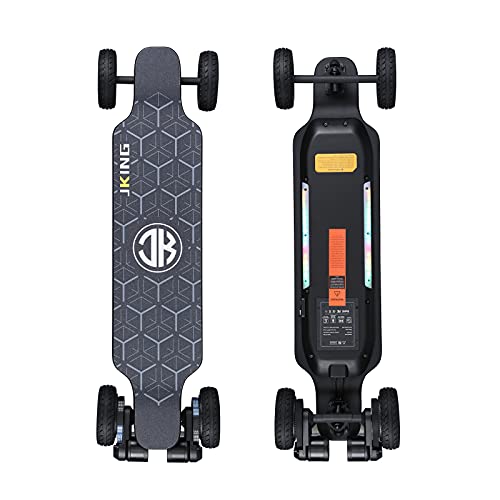
This model pairs a dual 3300W setup with a 270Wh battery, delivering up to 24 mph and an 18-21 mile range. It uses a sturdy combination of two layers of bamboo and six layers of maple for a strong deck that supports up to 330 lbs. The board features LED safety lights and automatic on/off behavior to promote safe operation in urban settings, plus 4-speed modes for a tailorable riding experience. The rugged construction suits riders seeking higher torque and stability on diverse surfaces.
Electric Skateboard By JKING (330 Lb Load)

Equipped with a UL 2272-certified 36V 7500mAh battery, this board supports up to 26 mph. A 19.5-21.8 mile range on a full charge and automatic start-on features aim to simplify daily use. The 8-ply deck and wide wheels offer stability and traction, while lighted LED bars enhance visibility in dim conditions. The board is designed for riders 16 and older who require a reliable long-range option with strong load capacity and a comfortable ride on varied terrain.
Buying Guide: Key Purchase Considerations
When selecting an electric skateboard that can safely support up to 300 pounds, consider these aspects to balance safety, performance, and value. Capacity and build quality should be prioritized, especially load rating and deck construction. Aim for models with reinforced decks (multiple plies of maple or bamboo, sometimes with fiberglass) and robust trucks and wheels to handle faster speeds and rough pavement.
- Motor power and top speed: Look for dual hub motors with sufficient peak power to handle hills and variable terrain. Higher top speeds are appealing but ensure braking systems and geometry support safe deceleration.
- Battery capacity and range: Battery size (Wh) determines range. For heavier riders, a larger battery helps maintain performance on inclines and long commutes. Check real-world range data and charging time.
- Safety features: Anti-collision pads, tail lights, LED remote indicators, waterproofing, and automatic on/off modes add safety and confidence in urban environments and low-light settings.
- Remote control and braking: A responsive remote with intuitive modes helps beginners gain control. Consider regenerative braking to extend range.
- Portability vs. stability: Large wheels and longer decks offer stability at speed but can reduce portability. Balance your need for commuting convenience with riding comfort.
- Maintenance and parts availability: Prefer brands with accessible spare parts (bearings, batteries, motors) and service support to reduce downtime.
- Warranty and safety certifications: UL2272 certification and manufacturer warranties indicate reliability and risk management for daily use.
Additional Perspectives
For heavier riders, choosing a board with a higher load rating and robust deck engineering reduces flex and improves ride stability, especially on inclines or uneven surfaces. Dual-motor configurations tend to deliver steadier acceleration and hill-climbing performance compared to single-motor designs. Battery modularity or swappable packs can be a practical feature for extended rides, but check compatibility and safety standards. Finally, consider how you plan to use the board—commute, campus travel, or casual recreation—as that informs acceptable trade-offs between range, speed, and weight.