Explore engaging, kid-friendly electricity kits that teach circuits, magnetism, and basic electronics through hands-on projects. The following selections cover a range of activities—from wiring experiments to battery-powered demos—designed to spark curiosity while emphasizing safe practice. Each option lists key features to help parents compare learning value, safety, and future-ready skills for children ages 8 and up.
| Product | Brand | Notable Feature |
|---|---|---|
| Blue Marble National Geographic Circuit Maker Kit | Blue Marble | 120+ projects with kid-friendly video instructions |
| Doctor Jupiter Ultimate Science Gift Set | Doctor Jupiter | STEM learning bundle for ages 8–14 with electricity experiments |
| NATIONAL GEOGRAPHIC Circuit Maker Kit | Blue Marble | 60+ projects and fiber optic light showcases |
| Science Circuit Kit Electricity for Kids | GadgetGlee | 8 circuit experiments with guided learning |
| Sntieecr Electric Circuit Motor Kit | Sntieecr | Comprehensive accessories for DIY science projects |
Blue Marble National Geographic Circuit Maker Kit

The National Geographic Circuit Maker Kit offers over 120 projects, introducing kids to circuits, energy, and electronics. Activities range from sound systems to light shows and even a simple flying copter, integrating diverse experiments that keep learners engaged while reinforcing core concepts of electricity and circuitry. The kit emphasizes safety with kid-friendly parts and easy-to-follow instructions, including a QR video guide to assist hands-on learners.
Doctor Jupiter Ultimate Science Gift Set

This science gift set centers on electricity-focused experiments suitable for late elementary to early teens. It blends electricity projects with broader STEM activities, promoting problem-solving and critical thinking as students explore exciting demonstrations. The kit is designed as a giftable collection that supports hands-on learning and long-term curiosity about science and engineering.
NATIONAL GEOGRAPHIC Circuit Maker Kit

Geared toward a broad age range, this kit provides 60+ projects that illuminate how electricity flows in circuits. Activities include fiber optic lighting, levitation tricks, and tiny projects that demonstrate practical electronics concepts. Clear, kid-friendly instructions and a video supplement help learners visualize circuitry while building confidence in experimental learning.
Science Circuit Kit Electricity for Kids

This kit combines eight circuit experiments in a compact format, featuring a guided circuit book and age-appropriate instructions. It emphasizes critical thinking and hands-on problem solving as children work through series, parallel, and other circuit configurations. Batteries and simple components enable multiple explorations in a classroom or home setting.
Sntieecr Electric Circuit Motor Kit
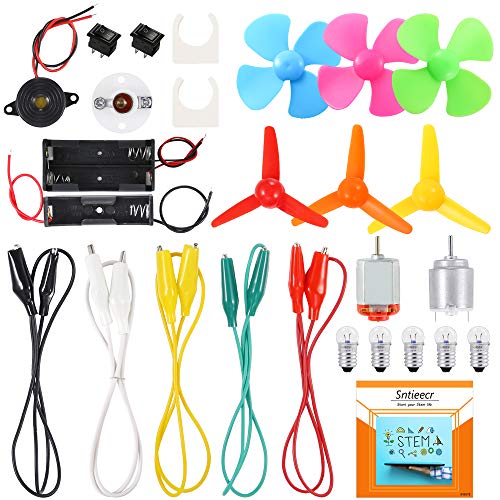
The Sntieecr kit provides a complete set of circuit components with motors, switches, bulbs, and multiple accessories to enable dozens of hands-on science projects. It supports practical learning about how circuits power devices and how components interact in real-world electrical systems. The included materials are suitable for classroom use or home STEM projects.
Buying Guide: Key Purchase Considerations
- Age and safety: Look for age recommendations and safety-oriented designs. Kits with simple, snap-together components and clear instructions reduce frustration and risk for younger children.
- Project variety: Consider the number and variety of experiments. More projects provide broader learning opportunities, from basic circuits to more advanced demonstrations like fiber optics or motors.
- Instruction quality: Video guides, illustrated manuals, and guided steps help learners of different styles. QR codes or online tutorials can boost comprehension for visual learners.
- Component durability: Sturdy containers and reusable parts support ongoing exploration. Check that essential items (wires, bulbs, switches) are included or easily replaceable.
- Learning goals: Align the kit with intended outcomes—fundamental circuit concepts, hands-on engineering, or STEM habits like critical thinking and problem solving.
- Expansion potential: Some kits pair with additional accessories or future projects, enabling continued growth as kids’ skills advance.
- Educational value vs. entertainment: Balance engaging activities with solid educational content to foster long-term interest in STEM fields.
- Storage and organization: Kits with clearly labeled bags or compartments help keep projects organized and accessible for independent work.