Parents seeking engaging, culturally themed play options for toddlers can explore a selection of wooden and soft-silicone sushi sets, pretend-play food kits, and interactive restaurant toys inspired by Japanese cuisine. These toys promote fine motor skills, cognitive development, and social play while offering safe, kid-friendly designs. Below are five highly relevant products that blend traditional Japanese food play with modern, durable materials for everyday use by toddlers and preschoolers.
| Product | Brand | Type |
|---|---|---|
| PlanToys Wooden Sushi Kit | PlanToys | Wooden pretend play set |
| WoodenEdu Sushi Slicing Set | WoodenEdu | Wooden pretend play food |
| Funpynani 34Pcs Sushi Set | Funpynani | LED color-changing pretend food |
| Liberty Imports Sushi Bento Box | Liberty Imports | Cut & slice sushi set |
| KiddoKraft Interactive Sushi Bar | KiddoKraft | Conveyor belt sushi restaurant play |
PlanToys Wooden Sushi Kit For Toddlers

The PlanToys set introduces children to Japanese cuisine through realistic pretend play. It includes wooden sushi rolls, nigiri, a soy sauce bottle, a dipping dish, and a serving tray, all designed for small hands. The pieces encourage tactile exploration of textures, colors, and shapes. Handling and arranging the sushi helps develop fine motor skills, focus, and imaginative storytelling. The kit also supports cultural awareness by offering a simple, hands-on way to discuss traditional dining concepts with toddlers.
WoodenEdu Sushi Slicing Play Food Set

This wooden sushi play set blends safe materials with interactive slicing sounds, enhancing sensory engagement for toddlers. The package includes a tray, chopsticks, bowls, soy sauce, mustard, and four sushi pieces. Self-stick tabs help pieces stay together during play, encouraging little chefs to perform slicing motions and listen to soft “cut” sounds. It supports early color recognition, hand-eye coordination, and cognitive development as children learn the order and characteristics of different sushi pieces. It’s a compact, eco-friendly option for budding sushi chefs.
Funpynani Sushi Slicing Play Set

The Funpynani set features a complete 34-piece sushi chef kit designed for toddlers and up. It includes a realistic assortment of Nigiri, Maki, Sashimi, a sake bottle with cup, Wasabi, Soy Sauce, and helper chopsticks. A standout feature is the LED color-changing “roasting” effect when the temperature-touched toppings are illuminated, simulating searing and adding a magical play element. The beginner-friendly chopsticks aid grip development, while the consistent assembly of toppings promotes fine motor control and concentration during pretend food preparation.
Liberty Imports Sushi Bento Box Set
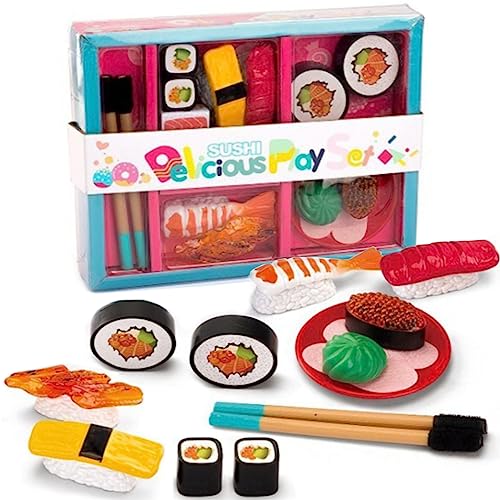
This 19-piece set offers a colorful sushi play experience with detachable pieces that can be sliced from rice. The bento box provides neat storage, while realistic chopsticks enable interactive dining play. Kids can pretend to serve sushi to family members, practicing early social skills like sharing and turn-taking. The set emphasizes manual dexterity as children detach, reassemble, and re-stack the pieces, supporting focus and sequencing abilities during culinary role play.
KiddoKraft Interactive Sushi Bar

This interactive sushi bar imitates a real Japanese restaurant with a manual rotating conveyor belt, food items, chopsticks, soy sauce, bowls, and a sake set. The conveyor belt promotes cooperative play and sharing as children take turns delivering sushi to customers. The design is battery-free for safety and simplicity, encouraging imaginative storytelling and social interaction in a classroom or home setting. The setup helps children learn cause-and-effect as the tray spins and pieces move along the belt.
Buying Guide: Key Purchase Considerations
- Age appropriateness: Most sets target toddlers and preschoolers (ages 2–5). Check recommended age on packaging to match skill level.
- Material and safety: Look for non-toxic paints and finishes, especially on wooden sets. Soft silicone pieces can reduce sharp edges and are easy to sanitize.
- Open-ended play vs. themed kits: Some sets emphasize open-ended pretend play (sushi bar, kitchen), while others offer structured roles (conveyor belt restaurant). Decide which aligns with your child’s play style.
- Fine motor development: Sets with detachable pieces, chopsticks, and slicing actions help build pincer grip, hand-eye coordination, and dexterity.
- Storage and portability: Bento boxes or compact trays facilitate tidy storage and on-the-go play.
- Language and cultural exposure: Toy sushi sets provide an accessible way to discuss Japanese cuisine, dining etiquette, and cultural concepts in an age-appropriate manner.
- Durability and maintenance: Wooden sets tend to endure long-term play with proper care; soft silicone components clean easily but may stain with color-intensive toppings.
- Interactivity: LED lights, sound effects, or moving conveyor belts add engaging multisensory elements that can extend playtime and foster imagination.
Product Comparison At A Glance
- PlanToys Wooden Sushi Kit: Durable wooden set with realistic pieces and tray; promotes coordination and storytelling.
- WoodenEdu Sushi Slicing Set: Safe wooden pieces with slicing sounds; supports color recognition and fine motor practice.
- Funpynani 34Pcs Sushi Set: Large, feature-rich kit with LED lighting and choppable toppings; encourages motor skills and imaginative play.
- Liberty Imports Sushi Bento Box: Cut-and-slice style with storage box; good for sequencing and role-playing serving.
- KiddoKraft Sushi Bar: Conveyor belt restaurant play; emphasizes social play, sharing, and turn-taking.
Across these options, the selection balances traditional wooden craftsmanship with modern interactive features. Each product offers a safe pathway for toddlers to explore Japanese cuisine concepts through scripted roles or open-ended kitchen play, supporting essential developmental milestones while keeping playtime engaging and educational.