For piano students and beginners, clearly labeled keys can speed up learning and build muscle memory. This article reviews five top-rated, removable label solutions that work across 61-key, 76-key, and 88-key keyboards. Each option focuses on durability, easy installation, and quick removal without residue. Read on to compare features, setup, and how each product supports different teaching styles and instrument sizes.
| Product | Brand | Key Range | Notes |
|---|---|---|---|
| Piano Keyboard Stickers for 88/61/54/49/37 Key | COYAHO | 88/61/54/49/37 | Removable, durable, waterproof |
| BEATBIT Piano Notes Guide (Rainbow Colors) | BEATBIT | 88-Key Full Size | Silicone, no stickers, reusable |
| ZUFECY Piano Notes for Beginner | ZUFECY | 88/61/76/54/49/37 | Sticky-free, versatile |
| runzoos Piano Keyboard Stickers | runzoos | 88/76/61/54/49 | Transparent, removable |
| GICUNK Removable Piano Key Stickers (Box) | GICUNK | 88-Key Full Size | Silicone, residue-free |
COYAHO Piano Keyboard Stickers
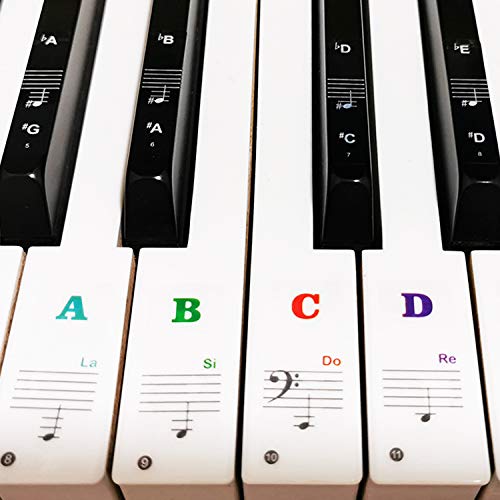
The COYAHO set provides label stickers sized for multiple keyboard formats, including 88-key models and smaller keyboards. White key stickers measure 4.0 cm by 1.55 cm, while black keys measure 3.9 cm by 0.85 cm. The labels are printed on the backside of a transparent sticker to prevent fading and ensure legibility through heavy use. They are waterproof and easy to wipe clean, maintaining visibility during lessons. Adhesive is designed to be removable without leaving residue or harming the keyboard surface, allowing repeated repositioning as learners progress.
BEATBIT Rainbow Piano Notes Guide

BEATBIT offers a no-sticker approach with silicone note strips that connect in series, eliminating the need to place stickers on keys. This reduces clutter and avoids adhesive contact with the keyboard. The double-staff display helps learners locate notes quickly since most piano scores use treble and bass staves. Suitable for beginners, it removes the barrier of memorizing key names, allowing students to start playing and learning basic melodies in minutes.
ZUFECY 88-Key Piano Notes Guide

ZUFECY offers versatile 88-key compatibility with a focus on easy, one-step use. The kit is designed to fit a variety of keyboard instruments, including 88/76/61/54/49-key pianos. Bold, colorful lettering enhances visibility, helping learners quickly identify notes. The stickers are designed for quick placement and removal, keeping the instrument in good condition while enabling fast setup for practice sessions or classroom instruction.
runzoos Clear Piano Keyboard Stickers

runzoos provides transparent, removable stickers designed to fit 88/76/61/54/49-key pianos. The clear printing delivers high visibility without obscuring the keyboard’s surface. Easy-to-peel cutting lines help users align stickers precisely, and the adhesive is arranged to minimize residue upon removal. This option suits players who want a clean look while still benefiting from visual note locations during practice and early learning phases.
GICUNK Removable 88-Key Box

GICUNK offers 88-key compatible silicone piano key stickers, designed for a variety of instrument types including upright, grand, and digital pianos. The silicone construction means easy removal without residue, preserving the keyboard’s finish. This option is beginner-friendly and emphasizes quick learning by clearly marking Middle C and other notes, with a box-set presentation that is ideal for gifting or classroom use.
Buying Guide: Key Purchase Considerations
- Sticker type vs. silicone/strip systems: Stickers are widely available and budget-friendly, but silicone or strip systems reduce residue and are easier to remove, making them suitable for frequent practice and teacher-led sessions.
- Compatibility: Verify key count compatibility (88-key, 61-key, etc.) and keyboard width to ensure the labels fit properly and do not interfere with playing.
- Durability and finish: For active learners, choose materials that resist wear, water, and frequent cleaning. Transparent or color-coded options help retain the keyboard’s aesthetic while providing visual cues.
- Install and removal: Look for easy, tool-free application and residue-free removal, particularly for rental instruments or shared classrooms.
- Learning approach: Boards with staff lines or color-coded notes support different teaching methods, from traditional note names to staff-based reading.
- Maintenance: Waterproof or wipe-clean surfaces simplify cleaning after sticky fingers or spills, a common concern for beginners.
Overall, the best choice depends on the learner’s age, classroom setting, and practice habits. Silicone-based, non-adhesive options are ideal for frequent repositioning and minimal instrument maintenance. Sticker-based sets may offer the most cost-efficient labeling for at-home practice. For teachers, systems that present both treble and bass staff information can accelerate early music literacy while keeping the instrument in good condition.