Parents seeking engaging, development-focused learning boxes for toddlers will find a range of options that support language, math, sensory, and fine motor skills. The following selections are curated to cover early cognitive milestones, Montessori-inspired practices, and hands-on play. Each option emphasizes independent exploration, interactive learning, and durability for everyday use by ages 1–3.
| Product | Brand | Key Focus |
|---|---|---|
| Dailyfunn Montessori Toys Color&Shape Sorting Learning Box | Dailyfunn | Color/shape matching, motor skills |
| Pidoko Kids Developmental Box | Pidoko Kids | First words, early language, senses |
| Ms. Rachel Surprise Learning Box | Ms. Rachel | Sensory play, vocabulary |
| Melissa & Doug Alphabet Puzzle | Melissa & Doug | Alphabet recognition, fine motor |
| TOP BRIGHT Preschool Learning Toys | TOP BRIGHT | Early math, Montessori-inspired |
Dailyfunn Montessori Color & Shape Box
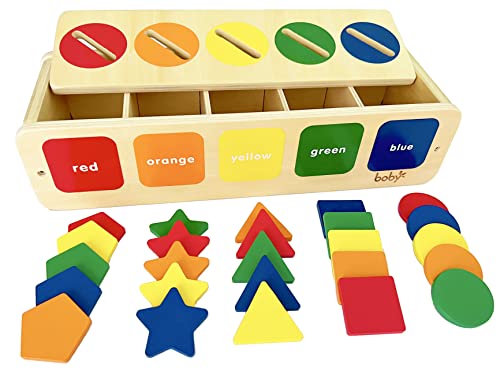
The Dailyfunn Color & Shape Sorting Learning Box uses 25 solid wood pieces across five colors and five shapes, plus 13 answer cards for an advanced mode. Grounded in Montessori principles, it emphasizes independent play, hands-on manipulation, and logical thinking. The set supports motor skill development and hand–eye coordination through simple, engaging movements, helping toddlers practice color and shape recognition in an age-appropriate format.
Pidoko Kids Developmental Box for Toddlers

Pidoko Kids offers an early learning set designed to spark first words, sounds, and feelings. The package includes three board books and three flashcard sets featuring real-life images, with emphasis on vocabulary development, emotional awareness, and problem-solving through interactive, sensory-rich activities. The design supports speech development and engages toddlers with tangible, recognizable objects for meaningful language practice.
Ms. Rachel Surprise Learning Box

Ms. Rachel’s Official Surprise Learning Box features four learning environments and six plush accessories for sensory play, including a teddy bear, bunny, and bus. The design encourages grasp development and fine motor skills as babies explore the contents, while a bonus learning card reinforces vocabulary by prompting spoken questions like, “What’s in the box?” This set supports early language growth and imaginative play in a compact, age-appropriate package.
Melissa & Doug Alphabet Puzzle

This self-correcting puzzle provides 52 wooden pieces with capital or lowercase letters and corresponding images. The design enables children to fit pieces only with their correct match, building confidence through trial and error. The sturdy storage box ensures portability for playdates or travel. It supports letter recognition, vocabulary building, and fine motor control through open-ended, screen-free play and tactile exploration.
TOP BRIGHT Montessori-Style Blocks Set

TOP BRIGHT’s preschool learning set blends Montessori-inspired practice with foundational math concepts. Designed for toddlers 2–4, it features counting blocks and manipulatives that help build recognition of numbers, colors, and shapes. The kit supports independent, self-directed learning, promoting concentration, problem-solving, and early math fluency as children engage with tangible materials that connect to abstract ideas.
Buying Guide
- Age appropriateness: Choose boxes tailored to 1–3 year olds that emphasize simple, repeatable activities and safe, durable materials such as wood and non-toxic finishes.
- Developmental goals: Consider whether the focus is language, early math, sensory play, or fine motor skills. Some sets blend two or more areas for well-rounded growth.
- Montessori alignment: Look for self-directed activities, open-ended play, and minimal adult instruction to encourage independence and concentration.
- Durability and cleanability: Toddlers tend to explore with hands and mouths, so sturdy construction and easy-to-clean surfaces are important.
- Storage and portability: Sets with safe storage solutions help maintain order and enable learning on the go.
- Clear safety features: Ensure pieces are large enough to reduce choking hazards and meet toy-safety standards for age groups.
- Expansion potential: Some boxes include additional cards or future-themed add-ons to grow with the child’s progress.
When selecting a learning box, balance immediate engagement with long-term developmental value. For families seeking a mix of language, sensory, and early math, a combination of boxes that emphasize independent, hands-on exploration typically yields broad benefits. Always supervise toddlers during play to ensure safe use of all pieces and materials.