Choosing the right learning clock helps toddlers grasp the concept of time while fostering concentration and independence. The following five clocks blend interactive play, clear time cues, and kid-friendly designs to support early time-telling skills. This guide compares features, pedagogy, and ease of use to help parents select a clock that fits their child’s learning pace and bedtime routines.
| Product | Brand | Key Benefit |
|---|---|---|
| BEST LEARNING Learning Clock | BEST LEARNING | Award-winning, interactive talking clock with quiz and sleep mode |
| Oyster&Pop Learning Clock | Oyster&Pop | Silent wall clock with labeled minute hands and quarters |
| Learning Resources Big Time Mini Clock | Learning Resources | Hands-on, color-coded hours to reinforce reading analog time |
| Learning Resources Tock The Learning Clock Pink | Learning Resources | Analog and digital modes with music and quiz learning |
| Linksandt Learning Clock | Linksandt | Multi-mode clock with time and color/shape discovery plus sleep/melodies |
These five options emphasize clear visuals, interactive feedback, and a gentle progression from learning to independent telling time. They are suitable for preschoolers and early elementary students ages 3–6, with features like labeled hands, quiz prompts, and sleep-friendly modes to support bedtime routines and classroom learning alike.
BEST LEARNING Learning Clock

The BEST LEARNING clock is an awards-winning interactive learning clock with a talking function, a quiz mode, and a Sleep Mode. It guides children to align the hour hand with the correct hour and adjust the minute hand to the desired time, then reads the time aloud. Its Sleep Mode plays classical music and offers a night-light option with multiple timer settings, facilitating bedtime routines and calm evenings for kids and parents alike. The device is designed for ages 3–6, providing a structured approach to early time literacy through engaging prompts and rewards.
Oyster&Pop Learning Clock

This 10″ non-ticking wall clock is designed for classrooms, bedrooms, and kids’ rooms. It labels minutes, hours, and quarters, helping children interpret analog time. The silent operation reduces distractions, which is ideal for study spaces or nighttime routines. The clock features a kid-friendly, colorful design and requires a single AA battery. It integrates visual time cues with a quiet, distraction-free experience to support independent practice and day-to-day time checks.
Learning Resources Big Time Mini Clock

Big Time Mini Clock emphasizes hands-on learning with hidden gears that keep time while you spin the hands. The color-coded hands match the hour and minute markings, reinforcing association between the clock face and time-telling concepts. This clock is designed for classroom or home use, offering tangible manipulation to build early time literacy through repeated practice and visual reinforcement, which supports learners who benefit from tactile engagement.
Learning Resources Tock The Learning Clock Pink
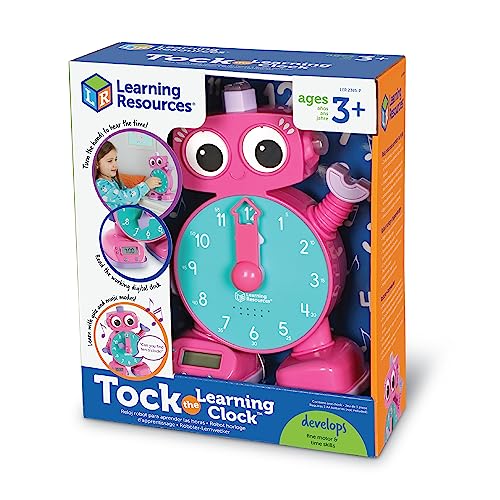
This clock combines analog and digital displays to teach time through interactive modes, including music and quizzes. The OK to Wake feature uses a green light to signal morning readiness, which can help establish routines and reduce early wake-ups. It is designed for ages 3+, supports homeschool and classroom learning, and offers dual learning modalities to keep children engaged while they practice setting hands to reflect digital time.
Linksandt Learning Clock

Linksandt offers a versatile learning clock with five-minute step teaching and modes for time telling, including “TIME” to hear current time and “ASK” for quizzes like “Show me 3:45.” It provides color and shape discovery with 12 colors and shapes, which broadens cognitive connections during time-telling practice. Sleep and music modes support bedtime routines, turning time-telling practice into enjoyable moments and encouraging consistent practice across daily activities.
Buying Guide: Key Purchase Considerations
- Learning progression: Look for clocks that combine hands-on manipulation with visual cues. Models offering both analog and digital displays can support smoother transitions as children grow.
- Engagement features: Quizzes, music, and interactive prompts help maintain attention and encourage repeated practice. Sleep modes or night lights can integrate bedtime routines.
- Noise and ambiance: If quiet spaces are a priority, choose a non-ticking or silent model to reduce distractions during study or sleep.
- Durability and safety: Prefer sturdy construction, kid-friendly materials, and easy-to-clean surfaces for toddlers and preschoolers.
- Portability and placement: Travel clocks or clocks with wall-mount options provide flexibility for rooms, cars, or classrooms.
- Age appropriateness: Ensure the clock is designed for preschool to early elementary levels, with clear hour and minute cues and age-appropriate activities.
- Maintenance: Consider battery requirements and ease of replacing batteries; some models include backup power options for reliability.
- Inclusive design: Some clocks offer multilingual or color-shape discovery features, which can help children with diverse learning needs and varied cognitive profiles.
In selecting a learning clock, parents should balance interactive features with simplicity to avoid cognitive overload. A clock that gradually reduces prompts as competence builds tends to support smoother progress from guided practice to independent time telling. For families prioritizing bedtime routines, models with sleep modes or night-light functions can provide consistent structure that benefits both children and caregivers.