Finding safe, engaging, and educational robots for toddlers can boost fine motor skills, logical thinking, and early STEM curiosity. The following five products are designed for preschoolers and early elementary ages, offering interactive play, problem-solving challenges, and screen-free or limited-screen experiences. Each option emphasizes durability, age-appropriate learning goals, and hands-on exploration.
| Product | Age Range | Learning Focus | Key Benefit |
|---|---|---|---|
| Educational Insights Design & Drill Robot | 3+ | Fine motor, basic construction, problem solving | Hands-on pretend-play with real tools |
| Ruko 1088 Smart Robots | 4-9 | Programmable play, imagination, sequencing | Voice/app control with expressive features |
| Miko 3 AI Robot | 5-10 | STEAM learning, storytelling, social interaction | Built‑in touchscreen, adaptive content |
| Learning Resources 1-2-3 Build It! Robot Factory | 3-6 | Early engineering, fine motor, problem solving | Colorful hands-on building set |
| Learning Resources Code & Go Robot Mouse | 4+ | Intro to coding, sequencing, critical thinking | Screen-free programmable mouse with guided activities |
Educational Insights Design & Drill Robot

Educational Insights’ Design & Drill Robot blends construction play with pretend-toy activities, suitable for toddlers and preschoolers. The kit encourages fine-motor skills as children use tools to decorate and assemble the snap-and-screw robot. Through play, kids can explore basic construction concepts and problem-solving in a low-stress setting. The set emphasizes creativity, imaginative play, and early STEM exposure by letting little hands manipulate real pieces and complete simple assembly tasks.
Ruko 1088 Smart Robots for Kids

Ruko 1088 is a large programmable RC robot designed to spark creativity and basic programming concepts in older toddlers and younger children. Standing taller with interactive expressions, it supports voice or app control, helping kids learn sequencing, cause-and-effect, and logical thinking as they guide the robot through routines or games. Its voice features and multiple movement options offer an engaging, multi-sensory learning experience that grows with the child’s curiosity.
Miko 3 AI Robot for Kids
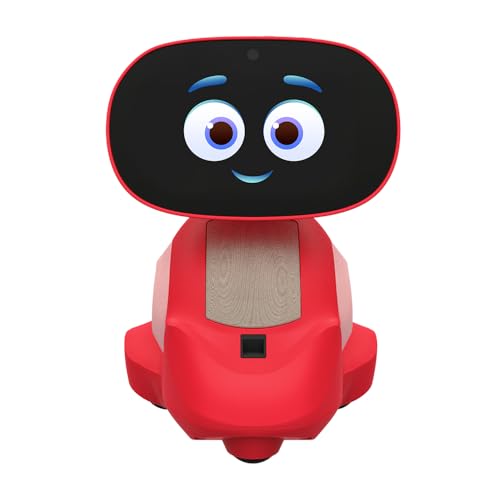
Miko 3 is an AI-powered learning companion with a built-in touchscreen, offering STEAM content, interactive apps, stories, and activities. It emphasizes not only cognitive development but also social and emotional growth through conversational learning. Story Maker adventures enable kids to co-create tales, which can be saved as digital memory books for family sharing. The robot adapts content to a child’s preferences, aiming to keep learning engaging and age-appropriate over time.
Learning Resources 1-2-3 Build It! Robot Factory

This toddler-friendly construction kit focuses on early engineering and fine motor skills. Children craft imaginative robot creations using easy-to-handle pieces while exploring basic engineering concepts. The design encourages critical thinking and problem-solving as kids follow simple patterns or create their own blueprints, enhancing spatial reasoning in a playful, hands-on format.
Learning Resources Code & Go Robot Mouse
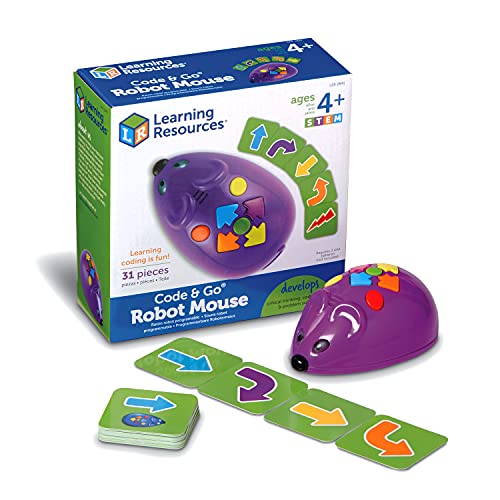
Code & Go Robot Mouse introduces elementary coding concepts with a screen-free approach. Children age four and up learn sequencing, direction, and logic through hands-on play with a programmable mouse. The kit uses tangible controls and color-coded cards to accommodate multiple learning styles—perfect for parents seeking a low-tech, classroom-friendly coding introduction that builds foundational STEM thinking without screens.
Buying Guide
Key purchase considerations for a toddler-friendly learning robot include age appropriateness, durability, and safety. Look for rounded edges, BPA-free materials, and clear age recommendations. Decide between screen-free or limited-screen experiences based on your child’s current development stage and family norms. Consider learning goals: fine motor development, early engineering, storytelling, or basic coding.
- Age appropriateness: Ensure the toy matches the child’s developmental level to avoid frustration or safety risks.
- Durability and materials: Durable plastics and sturdy construction reduce breakage during rough toddler play.
- Learning focus: Choose a product that aligns with desired outcomes—motor skills, STEM exposure, or cognitive development.
- Engagement and adaptability: Look for features that keep children motivated over time, such as interactive feedback or content that grows with the child.
- Screen exposure: Decide whether you want a screen-free option or a robot with educational apps or stories that extend learning beyond playtime.
- Maintenance and cleanability: Easy-to-clean surfaces help with daily toddler use and hygiene.
- For younger toddlers, prioritize simple assembly, big parts, and intuitive controls that reinforce fine motor skills.
- For older children, seek programmable or story-driven options that introduce basic sequencing and problem-solving.
- Balance play and learning: select toys that feel like play first, with learning outcomes emerging naturally.
All five selections offer distinct approaches to beginner-friendly robotics and STEM exploration. Depending on a child’s interests—construction play, storytelling, or coding fundamentals—these options provide safe, engaging pathways to early technology literacy without overwhelming screen time.