The following article showcases top model engine kits that make STEM learning hands-on and engaging for both kids and adults. Each selection features working pistons, realistic sounds, and interactive components that illuminate how engines operate. Explore kits ranging from classic V8s to inline six and W16 designs, with options including battery power, motorized driving, and LED lighting to enrich the learning experience.
| Product | Brand | Pieces | Key Feature |
|---|---|---|---|
| Playz V8 Combustion Engine Model Kit | Playz | 270 | Working V8 engine with sounds and interactive cables |
| Discovery Model Engine Building Kit | Discovery | Not specified | 4-Cylinder with moving pistons and belts |
| Playz Inline 6 Engine Model Kit | Playz | 230 | Working Inline 6 engine with realistic action |
| National Geographic 4-Cylinder Engine Building Kit | Blue Marble | 175+ | Clear visible engine with comprehensive learning tools |
| WINGIFT V8 Engine Building Set | WINGIFT | 478 | V8 engine with transparent head and motorized drive |
Below you’ll find five carefully chosen model engine kits that balance educational value, build complexity, and hands-on appeal. Each product section provides a concise overview, notable features, and practical considerations to help you select a kit that fits your goals—whether it’s sparking curiosity in young learners or satisfying adult hobbyists.
Playz V8 Combustion Engine Model Kit

Design and function converge in the Playz V8 engine kit, which invites both adults and young builders to assemble a visible V8 engine that actually runs. It includes realistic pistons, interactive cables, and engine sounds, delivering a tangible representation of how an eight-cylinder powerplant operates. The kit is ideal for curious minds who want to observe motion and hear feedback as the engine cycles through its firing sequence. Assembly focuses on cranks, pulleys, belts, and exhaust components, offering a comprehensive, hands-on STEM experience.
Considerations include the need for 3 AA batteries (not included) to power the running engine, making sure you have compatible batteries on hand. The kit supports longer play sessions by combining education with entertainment, and it serves as a compelling exhibit for a classroom or home workshop. It’s well suited for learners who enjoy mechanical detail and sound cues that simulate a real car engine.
Discovery Model Engine Building Kit
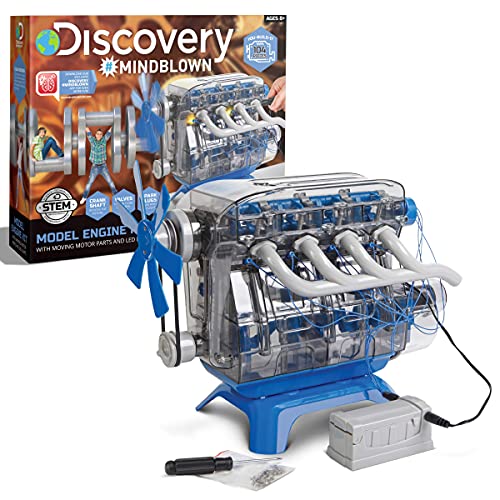
The Discovery kit emphasizes critical thinking and practical assembly. With a 4-cylinder configuration, it introduces kids and adults to pistons, belts, pulleys, and exhaust valves while encouraging logical thinking and motor skills development. Building the model requires aligning multiple moving parts and wiring components to a battery setup, resulting in a functional engine that can be observed as it turns over and runs through its cycles. The kit’s approachable complexity makes it suitable for both younger learners and hobbyists seeking a structured challenge.
Pros include a comprehensive toolset and a direct link between mechanical construction and engine operation. Users should be prepared for a potentially longer build phase that rewards perseverance with a working model. The kit provides a strong foundation for discussing engine anatomy, timing, and mechanical relationships that drive real-world automotive systems.
Playz Inline 6 Engine Model Kit

The inline six engine kit offers a different engine architecture while preserving the visible, working-parts concept that defines the Playz line. This model emphasizes a four-stroke cycle and piston motion, allowing builders to observe how six cylinders coordinate to produce smoother power delivery compared with smaller engines. The kit’s assembly focuses on precise alignment of cranks and valves, with motorized elements that bring the engine to life as you complete the build.
Pros include a high level of detail and a similar user experience to the V8 kit but with a different cylinder arrangement. Battery requirements mirror those of other Playz models, so having spare batteries is a practical planning step. The Inline 6 is a solid option for learners interested in engine scalability and multiple-cylinder dynamics.
National Geographic 4-Cylinder Engine Building Kit
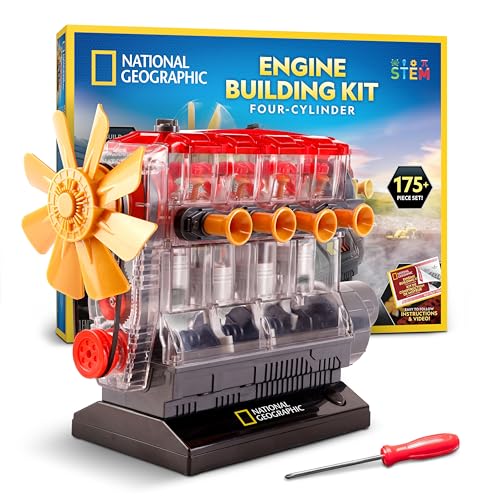
The National Geographic kit by Blue Marble focuses on a clear, 4-cylinder engine model designed to teach core engineering concepts. With more than 175 pieces, the kit provides a visible, movable demonstration of pistons, valves, and gears. It includes batteries and a concise learning guide, making it an accessible entry point for budding engineers who prefer visual feedback and structured instruction. The combination of a robust parts set and educational materials supports both independent exploration and guided classroom projects.
Considerations include the need for three AA batteries (not included) to power the engine. The kit’s clear chamber design makes it easy to observe the inner workings, which is particularly helpful for students who benefit from direct visual cues while learning about timing and motion in piston-driven engines. It also doubles as an educational display piece when not in active use.
WINGIFT V8 Engine Building Set

The WINGIFT V8 engine kit blends a detailed mechanical model with a motor and lighting features. It uses a transparent cylinder head to reveal piston motion and internal timing, providing a clear view of the engine’s operating sequence. The kit requires six AA batteries and includes a motorized drive suitable for demonstrating startup, acceleration, and sound cues. Its larger part count supports a thorough exploration of engine assembly and teardown, appealing to serious builders who enjoy meticulous work and realistic mechanical aesthetics.
Important factors include battery availability and space for a motorized setup. The transparent head and LED lighting enhance observation and engagement, helping learners connect theoretical concepts with tangible outcomes. This kit is well-suited for classrooms, clubs, or home workshops where learners want a robust, feature-rich model engine that “runs.”
Buying Guide: Key Purchase Considerations
- Age and skill level: Choose kits with appropriate complexity. Some are beginner-friendly with guided instructions, while others target advanced learners with more intricate assemblies.
- Power and operation: Decide between battery-powered, motorized, or manual crank models. Battery and motor options add motion and sound for a more immersive experience.
- Educational value: Look for kits that clearly demonstrate engine concepts such as piston motion, valve timing, and crankshaft dynamics. Supplementary learning guides are a plus.
- Visual access: Transparent cylinder heads or clear engine blocks help users observe internal mechanisms, enhancing comprehension for visual learners.
- Expansion potential: Some kits pair well with other models (e.g., inline six and V8 options) to illustrate multi-cylinder differences and performance characteristics.
- Durability and parts: Check for robust construction and the availability of replacement parts or spare components if needed during learning sessions.
- Display value: Models with aesthetically pleasing design and finish can serve as educational displays in classrooms or home study spaces.
- Safety considerations: Ensure that small parts or tools are appropriate for the user’s age and that adult supervision is available for younger builders.
- Storage and space: Larger kits with many pieces require adequate workspace and organized storage to maintain the build sequence and prevent loss of components.
- Future learning paths: If building skills or automotive knowledge is the goal, consider a kit that supports progressive projects or can be extended with additional components.
Overall, selecting the right model engine kit involves balancing realism, educational depth, and hands-on appeal. For classrooms or family learning, kits with clear demonstrations, kid-friendly instructions, and durable parts tend to offer the best long-term value. Enthusiasts may prefer kits with motorized features, lighting, and higher piece counts for ongoing projects and display purposes. By aligning a kit’s features with learner goals, you maximize both educational outcomes and engagement.