For young builders and curious minds, hands-on engine kits offer a engaging way to explore how engines work while developing STEM skills. The following selections highlight reliable, kid-friendly options that also appeal to adults who enjoy DIY mechanics. Each kit provides realistic moving parts, clear visibility, and practical assembly steps to foster critical thinking and problem-solving. Explore five top picks that balance educational value with interactive fun, and find guidance on choosing the right kit for different ages and skill levels.
| Product | Brand | Key Features |
|---|---|---|
| Playz V8 Combustion Engine Model Kit That Runs | Playz | Visible V8, real engine sounds, 270 parts, runs with batteries |
| Discovery Model Engine Building Kit, 4-Cylinder | Discovery | Working pistons, belts, valves; STEM and critical thinking |
| Playz Inline 6 Engine Model Kit | Playz | Inline 6 design, running model, 230 parts, engaging assembly |
| National Geographic 4-Cylinder Engine Building Kit | Blue Marble | 175+ pieces, clear visible engine, learning guide included |
| WINGIFT V8 Engine Building Set | WINGIFT | V8 replica, motorized, rechargeable power, LED lights |
Playz V8 Combustion Engine Model Kit That Runs

The Playz V8 engine model kit offers a practical, hands-on approach to understanding how a classic eight-cylinder engine functions. Designed for both adults and kids aged 12 and up, this kit provides a working miniature engine that resembles a real V8, with interactive cables and pistons that move as the engine runs. A battery-powered motor drives the action, producing audible engine sounds to enhance realism. The kit emphasizes trial-and-error learning as builders assemble cranks, belts, pulleys, and exhaust components, fostering problem-solving and mechanical intuition. Suitable for classrooms, after-school programs, or family STEM time, it blends entertainment with educational value. Batteries are required (not included) to unlock full operation.
From a safety and usability perspective, the kit is beginner-friendly while still offering depth for more advanced builders. It presents an opportunity to observe how timing, valve operation, and exhaust flow interact in a compact, visible model. For older kids and adults, it can serve as a stepping stone to more sophisticated engines or hobbyist modeling. Given the included components and the visible motor-assisted performance, this kit tends to be a strong pick for families seeking an engaging, realistic introduction to automotive engineering.
Pros: Realistic V8 action, audible engine sounds, engaging assembly experience. Cons: Battery requirement adds an extra item to purchase; some may prefer more advanced features or easier disassembly for troubleshooting.
Discovery Model Engine Building Kit, 4-Cylinder
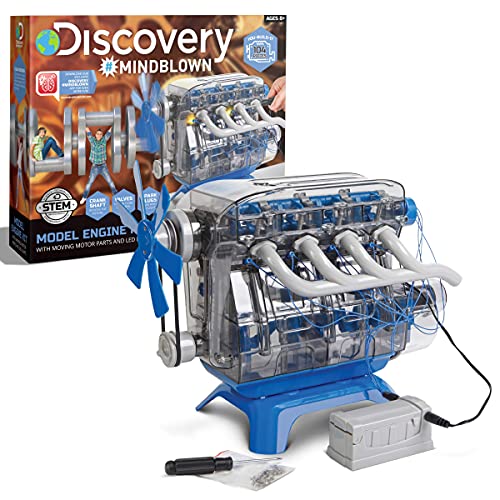
The Discovery Model Engine Building Kit focuses on a 4-cylinder configuration with working pistons, belts, and valves. It’s designed to promote critical thinking and hands-on learning as kids and adults assemble the engine, connect cables to the battery distributor, and observe the motion come to life. The kit emphasizes the mechanics of timing and synchronization, encouraging builders to think through how crankshafts and valves coordinate during operation. With practical tooling and straightforward instructions, it’s suitable for STEM classrooms and home projects alike.
Key benefits include the development of motor skills, logical reasoning, and an appreciation for mechanical engineering fundamentals. It is a well-rounded option for beginners who want tangible results and for those who enjoy tinkering with working automative components. The kit’s emphasis on real-world engine behavior makes it a compelling choice for a long-term hobby starter package.
Pros: Clear working model, strong STEM alignment, broad appeal for ages. Cons: Fewer customization options than larger kits; assembly may require patience and focus for younger children.
Playz Inline 6 Engine Model Kit

The Inline 6 engine model kit extends the same engaging approach used in the V8 kit to a six-cylinder setup. Builders watch the pistons move in a four-stroke cycle, and the kit features interactive cables and a visible engine block to illustrate internal combustion principles. With 230 parts, the project offers a meaningful challenge that can reward steady, methodical assembly and curious exploration of engine timing and balance. The kit is well-suited for older kids and adults who want to compare inline-six layouts with V8 designs and to understand cylinder layout differences in engine performance.
Educational value centers on cycle mechanics, valve timing, and the flow of energy through crankshafts and belts. It also reinforces patience and procedural thinking during assembly. The kit is compatible with a variety of educational setups, making it a strong choice for school demonstrations or family science nights.
Pros: Realistic inline six operation, strong hands-on learning. Cons: Slightly more complex than entry-level kits; requires attention to detail during assembly.
National Geographic 4-Cylinder Engine Building Kit
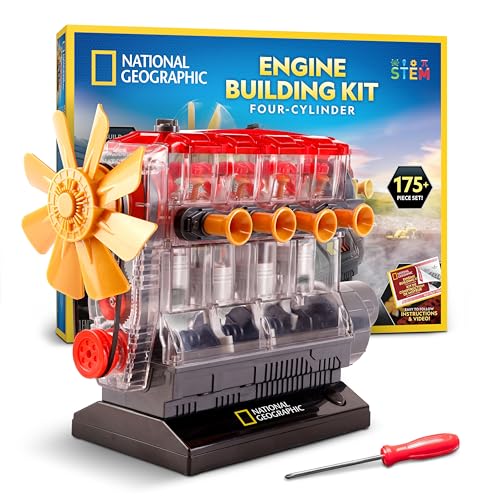
This National Geographic kit by Blue Marble offers a 4-cylinder engine that’s built from 175+ pieces, with a clear, visible design so builders can see piston movement, valve action, and gear interaction. The kit includes tools and illustrated instructions along with a Learning Guide, creating a complete STEM activity set for kids and adults. Aimed at hands-on learners, it emphasizes how pistons and gears translate into mechanical motion and energy transfer in a real engine. The kit is well-suited for classroom use or family STEM projects, providing a comprehensive, visually engaging experience.
Highlights include a robust parts assortment, persistent visibility into internal mechanics, and a structured learning guide that supports independent exploration. It’s a solid choice for children beginning to explore engineering concepts and for adults who want a clear, educational platform to demonstrate engine principles.
Pros: Clear visuals, comprehensive learning materials, versatile for groups. Cons: Requires batteries (not included) and some assembly time; may be best with parental guidance for younger kids.
WINGIFT V8 Engine Building Set

The WINGIFT V8 Engine Building Set presents a highly detailed V8 replica with a motorized drive and a battery-powered system. The transparent cylinder head design enables a close look at piston movement and valve train operation, while the built-in LED lighting enhances visibility of internal components during operation. A USB-powered motor option offers dual-speed control, enabling learners to observe how piston rhythm changes with speed. This kit is a robust option for more advanced builders who want a professional-grade feel in a compact model, with the bonus of real-time motion and sound effects that enhance understanding of engine dynamics.
Educational aspects focus on mechanical coordination, timing, and energy transfer within a multi-cylinder engine. The kit is appropriate for teens and adults who enjoy detailed engineering projects or collectors seeking a functional, display-worthy model. As with similar sets, it benefits from structured guidance and patience during assembly, but provides a satisfying, dynamic result that demonstrates core engine principles in a tangible form.
Buying Guide: Key Considerations For Model Engine Kits
- Age appropriateness: Choose kits designed for the learner’s age and skill level. Some sets are great for beginners, while others target older kids and adults with higher complexity.
- Learning objectives: Identify which engine layout (V8, inline-6, 4-cylinder, etc.) best aligns with your educational goals, such as understanding piston timing, valve mechanics, or gear trains.
- Hands-on vs. visual learning: Some kits emphasize moving parts and real engine sounds, while others focus on visibility and observation to reinforce concepts.
- Power source and electrical needs: Note whether batteries or USB/motor power are required, and ensure you have the appropriate supplies (batteries, USB power, etc.).
- Durability and parts availability: Look for kits with sturdy construction and readily replaceable parts in case of wear or damage during learning sessions.
- Educational support: A good kit often includes manuals, learning guides, and diagrams that help instructors and learners interpret each step and concept.
- Expansion potential: If you want to build on skills later, consider kits that offer modular components or compatibility with other models to compare engine configurations.
- Safety considerations: Ensure parts are appropriate for the user’s age and that assembly steps minimize risk of injuring fingers or handling small pieces.