Discover engaging, kid-friendly motor kits that teach electronics, engineering, and mechanical reasoning. This guide highlights five top options that balance complexity and play, helping children learn by building real working models. Each kit emphasizes hands-on exploration, clear instructions, and safe components to support curious minds from elementary through early teens.
| Product | Brand | Focus | Ideal Age |
|---|---|---|---|
| Playz V8 Combustion Engine Model Kit | Playz | Working V8 engine replica with moving parts | 12+ |
| Sntieecr 276PCS DC Motor Kit | Sntieecr | DIY motor project set with gears and LEDs | 8+ |
| EUDAX 465PCS DC Motor Kit | EUDAX | Extensive parts for multiple projects and experiments | 8+ |
| Sntieecr Electric Circuit Motor Kit With Solar Panel | Sntieecr | Solar-powered motor projects and circuits | 8+ |
| Klever Kits 36-in-1 Motor Robotic Kit | Klever Kits | Multiple robot builds with motorized models | 8-13 |
Playz V8 Combustion Engine Model Kit That Runs

The Playz V8 engine model kit offers a tangible introduction to internal combustion concepts through a functional, visible V8 engine. With 270 parts, the kit is designed for both adults and young learners (age 12+), delivering realistic piston action and cable-driven demonstrations. Its battery-powered operation adds authenticity to the experience while encouraging critical thinking about engine design and mechanics.
Key features include realistic engine sounds, functioning pistons, and a hands-on assembly that fosters problem-solving. As a STEM-toy, it blends education with entertainment, helping kids and adults explore engineering fundamentals by assembling components such as cranks, belts, and exhaust valves. (Requires 3x AA Batteries, not included)
Sntieecr Electric Circuit Motor Kit
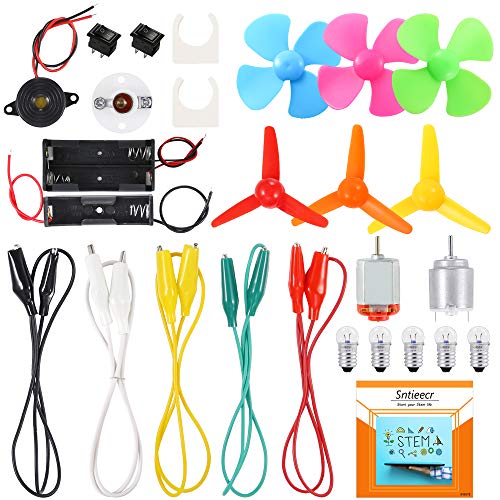
This circuit kit centers on electrical experimentation and circuit-building with a comprehensive package. It includes motor components, switches, bulbs, a speaker, and an assortment of accessories to support multiple science projects. The kit is described as Montessori-friendly and suitable for classroom and home use, encouraging kids to turn ideas into working prototypes while learning foundational concepts in circuits and engineering.
Sntieecr 276PCS DC Motor Kit

The 276-piece DC motor kit provides a robust assortment of motors, gears, battery holders, propellers, and LED lights. The high-torque electric motor (approximately 16500 RPM on a 3V supply) enables rapid prototyping of science projects and DIY STEM toys. The variety of propellers and gears supports experiments in motion, propulsion, and mechanism design, making it a versatile option for curious builders.
Sntieecr Electric Circuit Motor Kit With Solar Panel

This kit combines electrical circuits with a solar panel to demonstrate renewable energy use in motion projects. Included are multiple motors, propellers, LEDs, switches, and a solar module to spark interest in energy science and engineering. The solar-powered aspect provides a practical context for kids to explore how light translates into motion and how circuits respond to changing energy inputs.
Klever Kits 36-in-1 Motor Robotic Kit
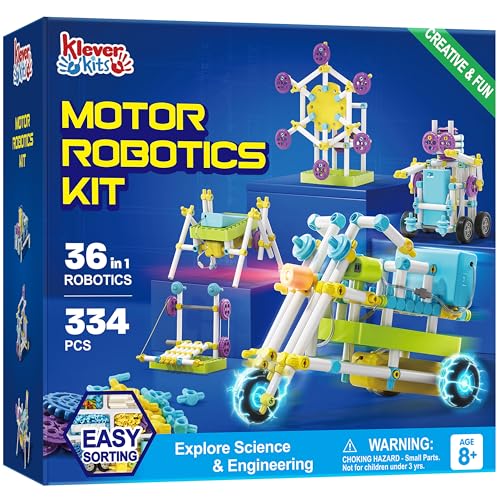
This 36-in-1 motor robotics kit invites kids to explore a wide range of builds, from walking machines to racing cars. With a clear parts tray for organization, it supports progressive learning and problem-solving as children assemble increasingly complex models. The kit encourages experimentation, planning, and iterative design, aligning with core STEM skills.
Buying Guide
When selecting motor kits for kids, consider learning goals, age range, and safety. Look for clear, age-appropriate instructions and families’ preferred project types—engineering simulations, robot building, or circuit experiments. A robust kit should include multiple components such as motors, gears, wires, and batteries, plus guidance for expanding projects beyond the starter set. Consider any solar or renewable energy options to broaden sustainability lessons.
Pricing, availability, and replacement parts matter for long-term use. Favor kits with organized storage, easy-to-identify parts, and accessible customer support. Assess the complexity level: a modular kit that scales from simple to more advanced builds helps children progress without outgrowing the set. Finally, align the kit with school curricula or maker activities to maximize educational value and ensure a consistent learning trajectory.
From a safety standpoint, verify that parts are sized appropriately for the target age, with no small components that pose choking hazards for younger children. Seek components with rounded edges and non-toxic materials. If purchasing for a classroom, ensure the kit supports collaborative projects and includes teacher-friendly guides or lesson ideas.
In summary, the five featured kits provide a spectrum of experiences—from a realistic, engine-centric model to modular, multi-build robotics and circuit experiments. This variety supports different interests, whether a child loves mechanical movement, electronics, or creative problem solving, and offers a practical, hands-on path to mastering fundamental STEM concepts.