Movement cards offer quick, structured ways to shift energy, regulate emotions, and support focus in classroom settings. This guide reviews five highly relevant options designed for American classrooms, covering kinesthetic activities, mindfulness prompts, and inclusive movement ideas. Each selection emphasizes ease of use, portability, and evidence-based benefits for self-regulation, attention, and social-emotional learning.
| Product | Why It Shines For Movement Breaks | Age/Setting |
|---|---|---|
| Harkla Sensory Activity Cards | 60 therapist-designed moves; dual-sided alerts and calms cards for quick self-regulation | Elementary to middle school |
| Covelico Exercise Cards | 20 kid-friendly exercises; flexible solo or group play; builds gross motor skills | Elementary |
| Roylco Super Hero Exercise Cards | Three levels of movement challenges; imaginative themes to engage learners | K-6 |
| Chair Yoga Poses Cards | 40 chair yoga poses; ideal for brain breaks, transitions, and test prep | All ages; adaptable |
| Learning Resources Alpha Pose Letter Yoga | Alphabet-themed poses; built-in storage; supports SEL through movement | K-1 to early elementary |
Harkla Sensory Activity Cards

- 30 Cards, 60 Activities: Each double-sided card features one alerting (orange) and one calming (blue) activity.
- Curated Sensory Break: Quick, therapist-designed activities to aid self-regulation in minutes.
- Supports Focus, Transitions & Emotional Regulation: Targeted movement and sensory input for smoother routines and behavior.
70 Conversation Cards

- 70 Cards in 4 categories: Emotions, Inquiry, Mindfulness, Expression for structured conversations.
- Encourages authentic dialogue and social communication in classrooms and families.
- Compact size (4.7” x 3.2”) for easy transport and quick use.
Covelico Exercise Cards
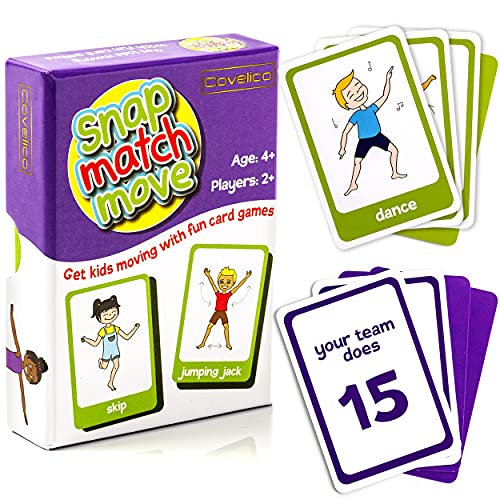
- 20 unique kid-friendly exercises; can be used indoors or outdoors as gym or classroom activities.
- Flexible play: solo moves or group games like Snap, Memory, and Go Fish.
- Supports fitness, balance, strength, and gross motor skills through varied activities.
Chair Yoga Poses Cards

- 40 chair yoga poses suitable for movement breaks, transitions, and calm-down routines.
- Designed to engage a wide range of ages; supports focus and emotional regulation.
- Versatile for classroom therapy, occupational therapy, and SEL activities.
Learning Resources Alpha Pose Letter Yoga

- Alphabet-themed yoga poses with a movement-focused educational twist.
- Includes a storage tin for easy cleanup and organized use.
- Supports early literacy alongside social-emotional learning through movement.
Buying Guide
Choosing movement cards for a classroom involves balancing engagement, accessibility, and instructional goals. Consider these factors to match the right tools to your students:
- Age and ability: Select cards with clear visuals and adaptable difficulty. A mix of high- and low-complexity moves helps mixed-ability classrooms.
- Movement goals: If the aim is to reduce restlessness, prioritize alerting and energizing activities. For regulation, choose calming and self-soothing options.
- Format and storage: Card decks with double-sided designs save space; built-in storage keeps materials organized and accessible.
- Durability and cleaning: Look for sturdy cards that withstand classroom wear and are easy to wipe or sanitize between uses.
- Integration with SEL: Choose sets that include conversations or prompts to connect movement with social-emotional learning outcomes.
- Portability and setup: Lightweight, compact options are ideal for rotating stations, tutoring sessions, or outdoor activities.
- Teacher and student engagement: Cards with themes, stories, or character roles (like superheroes) can boost motivation and participation.
- Budget and scalability: A core set of versatile cards can support multiple activities across grades; consider expanding with additional packs as needed.
Across settings, movement cards can complement literacy, math, or SEL curricula by providing structured movement breaks, transition routines, and reflective prompts. When implementing, consider a short pilot across a two-week period to observe engagement, behavior changes, and ease of use. Documentation of outcomes helps justify continued use and informs adjustments to fit your classroom rhythm.