Finding the right piano for a child starts with safety, durability, and engaging features. The best beginner pianos for little hands combine sturdy construction with perks like color-coded keys, learning modes, and playful sounds that encourage early musical exploration. Below is a curated guide to five kid-friendly keyboards and toy pianos that balance age-appropriate design with educational value. Each option offers different learning aids, from demo tunes to record-and-playback capabilities, so parents can pick the right match for their child’s development stage and interests.
| Product | Brand |
|---|---|
| Keyboard Piano for Kids, Purple | BIGFUN |
| Keyboard Piano for Kids, Blue | BIGFUN |
| B. Toys – Wooden Toy Piano | B. toys |
| 37 Key Upgrade Piano Keyboard | M SANMERSEN |
| Best Choice Products Kids Classic Wooden 30-Key Mini Grand | Best Choice Products |
BIGFUN 37 Keys Kids Keyboard (Purple)

The BIGFUN 37-key keyboard is designed for preschoolers and early elementary learners. It features 37 keys and a range of modes to support skill-building, including multiple tones, rhythms, and a basic ensemble option. The instrument is certified for safety and uses a USB-powered setup, with a DC 5V-1A power supply as standard. This model emphasizes portability and simple operation, making it a practical first keyboard for children ages 3 to 7. The built-in record playback function allows kids to hear their performances, supporting basic melody recognition and memory practice. The dual speakers and multiple percussion options help sustain engagement during early music sessions.
BIGFUN 37 Keys Kids Keyboard (Blue)

This blue version mirrors the purple model in features and design, offering 37 keys and the same multifunction capabilities. Kids enjoy the same play options: piano function, double speakers, ensemble mode, audio cable jack, keyboard drum, and record playback. The USB power arrangement and safety certification are identical, ensuring consistent reliability across color variants. The blue finish is a popular choice for children who prefer a vivid, engaging look while learning, making it suitable for shared playspaces or individual practice at home or school environments.
B. Toys Wooden Toy Piano for Toddlers

This wooden toy piano from B. toys introduces children to a classic grand-piano aesthetic with color-coded keys to aid note recognition. It features 25 keys spanning two octaves and a dedicated Music button for playing classical tunes. The included illustrated songbook helps caregivers guide early literacy and music connections, pairing visual cues with keyboard exploration. The compact, durable wooden design is ideal for toddlers and preschoolers, encouraging auditory discrimination and fine motor skill development in a safe, age-appropriate form factor.
37 Key Upgrade Piano Keyboard for Kids

Designed for beginners, this 37-key keyboard emphasizes a realistic feel with wood-grain key styling that helps kids sense finger position and movement. It includes a Record & Playback feature that lets children capture and replay their performances, supporting iterative practice and self-assessment. Built for ages 3 to 8, it offers 8 rhythms, 8 tones, several demos, 4 percussion sounds, and adjustable volume and tempo. The dual-speaker system enhances sound quality, which helps young learners perceive harmony and melody more clearly. The ABS construction ensures durability for active play.
Best Choice Products Kids Classic Wooden 30-Key Mini Grand
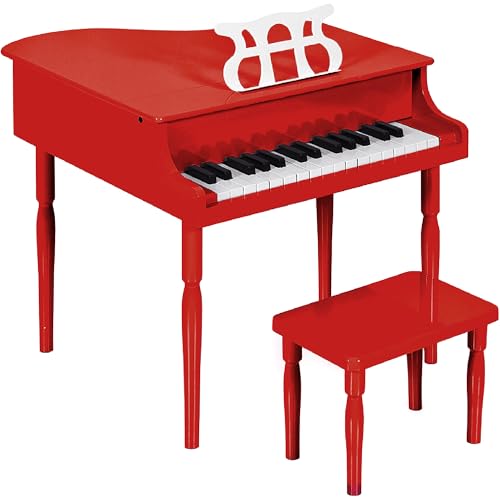
This mini grand piano blends traditional aesthetics with kid-friendly practicality. It features 30 keys, a hinged lid, a bench, foldable music stand, and a song book with note stickers, all finished in a bright enamel red. The design supports early keyboard exploration while introducing basic music notation and fingering concepts. The instrument’s small footprint makes it suitable for limited spaces, and the lid opening enhances role-playing opportunities, helping children simulate real piano performances while building concentration and coordination.
Buying Guide: Key Purchase Considerations
Choosing the right piano for a young child involves evaluating several factors that influence learning outcomes and long-term use. Here are essential considerations and how they compare across common options:
- Age suitability and safety: Look for non-toxic materials, rounded edges, and certified safety marks. Toy-grade keyboards like the 25-37 key models fit toddlers and early preschoolers, while more durable wooden pianos are better for cautious, longer-term use.
- Key feel and size: For small hands, lighter action and smaller key spacing reduce fatigue and encourage correct finger placement. Some models mimic real pianos with wood-grain keys, which can aid later transition to full-size instruments.
- Learning features: Record-and-playback, demo songs, and built-in rhythms promote active practice and listening skills. If your child is just starting, built-in melodies and color-coded notes can accelerate recognition of scales and patterns.
- Sound quality and volume control: Dual speakers and multiple tones enhance engagement but ensure there is a convenient volume knob or mute option to protect developing hearing.
- Power source and portability: USB-powered designs are straightforward for home use, while battery-powered options offer flexibility for travel or classrooms without easy power access.
- Durability and materials: Plastic housings are light and affordable but may wear over time; wooden constructions feel sturdier and often appeal to kids who enjoy a “real instrument” aesthetic.
- Expandability and progression: Some kits include songbooks or teacher-friendly features that support progression to more complex pieces, making them suitable for ongoing development.
- Price vs. value: For very young children, affordable options with engaging features can be ideal. As skills grow, transitioning to a model with more keys or realistic action may be worth considering.
- Safety in shared spaces: If the piano will be used by multiple children, choose models with stable bases and protective features to prevent tipping or pinched fingers during group play.
In summary, the right choice balances child-specific design with foundational learning tools. Toy pianos and beginner keyboards are excellent for introducing rhythm, melody, and hand-eye coordination, while models with playback and multi-tone options can support early music theory exploration. Consider the child’s current interest, space, and whether you want a device that can grow with them into more advanced instrument play.