Choosing the right push toy can support early walking confidence while building cognitive skills. The following hand-picked options offer age-appropriate activities, multi-stage learning, and engaging features to keep little movers motivated. This guide highlights five top picks with practical details to help parents compare styles, durability, and developmental benefits.
| Product | Brand | Key Benefit |
|---|---|---|
| Fisher-Price Baby Push Toy 4-in-1 Snack Cart Walker | Fisher-Price | Multi-stage play from sitting to walking with language options |
| Fisher-Price Baby Push Toy 2-Sided Panda Walker | Fisher-Price | Steady Speed wheels for beginners, 100+ songs and lines |
| HYES 5 in 1 Baby Push Walker | HYES | Five modes and adjustable speed for growing toddlers |
| SYNCFUN Baby Learning Walker | SYNCFUN | Two-speed learner, removable play panel for varied play |
| Pithfor Wooden Baby Walker | Pithfor | Montessori-inspired eight-activity toy set in a wooden frame |
Fisher-Price Baby Push Toy 4-in-1 Snack Cart Walker
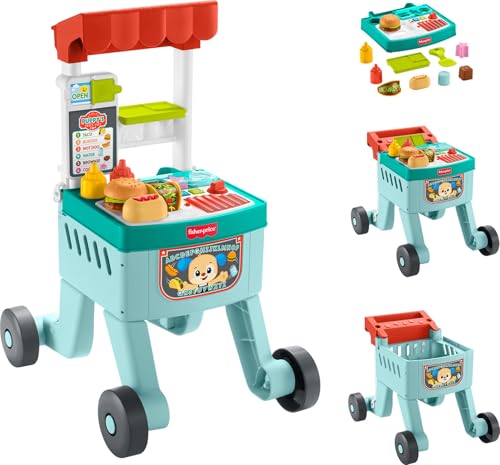
The 4-in-1 Snack Cart Walker gives babies multiple play modes that grow with them—from sitting to walking to pretend play. With three Smart Stages, it introduces opposites, numbers, shapes, the alphabet, and more. A globe button lets toddlers switch between English, Spanish, French, and Brazilian Portuguese, expanding early language exposure. The cart features more than 135 songs, sounds, and lights, plus interactive elements like a grill dial and cooler door. This versatility supports gross motor development and early cognitive learning in an engaging, motion-friendly toy.
Key features drawn from the product listing include: 4 ways to play, multilingual language options, extensive songs and phrases, and interactive push-to-activate components. Parents should expect a sturdy push toy that evolves with a child’s walking milestones, making it a lasting addition to early learning routines.
Fisher-Price Baby Push Toy 2-Sided Steady Speed Panda Walker

This Panda Walker features a two-sided design and Steady Speed wheels that help maintain a comfortable pace for new walkers. It supports babies from sitting to pulling up and walking, with over 100 songs, sounds, and phrases across 3 Smart Stages to teach alphabet basics, counting, and opposites. The panda theme adds a friendly, engaging aesthetic, encouraging kids to push and explore as they gain balance and confidence on their feet.
In detail, the product offers a side-rolling exploration path, dynamic learning content, and adjustable pacing to accommodate different walking stages. It’s suitable for families seeking a friendly animal character with a developmental learning framework and durable construction for early mobility play.
HYES 5 in 1 Baby Push Walker

The HYES push walker delivers a comprehensive 5-in-1 design, including baby walker mode, scooter mode, motorbike mode, a baby entertainment table, and an activity center. This versatility helps babies learn balance, leg strength, and coordination while providing varied play experiences. An adjustable speed feature uses a non-slip, shock-absorbing rubber ring to tailor friction with the floor. The removable play panel includes a basketball frame, shape blocks, colorful rollers, a piano keyboard, and more for early color and shape recognition.
This model emphasizes adaptability for different stages of walking, with a focus on safe speed control and a diverse set of activities to stimulate sensory and fine motor development. Parents can expect a robust, multi-functional toy that remains engaging as a child transitions from floor play to independent walking.
SYNCFUN Baby Learning Walker

The SYNCFUN 2-in-1 Learning Walker supports standing and walking with adjustable speed settings, featuring two speeds to suit 6- to 12-month-olds and older infants. A detachable play panel offers flexible use—on the floor, attached to a crib, or on the walker itself—providing varied play contexts. The toy includes light-up buttons, sounds, and a seven-mode piano panel, delivering engaging audiovisual stimulation. ABC buttons, rolling wheels, and interactive phone sounds round out the experience for curious kids.
From a developmental standpoint, the walker targets gross motor skills, language exposure, and cause-and-effect learning through interactive features. Its modular design supports a longer lifespan as a child grows, making it a practical option for parents prioritizing adaptable play spaces.
Pithfor Wooden Baby Walker

The Pithfor Wooden Baby Walker combines Montessori-inspired design with a sturdy, all-wooden frame and eight activity toys, including a mirror, rolling drum, bead maze, xylophone, spinning gears, shape sorter, drum, and zig-zag track. This all-in-one setup supports first-step learning, percussion-based exploration, hand-eye coordination, and cognitive development through open-ended play. The wooden construction offers a classic aesthetic with a focus on durability and safe, stable movement.
With eight integrated activities, caregivers can encourage exploration across multiple sensory modalities, from sight and sound to touch and balance. This Walker emphasizes a more traditional, tactile play experience while still supporting modern learning objectives like shape recognition and early problem-solving skills.
Buying Guide: How to Choose the Right Push Walker
- Age and growth trajectory: Look for multi-stage options that adapt as your child progresses from rolling to standing to walking. Consider whether the toy includes sit-and-play modes as well as stand-and-push modes.
- Physical safety and stability: Prioritize wide bases, low centers of gravity, non-slip wheels, and sturdy construction. Adjustable speed controls help tailor activity to different walking paces.
- Learning features: Note the types of cognitive stimuli offered—numbers, letters, shapes, languages, music, and interactive panels. A mix of auditory and visual features supports diverse learning preferences.
- Durability and materials: Wooden walkers offer durability and a traditional feel, while plastic models may provide brighter colors and larger feature sets. Consider cleaning ease and toy longevity.
- Portability and storage: Some designs break down for storage, while others are fixed. If space is limited, opt for compact models or those with foldable or detachable panels.
- Language and cultural exposure: For bilingual households or early language exposure, consider walkers with multilingual options or clear language prompts in multiple languages.
- Age suitability and supervision: Verify age recommendations and always supervise during use, especially for babies who are still mastering balance and coordination.