Exploring science early helps kids build critical thinking, problem-solving, and a love of discovery. This guide highlights five engaging, child-friendly tools that support hands-on learning from elementary ages through middle school. Each pick includes practical activities, clear instructions, and age-appropriate concepts to foster safe, fun experimentation at home or in the classroom.
| Product | Focus | Age Range |
|---|---|---|
| National Geographic Chemistry Set | Hands-on chemistry with 50 experiments | 4+ years |
| The Everything Kids’ Science Experiments Book | Broad science activities and concepts | 8+ years |
| Science Posters For Classroom | Foundational science concepts at a glance | All ages |
| Pocket Scientist High School Edition | Mini multitool with scientific references | Teens |
| EUDAX School Physics Labs Kit | Electricity and magnetism experiments | 12+ years |
National Geographic Chemistry Set For Young Scientists

A complete chemistry lab designed for budding scientists aged four and up. This kit includes 50 hands-on experiments and 20+ lab tools, enabling children to explore common household items like baking soda and vinegar while learning basic chemical concepts. Illustrated, step-by-step instructions help young researchers conduct experiments with clear outcomes, fostering independence and safety awareness in early science exploration.
Everything Kids’ Science Experiments Book
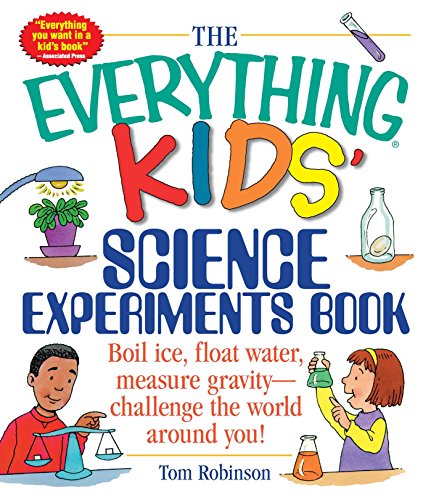
This comprehensive compilation offers a variety of science activities designed to challenge curious minds. Readers encounter engaging experiments that explore physics, chemistry, biology, and earth science, with kid-friendly explanations and tasks. It serves as a practical companion for family science nights or classroom enrichment, encouraging reading, following instructions, and drawing connections between experiments and everyday phenomena.
Science Posters For Classroom Decor

This 12-piece poster set brings foundational science concepts into the classroom with large, readable text and bold visuals. Topics include the scientific method, matter, the solar system, and Earth processes. Posters are designed to support quick reference, reinforce classroom lessons, and create a visually engaging science environment that helps students grasp complex ideas at a glance.
Pocket Scientist High School Edition

This compact, stainless-steel multitool offers a ruler, protractor, and compass with laser-etched references. While optimized for teens, it serves as a practical reference in any STEM setting, helping students sketch experiments, measure angles, and record precise data during activities or fieldwork. Its durable construction makes it a long-lasting classroom and home tool for science projects.
Pocket Scientist High School Edition – Expanding Toolkit

The same Genius Lab Gear line continues with a high school edition that adds geometry-focused tools and constants, ideal for AP-level work or advanced science demonstrations. It supports higher-level calculations, data sketching, and precise measurements needed for more sophisticated experiments and classwork.
EUDAX School Physics Labs Basic Electricity Kit
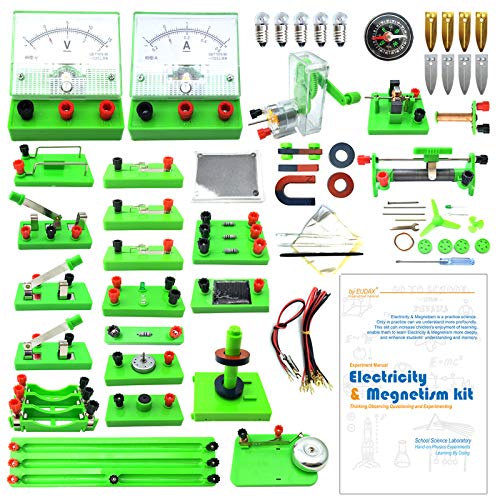
Designed for high school-level understanding of electricity and magnetism, this kit provides a robust set of components and a color-page manual. It enables students to build simple electrical and magnetic models, promoting hands-on experimentation, critical thinking, and foundational physics concepts. Batteries are required for operation but not included.
Buying Guide
- Age and learning goals: Match product complexity with the student’s age and science interests. For younger children, prioritize kits with clear instructions and safe materials. For teens, seek kits that introduce more challenging concepts and data collection.
- Safety and supervision: Look for age-appropriate materials and clearly labeled safety guidelines. Ensure tools and chemicals (even household items) are safe for home use and that supervision is available when needed.
- Hands-on value and concept coverage: Favor kits that cover a range of experiments or core topics (chemistry, physics, biology) to build a broad scientific foundation and keep engagement high.
- Instruction quality: Clear, illustrated, and step-by-step guides reduce frustration and support independent exploration while improving learning outcomes.
- Durability and reusability: Durable tools, reusable components, and quality posters maximize long-term value for classrooms or repeated home use.
- Expandability and compatibility: Consider whether the kit scales with growing skills and whether additional activities or related tools are available to extend learning.
- Resource balance: Some kits offer physical materials, while others emphasize reference items like posters or calculators. A mix can support both hands-on experiments and quick concept reviews.
- Storage and organization: Kits with organized containers or labeled components help manage classroom or home spaces and support easy cleanup after activities.
- Budget and accessibility: Compare the total number of activities, instructional quality, and durability to determine value. Look for options that provide ongoing learning opportunities without frequent repurchases.