Finding the right sensory toys for a 5-year-old with autism can help improve focus, fine motor skills, and emotional regulation. The following selections emphasize safe materials, engaging textures, and multi-sensory features that support attention and calm play. Each pick highlights practical benefits for classrooms, therapy sessions, and home use, with clear, evidence-backed design elements.
Summary table of selected products:
| Product | Brand | Key Sensory Benefit | Notes |
|---|---|---|---|
| LearnToy Busy Board | LearnToy | Tactile exploration, fine motor skills, concentration | Montessori-inspired, portable for travel |
| Scientoy Fidget Toy Set | Scientoy | Varied textures and motion for focus and anxiety relief | Pack of 35, safe ABS materials |
| ArtCreativity Light Up Sensory Car | ArtCreativity | Visual stimulation, cause-and-effect learning | Music, lights, bump-and-go action |
| Anlabay Two-in-One Pop Blocks | Anlabay | Pop-sensory feedback, color and shape recognition | Bubble popping with building elements |
| Montessori Wooden Sensory Puzzles | TMGOT | Fine motor control, problem solving, color matching | Wooden, magnetic pieces, card-based challenges |
LearnToy Busy Board: Montessori-Inspired Sensory Play
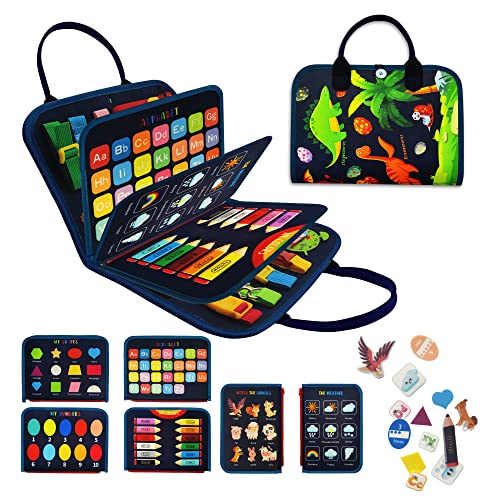
The LearnToy Busy Board emphasizes Montessori-style activities designed to improve concentration and fine motor skills. This portable board features a flexible zipper connection on each page, encouraging kid-led exploration while supporting collaborative play and communication. Its design makes it suitable for travel, helping children practice problem solving and self-directed activity in cars, airplanes, or quiet rooms. The broad range of textures and fastenings keeps engagement high without overwhelming a child with sensory input.
Scientoy Fidget Toy Set: 35 Pcs For Focus And Calm
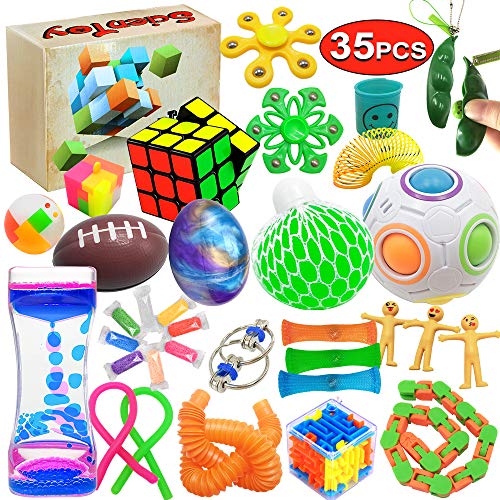
The Scientoy fidget assortment provides a broad sensory toolkit, including multiple textures, shapes, and interactive elements. The set aims to support children with autism or anxiety by offering tactile engagement, smooth motion, and visual variety. Built from safe ABS materials and designed for classroom or home use, these toys encourage focused play, aid in stress reduction, and provide a structured outlet for self-regulation. The included pieces promote counting, color recognition, and fine motor practice through diverse play modes.
ArtCreativity Light Up Sensory Car Toy

This transparent sensory car combines lights, music, and a bump-and-go mechanism to create a dynamic, visually engaging play experience. Colorful moving gears offer a tactile and visual focus point, while the three-mode switch allows caregivers to tailor the play experience to the child’s mood. The combination of motion, light, and sound can support cognitive associations, cause-and-effect learning, and sustained attention in short play sessions.
Anlabay Two-in-One Pop Blocks And Puzzles

The Anlabay set blends bubble popping with 48-piece block puzzles to create a dual-mode sensory toy. This combination supports color and shape recognition, color matching, and logical thinking while offering a calming popping sensation. The block-puzzle format can be used solo or with siblings, promoting cooperative play and incremental problem solving, making it suitable for children with autism who benefit from structured, repetitive tasks.
TMGOT Montessori Wooden Sensory Puzzles

Designed for 4–7 year olds, this wooden sensory puzzle set emphasizes color recognition, hand-eye coordination, and fine motor development. The puzzle cards provide guided challenges, while the magnetic components encourage precise manipulation and spatial reasoning. This toy supports independent thinking and problem-solving, offering a tactile, durable alternative to plastic playthings and serving as a long-lasting addition to any sensory toolkit.
Buying Guide: Key Considerations For Choosing Sensory Toys
When selecting sensory toys for a 5-year-old with autism, consider the child’s specific needs, sensory profile, and play context. Look for items that balance calm-inducing textures with engaging stimuli to avoid overstimulation. Durability and safety are critical, especially for younger siblings who may share toys. Accessibility, cleanability, and the ability to adapt difficulty across developmental stages help ensure long-term value.
- Texture variety: A mix of soft, rigid, and squeezable textures can address tactile defensiveness or seeking behaviors and encourage exploration.
- Motor skill development: Toys that require finger isolation, pinching, twisting, and grabbing support fine motor growth and handwriting readiness.
- Instant feedback: Mechanisms that show cause-and-effect, like lights or sounds, can boost engagement and reinforce learning through repetition.
- Portability and setup: Travel-friendly and simple-to-use toys help maintain routines and reduce transition anxiety in different environments.
- Safety standards: Choose items made from non-toxic materials and compliant with child-safety standards to minimize risks during play.
- Group vs individual play: Some toys are ideal for solo exploration, others for cooperative activities. A mix helps support social skills and communication.
Choosing a balanced mix of toys that emphasize sensory regulation, cognitive challenges, and social interaction can support a holistic development approach. Consider rotating toys to maintain novelty while preserving the child’s sense of control over play choices. Always monitor a child’s reactions to different stimuli and adjust the assortment as needed to optimize engagement and comfort.
In addition to the options above, pairing sensory toys with guided activities such as imitation games, simple instructions, and visual schedules can enhance learning outcomes. Caregivers and educators may experiment with pairing a busy-board activity with a brief storytelling prompt or a matching exercise to reinforce cognitive and language skills during playtime.