Parents seeking engaging toys that blend pretend food shopping with developmental fun will find shopping cart-themed toys ideal for toddlers. This guide highlights five standout products that promote imagination, motor skills, and early social play. Each item offers sturdy construction, kid-friendly features, and easy maneuverability for indoor use. Read on to compare options and discover practical buying considerations for growing little shoppers.
Summary of selected products
| Product | Brand | Key Features | Ideal For |
|---|---|---|---|
| Radio Flyer Toddler Shopping Cart Walker | Radio Flyer | Interactive lights and sounds; shape-sortable play foods; push walker stability | Young toddlers learning walking and pretend play |
| Step2 Little Helper’s Shopping Cart | Step2 | Easy-grip handles; smooth wheels; compact for small spaces | Early walkers and role-play enthusiasts |
| Jovow 102pcs Shopping Cart Set | Jovow | 60+ fruits/vegs, 16 fast-food toys; shopping cart and bag | Imaginative play and language development |
| Battat Play Circle Shopping Cart | Battat | Realistic details; adjustable handle; durable wheels | Durable, kid-friendly grocery play |
| Fisher-Price 4-in-1 Snack Cart Walker | Fisher-Price | Four play modes; multilingual; over 135 songs and sounds | Growing with baby from infancy to walking |
Radio Flyer Toddler Shopping Cart Walker

The Radio Flyer shopping cart walker combines a classic push cart with age-appropriate interactive features. It includes a scanner that triggers music, lights, and sounds when play foods are scanned, enhancing pretend grocery trips. Adjustable volume keeps playtime comfortable, and batteries are included for immediate use. This toy is well-suited for indoor use on hardwood, carpet, or playroom floors. The cart’s design supports early walking with Safety Resist Clickers that assist balance and confidence as little ones push the cart around the house.
Educational value comes from the included play foods with shape-cutouts, promoting problem solving and shape recognition. This makes it a strong option for stimulating both motor and cognitive development in toddlers, and it can double as a calm learning activity or a lively pretend shopping trip. The sturdy construction ensures longevity even with enthusiastic use by curious toddlers.
Step2 Little Helper’s Shopping Cart

Step2’s Little Helper’s Shopping Cart is designed for early walkers and budding shoppers. Its easy-grip handles and smooth wheels are gentle on floors and won’t leave scratches, making it ideal for homes with various flooring. The cart is lightweight and compact, helping parents store it easily in small spaces. While the product description notes that food is not included, the cart is built to encourage role play and social interaction as children stock up on pretend groceries and practice turn-taking during playtime.
With a practical 21.5″ height and 18.5″ depth, this cart is sized for toddlers learning balance and mobility. The simple assembly and durable plastic construction support long-term use, and the design emphasizes real-world mimicry, which can help children translate play into everyday routines and language development during pretend shopping trips.
Jovow 102pcs Shopping Cart Set

This Jovow kit offers a deluxe pretend shopping experience with 60 fruit and vegetable pieces and 16 fast-food toys, all included with the shopping cart and bag. The set is designed to promote imaginative play, language development, and social interaction by encouraging kids to describe foods, practice naming items, and engage in shared play with siblings or friends. Simple assembly adds to the fun, and the combination of assorted items provides varied play scenarios—from grocery store roles to kitchen pretend play—supporting broad cognitive and vocabulary growth in children aged 3 and up.
The bundled cart encourages organization and responsible play as kids practice sorting and sorting-related language while walking and pushing. The realistic accessories help expand conversations around food, nutrition, and everyday routines, contributing to a well-rounded early learning experience.
Battat Play Circle Shopping Cart

The Battat Play Circle Shopping Cart focuses on realistic details that elevate pretend grocery play. It features an adjustable handle, allowing adults to adapt the height as children grow, and durable plastic wheels that glide smoothly on carpets or hard floors without leaving scratches. Realistic touches such as “nutrition information” and lids that open add interactive elements that encourage kids to explore healthy eating concepts and portion sizes in a playful context. This model supports both independent play and cooperative role-play scenarios with peers or caregivers.
Crafted for long-lasting fun, the cart’s sturdy construction can withstand energetic play. The realistic visuals help children connect play with real-world shopping experiences, making mealtime and grocery trips more relatable and enjoyable. As a result, Battat’s cart is a strong candidate for families seeking durable, kid-centered shopping toys with educational potential.
Fisher-Price 4-in-1 Snack Cart Walker
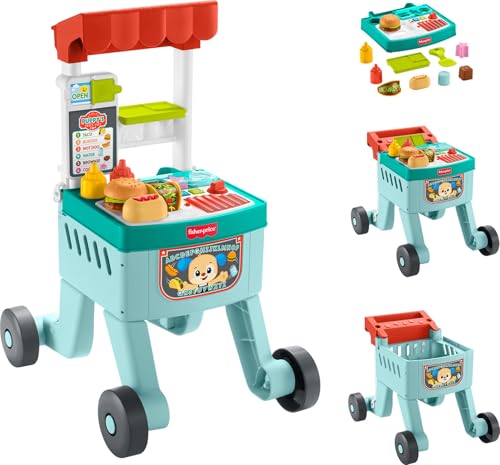
The Fisher-Price 4-in-1 Snack Cart Walker grows with babies from sitting to walking and pretend play. It offers three Smart Stages learning levels that introduce opposites, numbers, shapes, the alphabet, and more. The globe language selector adds multilingual appeal, supporting early language exposure for diverse households. The cart features 135+ songs, sounds, and phrases, along with lights that engage visual learners. Kids can push the cart, press buttons, turn a grill dial, or open and close a cooler door to activate different activities, offering varied play experiences as children develop motor skills and cognitive abilities.
Buying Guide: Key Purchase Considerations
- Age and maturity alignment: Choose a cart that matches your child’s walking stage and attention span. Some carts support early walkers, while others target older toddlers with more advanced pretend play.
- Durability and materials: Look for sturdy plastic or composite materials with safe, smooth edges. Wheels should roll easily without scuffing floors. A stable base reduces tipping risk during play.
- Interactive features: Consider whether a cart includes lights, sounds, or language prompts. Multilingual options can be beneficial for households with bilingual caregivers or for exposure to new languages.
- Storage and portability: Compact designs are useful for small spaces. Detachable parts or toy food items should be easy to clean and store between play sessions.
- Educational value: Pretend food sets, sorting activities, and role-play scenarios can aid vocabulary development, counting, color recognition, and social skills such as sharing and cooperation.
- Safety certifications and age guidance: Verify age recommendations and check for choking hazards with small pieces. Ensure pieces are sized appropriately for toddlers and meet safety standards.
- Maintenance and replacement parts: Some sets include many tiny pieces. Confirm availability of replacement items or sets that allow easy replenishment of missing items.
- Ease of assembly: Some products require additional assembly. Look for tools-free assembly or straightforward instructions to minimize setup time.
Across these options, parents can balance realism with safety and developmental value. A basket of pretend foods paired with a sturdy cart fosters imaginative play while nurturing motor skills and language development. For households prioritizing portability and compact storage, select a lighter, smaller cart with fewer accessories. Families seeking richer storytelling and vocabulary growth may prefer deluxe sets with multiple food items and interactive features. Consider your living space, child’s interests, and the long-term value of the toy when making a choice.