Discover engaging, hands-on steam and engine kits that spark curiosity in young learners and adults alike. This guide highlights five standout options that blend education with interactive play, helping kids understand early engineering, thermodynamics, and mechanical principles through real-world models. Each pick features practical building steps, visual components, and working mechanisms to inspire experimentation and STEM confidence.
| Product | Brand | Key Feature |
|---|---|---|
| Playz V8 Combustion Engine Model Kit | Playz | Working miniature V8 engine with interactive cables and sounds |
| National Geographic 4-Cylinder Engine Building Kit | Blue Marble | 175+ parts, visible moving pistons and gears |
| ConGamefun Steam Engine Kit | ConGamefun | Vertical steam engine with spherical boiler and safety features |
| MechPuConToy Steam Engine Model SE-01 | MechPuConToy | Full metal beam engine with boiler and exquisite craftsmanship |
| DjuiinoStar Stirling Engine DLTD-303 | DjuiinoStar | Low-temperature Stirling engine powered by heat differences |
Playz V8 Combustion Engine Model Kit That Runs

Engage young minds with a realistic mini V8 engine that actually runs. The kit is designed for both adults and kids over 12, offering a tangible way to explore internal combustion principles while assembling crankshafts, pulleys, belts, and exhaust valves. It features visible pistons and interactive cables, delivering authentic engine action and audible feedback when powered by three AA batteries (not included). This hands-on project supports STEM learning through practical, visual demonstration of engine mechanics.
National Geographic 4-Cylinder Engine Building Kit
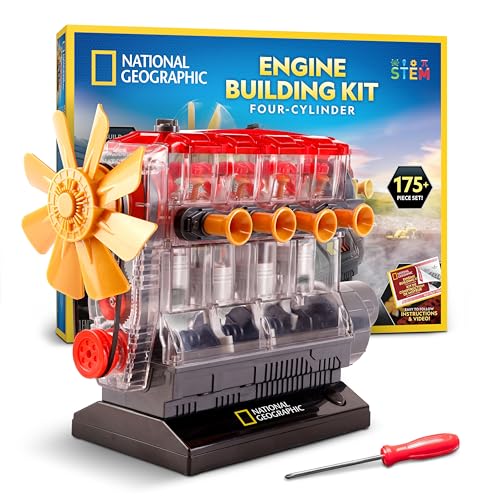
This 4-cylinder engine model offers a comprehensive build with 175+ parts, including tools and a Learning Guide. When assembled and powered by batteries, the model demonstrates pistons, valves, and gears in motion, providing a clear, working representation of how a real engine operates. It’s an ideal STEM activity that combines practical construction with an emphasis on understanding the principles behind engine timing and mechanical synchronization.
ConGamefun Steam Engine Kit
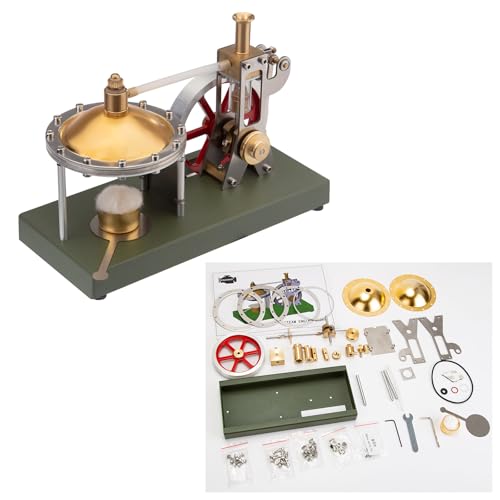
Explore a retro-inspired steam engine project with nearly 40 parts and clear graphical instructions. The vertical configuration displays a transparent cylinder for easy observation of piston movement, complemented by a large flywheel for smooth operation and realistic jet sounds. Safety features include a spherical boiler, a mini safety valve, splash-proof exhaust, and a brass alcohol lamp, making it a compelling, educational DIY experience that emphasizes safety while showcasing steam power principles.
MechPuConToy Steam Engine Model SE-01
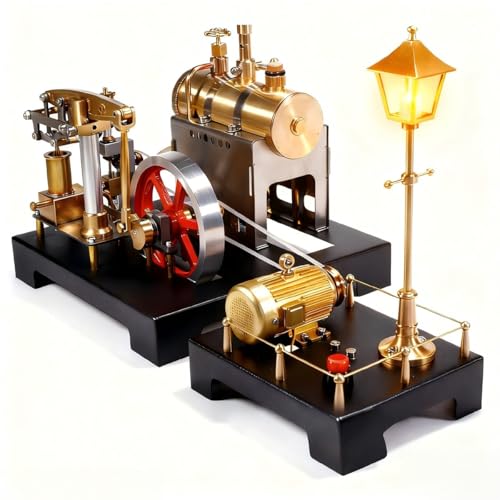
This full metal beam engine model emphasizes craftsmanship and durability. With a mini steam generator and a visually appealing boiler kit, it offers an engaging exploration of early engineering concepts. The design focuses on precise assembly and high-quality materials to ensure longevity, providing a robust hands-on learning experience for both young enthusiasts and older hobbyists interested in steam-powered mechanics.
DjuiinoStar Stirling Engine DLTD-303

The Stirling engine kit demonstrates an external combustion model driven by heat differences, commonly used as an introductory example for thermodynamics. The design is compact and visually appealing, making it a popular choice for classrooms and desks alike. It’s easy to start—place it on a mug of hot water and observe the motion as heat causes expansion and contraction within the engine—an accessible entry point to energy conversion concepts.
Buying Guide: Key Purchase Considerations And Comparisons
When selecting a steam or engine-related kit for kids, consider the following to ensure an educational, safe, and engaging experience:
- Educational value: Look for kits that clearly demonstrate core concepts like pistons, gears, thermodynamics, or energy conversion. A robust learning guide or illustrated instructions enhance understanding.
- Age appropriateness: Check the recommended age to ensure safe handling and an appropriate complexity level for target learners, especially younger kids or reluctant learners.
- Build quality and materials: Metal components tend to offer durability and a premium feel, while plastic parts may be lighter and more affordable. Consider long-term value and ease of assembly.
- Safety features: Features such as covered boilers, safety valves, and splash-proof components are important for school or home use, especially with younger participants.
- Power and operation: Some models run on batteries; others require heat sources or external power. Determine which approach aligns with your setting and educational goals.
- Hands-on engagement: Kits that offer visible operation, moving parts, and audible feedback help sustain interest and reinforce learning through observation and experiment.
- Storage and maintenance: Consider space requirements for assembly and storage, plus the ease of cleaning or replacing parts if necessary.
- Cross-disciplinary potential: Some kits blend engineering with art or history, broadening the learning scope beyond pure mechanics.
Comparative snapshot:
- Realism and moving parts: National Geographic and ConGamefun emphasize visible pistons and dynamic motion, aiding comprehension of mechanical timing.
- Hands-on construction: All listed kits offer assembly steps, but MechPuConToy SE-01 and SE-02 emphasize durable metal components for longevity.
- Thermodynamics and energy concepts: DjuiinoStar Stirling engine provides a straightforward external combustion demonstration, suitable for introductory physics discussions.
- Educational support: Kits with Learning Guides or illustrated instructions help teachers and parents structure lessons around experiments and observations.
- Safety and usability: Retro or simplified designs often prioritize safety features and ease of handling for younger users.
Each option presents a distinct angle on “steam engine” education—from visible combustion engines to Stirling and beam engines. Selecting the right kit depends on whether the focus is on practical assembly, thermodynamics, or historical engineering context, as well as the age and skill level of the learner.