For families and caregivers exploring autism-friendly tools, task boxes and visual schedules can simplify daily routines, support communication, and reduce anxiety. This article highlights five carefully chosen products that blend structure, sensory engagement, and educational value. Each item helps children with autism manage transitions, build skills, and stay focused through engaging activities. The selection covers timers, Montessori-inspired learning toys, and a variety of fidget and sensory resources designed for classroom and home use.
| Product | Brand | Brief Focus |
|---|---|---|
| Autism & Prosperity Time Schedule Tasks | Autism & Prosperity | Visual schedules, time management, routines |
| Edu&Kate’s Learning Toys for Kids (Stage 2) | EduNKate’s | Montessori shape matching, early learning |
| Fidget Sensory Toys 26 Pack | LESONG | Textured fidgets, calm-down tools |
| Edu&Kate’s Preschool Learning Toys (Stage 2) | EduNKate’s | Early skills, cognitive and motor development |
| Edu&Kate’s Alphabet Early Learning Toys (Stage 2) | EduNKate’s | Alphabet learning, language development |
These selections were chosen for their emphasis on practical application, therapist or educator input, and the ability to be used across home and school environments. Each product is evaluated for its potential to support structured routines, reduce repetitive questioning, and promote engagement through multisensory activities.
Autism & Prosperity Time Schedule Tasks

The Autism & Prosperity Time Schedule Tasks bundle focuses on easing transitions and daily routine management through visual cues and structured activities. Key features include a visual timer to help limit screen time, customizable alarms for smoother transitions, and materials that support communication and daily planning. Designed to reduce repetitive questions and support independent task handling, this set is suitable for classroom use as well as home environments. It aligns with goal-oriented tasks that build time awareness and routine literacy for children ages 3 and up.
Edu&Kate’s Learning Toys for Kids – Stage 2
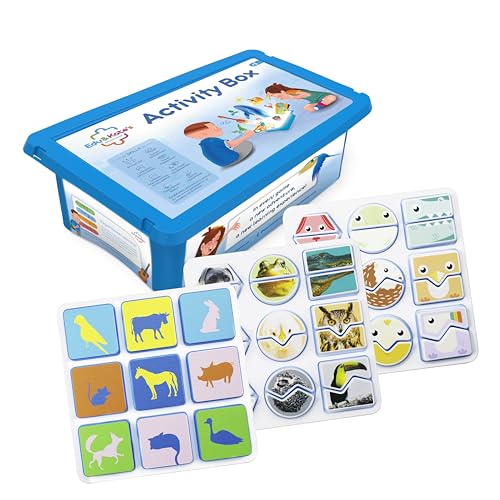
Edu&Kate’s Learning Toys for Kids emphasizes early learning skills through Montessori-inspired shape matching and problem-solving activities. With 45 tiles and three boards plus an activity box, this set supports visual perception, fine motor control, hand-eye coordination, and early language growth. Therapists appreciate its evidence-informed design, making it suitable for guided play and structured practice. The kit’s engaging color and shape combinations help children with autism develop focus and cognitive flexibility in a playful, supportive framework.
Fidget Sensory Toys for Kids – 26 Pack

This 26-pack collection from LESONG provides a broad set of textures and sensations to support calm and focus. It includes texture worry stones, stretchy noodles, and finger sensory rings designed to address sensory needs, anxiety, and ADHD. The variety of tactile experiences supports repetitive behavior management by offering alternatives for soothing, stimulating, or grounding activities. The items are practical for classroom prize drawers, therapy sessions, and home calm-down corners, helping to create predictable, engaging sensory breaks.
Edu&Kate’s Preschool Learning Toys – Stage 2

Edu&Kate’s Preschool Learning Toys Stage 2 focuses on building foundational cognitive and social skills through Montessori-inspired activities. With three boards and an activity box, the kit supports visual processing, critical thinking, and fine motor development while fostering language growth through guided play. Therapists often deploy these materials to help toddlers and preschoolers with autism practice problem-solving and storytelling. The structured format encourages sustained attention and collaborative play between caregivers and children.
Edu&Kate’s Alphabet Early Learning Toys – Stage 2

Edu&Kate’s Alphabet Early Learning Toys target early literacy and language development through alphabet-focused activities. This Stage 2 kit includes 27 pieces across three boards plus an activity box, designed to be therapist-endorsed for supporting cognitive, sensory, and speech development. The alphabet-centric setup encourages recognition, phonemic awareness, and storytelling as part of a guided play routine. It is suitable for home learning, classroom centers, and therapy sessions focused on language acquisition.
Buying Guide
- Target goals: Identify whether the priority is visual schedules, sensory regulation, early literacy, or motor skills. This helps select boxes aligned with the child’s current needs and long-term development.
- Age and development range: Look for age-appropriate materials that accommodate progression. Some kits offer stages that support ongoing growth from toddlers to preschoolers.
- Therapist and educator input: Products designed with professional guidance may align better with therapeutic goals and evidence-based practices.
- Sensory range: Choose a mix of calm-down tools (textures, fidgets) and cognitive tasks (puzzles, matching games) to address both regulation and learning.
- Durability and ease of use: Consider materials that can withstand frequent handling and are easy for caregivers to model and supervise.
- Portability and storage: For families on the go, select items that are compact or come with organized storage to support consistent routines.
- Compatibility with routines: Visual timers and schedules should align with daily rituals (wake, meals, school pickup) to maximize effectiveness.
- Budget and scalability: Start with core items and gradually add complementary tools if the child responds well to the initial set.
- Safety and accessibility: Ensure components are age-appropriate, non-toxic, and easy to manipulate for small hands and sensory needs.
- Multi-sensory balance: Combine tactile, visual, and auditory elements to support diverse learning preferences and reduce potential overwhelm.
In evaluating task boxes for autism, it’s important to balance structure with flexibility. The listed products offer a spectrum of options—from structured visual schedules to open-ended sensory play—that can be integrated into daily routines, therapy goals, and classroom activities. When selecting, consider the child’s sensory profile, communication style, and the environments in which the materials will be used most consistently.