Exploring the night sky requires a telescope that balances light-gathering capability, portability, and ease of use. The following selections focus on stargazing performance for beginners and seasoned observers alike, with options ranging from binoculars tailored for astronomy to entry-level refractors and tracking Newtonians. Each pick is paired with its standout features to help you compare at a glance.
Summary of Selected Products
| Product | Key Benefit | Type |
|---|---|---|
| NACATIN Astronomy Telescope | Bright 90mm aperture for planetary detail | Refractor |
| ESSLNB Telescope For Adults | Smartphone app with celestial tracking | Refractor |
| Celestron SkyMaster 15×70 | Bright long-range binoculars for dusk/dawn skies | Binoculars |
| Celestron AstroMaster 130EQ-MD | Motor-driven tracking and beginner-friendly | Reflector |
| KTBDING Monocular 80×100 | Compact, versatile for quick star glimpses | Monocular |
ESSLNB Telescope For Adults Astronomy
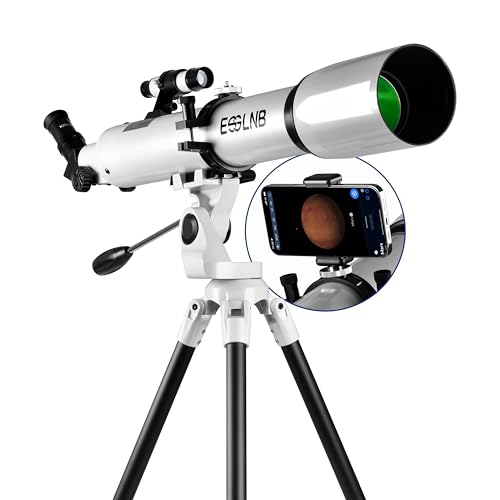
Overview: This 80mm aperture refractor is designed for beginners and enthusiasts seeking a capable entry into celestial observing. The package emphasizes a smart app-assisted tracking experience to help locate planets, star clusters, and brighter deep-sky objects. It includes adjustable eyepieces and a finder scope to simplify targeting, making it a strong option for aspiring stargazers who want more automated guidance without sacrificing optical quality.
Optical and tech features: The telescope pairs a fully multi-coated optical system with a patented stargazing app for automatic tracking. With interchangeable eyepieces and a Barlow lens, observers can explore a magnification range from wide-field to close-up planetary views. The high-transmission optics assist in brighter, sharper images, while the smartphone adapter enables easy photo capture of celestial objects.
NACATIN Astronomy Telescope For Adults & Beginners

Overview: A portable refractor with a 90mm aperture designed to deliver bright lunar, planetary, and deep-sky views at a reasonable price point. The kit includes two eyepieces and a smartphone adapter to capture observations. Its larger aperture gathers more light than smaller models, offering crisper details for the Moon and planets, alongside a practical setup for beginners exploring the night sky.
Optical and tech features: The telescope ships with 90mm aperture and a focal length that supports balanced brightness and image clarity. The included 25mm and 10mm eyepieces provide a broad magnification range, plus a 3x Barlow lens for higher powers. The smartphone adapter enables straightforward sharing and documentation of your celestial discoveries, while a moon filter helps reduce glare for finer lunar detail.
Celestron Cometron 7×50 Astronomy Binoculars

Overview: A beginner-friendly binocular option that’s popular for quick, wide-field sky viewing. The 7×50 configuration is well-suited for locating constellations, tracking brighter comets, and orienting yourself in the night sky. A practical entry point for those who want portable optics without a full telescope setup.
Optical and tech features: Large 50mm objectives maximize light gathering, with multi-coated optics to boost brightness and contrast. The wide field of view helps users scan large swaths of the Milky Way efficiently, making it a versatile companion for outdoor astronomy sessions and field observations.
Celestron AstroMaster 130EQ-MD

Overview: This Newtonian reflector telescope aims at beginner-to-intermediate users seeking a sturdy, motor-driven tracking mount. The 130mm optics deliver bright, sharp views of the Moon, planets, and some brighter deep-sky objects like star clusters. The included software package helps new observers plan their nights and learn the sky more efficiently.
Optical and tech features: A 130mm reflector collects ample light for detailed planetary and lunar observations. The equatorial mount with motor drive simplifies tracking as objects drift across the sky. The kit typically includes basic eyepieces and software to assist in planning observing sessions and learning celestial coordinates.
KTBDING Monocular 80×100 HD Monocular
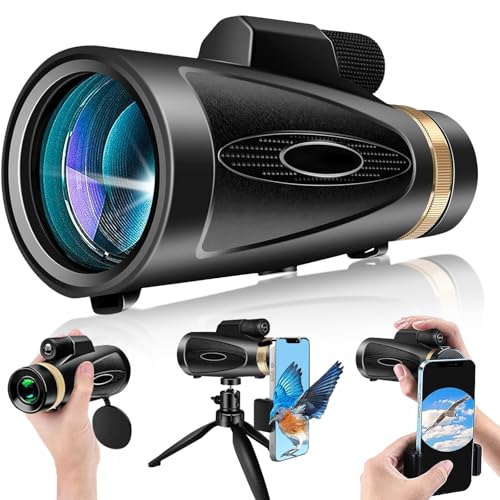
Overview: A compact, high-powered monocular suitable for quick sky glimpses and field use. While not a full telescope, it provides a portable option for observers who want a lightweight device for scouting star-rich horizons during a camping trip or outdoor excursion.
Optical and tech features: The device features an 80x magnification with a large 100mm objective, designed to maximize light gathering for brighter images. It ships with a tripod and phone adapter to facilitate stable viewing and easy photography, making it a convenient add-on for travelers and casual stargazers.
Buying Guide: Key Purchase Considerations For Star Gazing
- Objective size and light gathering: Larger apertures capture more light, revealing fainter stars and finer surface details on the Moon and planets. Refractors with 80–90mm aperture and reflectors around 130mm are solid all-around choices for beginners to intermediates.
- Magnification range: Higher magnification is compelling, but it comes with dimmer images and a narrower field of view. Look for versatile kits offering wide-field eyepieces (e.g., 25mm) plus higher-power options and, if possible, a Barlow lens to expand magnification without extra bulky optics.
- Mount and tracking: Equatorial mounts with motor drives help keep objects centered, especially for longer observing sessions. Tripod stability matters; a sturdy tripod improves image stability and reduces shake during high magnification.
- Ease of use: For beginners, integrated smartphone adapters, finder scopes, and auto-tracking apps can reduce the learning curve. Eye relief and optical coatings also influence comfort and brightness, particularly during dusk twilight viewing.
- Portability vs. power: Portable monoculars and compact refractors offer quick sky glimpses on trips, but larger reflectors or binoculars with higher light-gathering power deliver richer, more detailed views for serious stargazing.
- Accessories and expandability: Carry bags, carrying cases, extra eyepieces, and software for sky planning add long-term value. Consider whether the kit includes or supports future upgrades without high added costs.
- Maintenance and durability: Protective coatings (fully multi-coated optics) and materials that withstand outdoor conditions help preserve optical performance and extend the telescope’s life.
Notes On Selection And Use
Each choice represents a balance between portability and performance. For beginners prioritizing quick success and ease of use, a sweet spot is a mid-size refractor or a well-equipped Newtonian with motorized tracking. Those who value portability may prefer high-powered monoculars or compact binoculars for on-the-go sky scanning. For more ambitious stargazing, a dedicated telescope with a stable mount and tracking will unlock deeper celestial viewing and longer sessions.