The right toys for nine-year-olds blend learning with imaginative fun. This guide highlights five engaging options that support problem solving, science curiosity, construction, and hands-on creativity. Each pick offers different ways to explore STEM concepts, storytelling, and teamwork—perfect for independent play, school projects, or family activities.
| Product | Brand |
|---|---|
| ThinkFun Gravity Maze | ThinkFun |
| Blue Marble National Geographic Magic Chemistry Set | Blue Marble |
| National Geographic Kids Magic Set | Blue Marble |
| Rechargeable Game Activity Cube | Ninja Blast |
| Poraxy STEM Kits (RC Car) | Poraxy |
Gravity Maze: Brain-Boosting Marble Challenge

ThinkFun Gravity Maze combines marble runs with logic puzzles to challenge spatial reasoning and planning. Players navigate a grid by placing towers and pathways to guide the marble to the target. The game blends STEM concepts with strategy, helping kids think through cause and effect, sequencing, and problem-solving steps as they design a successful route.
Designed for ages 8–12, Gravity Maze suits both solo challenges and small-group play. The mix of physical components and abstract thinking keeps attention focused, while the gradual difficulty provides ongoing growth opportunities. It’s a strong classroom or family activity that reinforces critical thinking in a hands-on format.
Blue Marble National Geographic Magic Chemistry Set
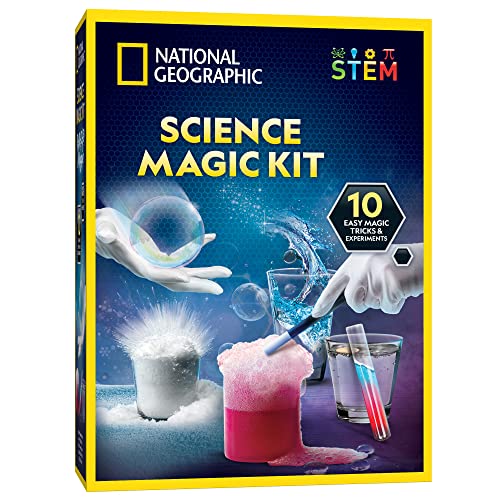
This science kit brings magic-inspired experiments to life with 10 exciting tricks that reveal surprising scientific principles. Children can make a coin float, color-changing water, and other effects, all while learning the underlying science. The included wand and gloves add a theatrical element, making science feel like magic while staying educational and safe.
The accompanying illustrated guide explains the science behind each trick and provides kid-friendly insights, making it useful for curious minds who want more than just demonstrations. It’s a compelling way to turn everyday curiosity into structured inquiry and experimentation.
National Geographic Kids Magic Set

National Geographic’s magic set offers a classic collection of tricks with a modern twist. Kids can learn cups-and-balls, false tips, and other illusion basics while building confidence through performance. A dedicated magician’s card deck helps practice sleight of hand, and step-by-step video instructions provide visual guidance for each trick.
The kit emphasizes careful technique, practice, and presentation. By blending traditional magic with education, it supports memory, sequencing, and fine motor skills, while offering a platform for storytelling and stage presence during performances.
Rechargeable Game Activity Cube
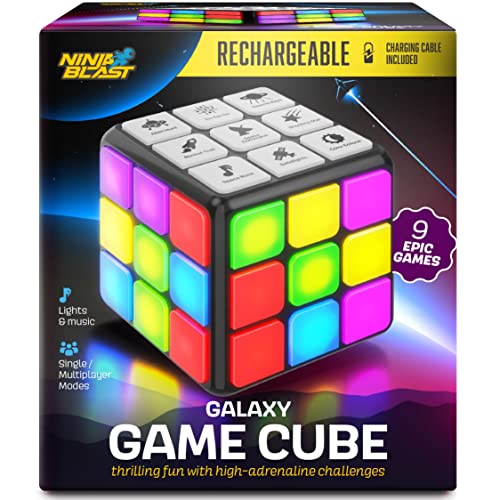
The Rechargeable Game Activity Cube combines memory games and brain challenges across nine activities. It supports solo play and multiplayer modes, offering varied content to maintain interest. The unit includes sound effects and voice-guided feedback from Mission Control, enhancing engagement and providing hints as kids work through tasks.
Because the cube is rechargeable, there’s no need for frequent battery changes—convenience that reduces interruptions during play. The blend of quick challenges and longer cognitive tasks helps kids practice attention, memory, and strategic thinking in a compact, portable format.
Poraxy RC Car & 3D Puzzles STEM Kit

Poraxy’s STEM kit combines a remote-controlled 4WD car with wooden 3D puzzles and science projects. The RC car supports latency-free racing with a long control range and auto-centering steering to simplify handling. The wooden puzzle components emphasize precision and engineering thinking, encouraging kids to assemble and experiment with real mechanisms.
Great as a birthday gift or holiday project, this kit engages multiple interests—from building and racing to problem solving and spatial reasoning. It provides a hands-on platform for exploring mechanics, timing, and design, fostering persistence and curiosity in young engineers.
Buying Guide: Key Purchase Considerations and Comparisons
When selecting toys for nine-year-olds, consider the following factors to match developmental needs and interests:
- Learning goals: Choose toys that align with science, technology, engineering, and math (STEM) objectives or foster creativity and problem solving.
- Skill level and progression: Look for games with adjustable difficulty or multiple challenges to keep engagement over time.
- Play style: Decide between solo challenges, family play, or group activities that build collaboration and communication.
- Durability and safety: Ensure materials are sturdy and age-appropriate, with small parts kept away from younger siblings if needed.
- Reusability and expansion: Prefer kits that offer repeatable experiments or add-ons to extend value beyond initial use.
- Screen-free balance: Balance digital or electronic components with hands-on manipulatives to support physical development and focus.
- Storage and portability: Compact designs with organized storage improve usability for homes and classrooms.
Product variety matters: logic-centric puzzles like Gravity Maze support critical thinking and planning; magic-themed sets foster science curiosity and experiment design; and RC or multi-part kits encourage engineering mindset and collaborative projects. For parents and educators, mixing different formats—puzzle challenges, science demonstrations, and interactive play—broadens a child’s interests while reinforcing important cognitive skills.