Finding suitable wooden toys for a 9-month-old can support early cognitive and motor development while offering safe, durable play. The following selections emphasize object permanence, grasping, and cause-and-effect through hands-on exploration. Each toy uses natural materials and thoughtful design to engage curious infants. Below you’ll find five top wooden choices, plus a practical buying guide to help families compare options.
| Product | Brand | Key Benefit |
|---|---|---|
| Busy Edition Montessori Toys for Babies 6-12 Months | Busy edition | Object permanence and fine motor skills |
| Melissa & Doug First Bead Maze | Melissa & Doug | Hand-eye coordination and problem solving |
| Wooden Push Car Toys for Infants 12-18 Months | KIDS TOYLAND | First mobility toy, teething-safe wood |
| Adena Montessori Wooden Toy 3 Balls | Adena Montessori | Object permanence with colorful balls |
| Hape Beaded Raindrops | Hape | Sensory beads and soothing sounds |
Busy Edition Montessori Toys For Babies
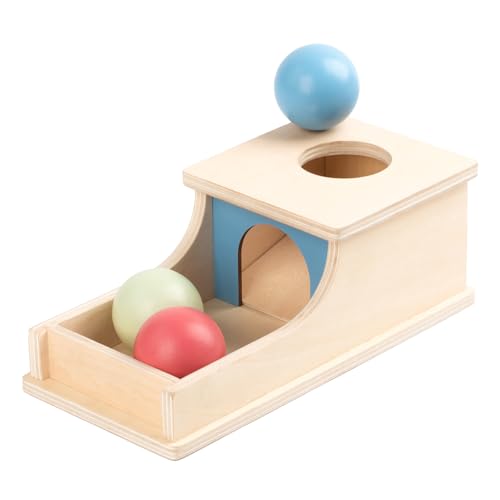
The Busy Edition Montessori object permanence box includes three balls and a tray to encourage infants aged 6 to 12 months to explore the concept that objects persist even when hidden. The design emphasizes fine motor control as babies grasp and place balls into holes, promoting hand-eye coordination and concentration through interactive play. With its durable wooden construction, this toy supports repeated sessions that foster early cognitive development without relying on plastic components.
Melissa & Doug First Bead Maze

This wooden bead maze engages babies on floors, tables, or high chairs with four looping wires, 18 beads, and three rings. Beads slide and spin, encouraging pushing, pulling, and grasping motions. The product uses smooth wooden blocks, soft-coated wires, and a secure suction base for stability. It supports Montessori-inspired learning by strengthening fine motor skills and hand-eye coordination while introducing basic shapes and colors through tactile exploration.
Wooden Push Car Toys For Infants

These two hand-push wooden cars are sized for infants around 12-18 months and up to encourage early mobility. The cement truck and road roller are durable, FSC-accredited wood products designed to be gentle on baby gums during teething. The natural wood construction provides a safe, resin-free alternative to plastic toys, offering long-lasting play value as babies begin to crawl and cruise, explore sounds, and mimic driving behaviors with a simple push action.
Adena Montessori Wooden Toy 3 Balls

The Adena Montessori set includes a wooden object-permanence box with three distinct balls—yellow wooden, green plastic, and pink EVA soft ball—designed to stimulate tactile senses and cognitive processing in babies aged 6 to 12 months. The three-ball system encourages grasping, dropping, and insertion into the tray holes, fostering fine motor skills and problem-solving. The variety of textures and colors adds sensory richness and supports early visual recognition and color differentiation.
Hape Beaded Raindrops

The Hape Beaded Raindrops is a mini wooden musical shake-and-rattle that produces soothing raindrop sounds as beads trickle through. Its easy-to-grip design supports developing grabbing abilities and fine motor skills while introducing cause-and-effect through sound and motion. Bright blue and green colors provide visual stimulation, and the simple shaking motion can help with sensory processing and early auditory development.
Fisher-Price Wood Stack & Sort Animals
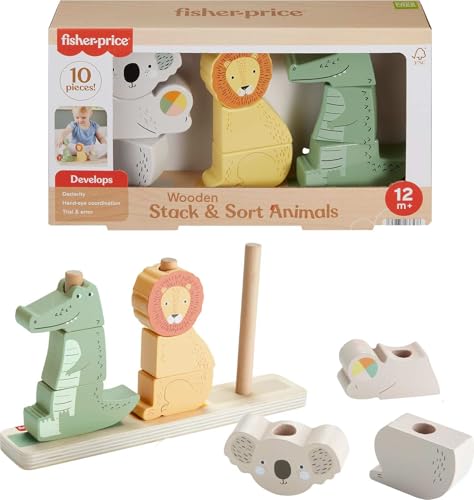
Note: This Fisher-Price option features wooden stacking and sorting play with animal themes. It supports early sorting and stacking skills, encourages fine motor development, and uses wood sourced from FSC-certified forests. Non-toxic paints enhance safety for little ones as they explore shapes, animals, and basic motor control through hands-on play.
Buying Guide: Key Purchase Considerations For Wooden Toys
- Age and developmental stage: Choose toys designed for a 6-12 month range to align with object permanence, grasping, and motor skill milestones.
- Material and finish: Opt for untreated or non-toxic finishes on durable wood. Look for FSC-certified sources and avoid toys with small detachable parts that pose choking risks.
- Safety features: Smooth edges, no sharp corners, and sturdy construction reduce injury risk. Soft textures and gentle materials suit teething phases.
- Montessori alignment: Toys that promote independent exploration, problem-solving, and hand-eye coordination tend to support early curiosity and concentration.
- Sensory variety: A mix of tactile textures, colors, and sounds helps multisensory learning and keeps play engaging for longer.
- Durability and care: Consider water-based paints, easy cleaning options, and durable construction for long-term use across multiple stages.
- Cleanability: Materials that wipe clean or are easy to sanitize are advantageous for toys used by infants during drool and exploration phases.
- Portability and storage: Compact designs are easier to store, while some toys are designed to be floor boards or high-chair compatible for on-the-go play.
- Brand credibility: Reputable brands in the wooden-toy space often provide safer, well-tested products with consistent quality.
These considerations help balance cognitive benefits with safety and long-term value, ensuring that a 9-month-old finds toys that are engaging and developmentally appropriate. When evaluating options, prioritize items that encourage reaching, grasping, object locality, and early problem-solving through simple interactions.