Exploring emotions with toddlers can be challenging, but kid-friendly feelings charts offer a simple, visual way to name and regulate emotions. This guide highlights five highly-rated options designed for classrooms, counseling spaces, and homes. Each entry includes a quick peek at features, ideal uses, and how they support social-emotional learning for young children.
| Product | Brand | Key Benefit |
|---|---|---|
| Hadley Designs Feelings Chart | Hadley Designs | Colorful posters for emotion decoding and regulation |
| BIZIBAFF Feelings Chart Poster | BIZIBAFF | 16 common emotions; durable and kid-friendly |
| Distasio 9 Calming Corner Posters | Distasio | Calming techniques and feelings tools in a kit |
| FLYAB Feelings Chart | FLYAB | 16 feelings with friendly characters; classroom ready |
| Thought-Spot Flipbook | Thought-Spot | Visual emotions guide for autism and diverse learners |
Notes: All selections support early emotional literacy, self-regulation, and constructive communication. Each product includes visuals designed for quick recognition by toddlers and preschoolers, with durability and classroom-friendly materials in mind.
Hadley Designs Feelings Chart For Kids
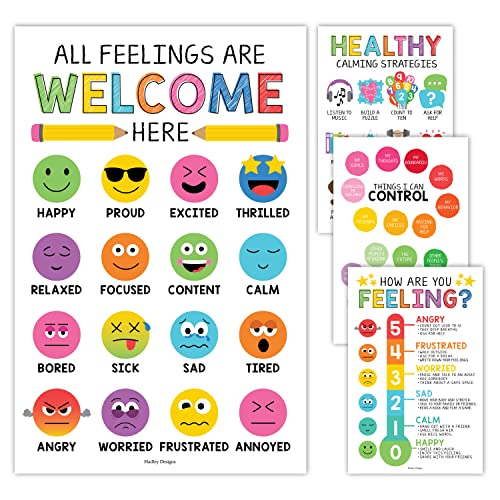
If children struggle to express how they’re feeling, this set of four laminated 11×17″ posters helps decode emotions and support emotional regulation. The posters are USA-designed and laminated for durability, designed to keep children engaged and feeling understood. Ideal for classroom walls, calming corners, and social-emotional learning spaces, the posters offer a structured way to recognize and label feelings, aiding in early coping skills and communication when caretakers are not nearby.
BIZIBAFF Feelings Chart Poster for Kids Toddlers

This poster presents 16 common emotions in bright colors and clear illustrations, sized at 11.8″ x 16.5″ for easy classroom visibility. It is laminated for durability and tears-resistance, making it suitable for walls, bulletin boards, or homeschooling setups. The chart supports social-emotional learning by helping toddlers and preschoolers identify feelings, fostering communication and early empathy in both classroom and home settings.
9 Calming Corner Posters Classroom
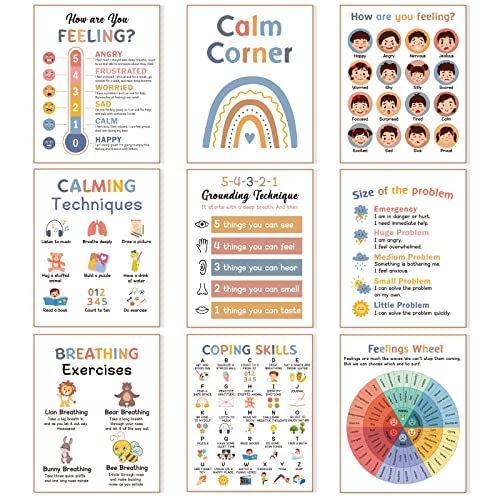
This calming corner poster kit includes nine 8×10″ pieces featuring a calming corner title, feelings chart, coping skills, breathing exercises, and more. The set is designed to decorate classrooms, homes, or therapy spaces and to create a calm, safe atmosphere. It helps children name emotions and practice self-regulation strategies, supporting both immediate regulation and long-term emotional skills in diverse learning environments.
FLYAB Feelings Chart for Kids

Designed for classroom decorations, this poster features 16 emotions and a message that All Feelings Are Welcome Here. It is an engaging teaching aid for teaching emotional intelligence and self-awareness, with kid-friendly characters to capture attention. The poster measures 11.2″ x 16.5″ and comes with glue points for easy mounting, making it a practical addition to bulletin boards and learning centers for preschool through elementary learners.
Thought-Spot I Know What to Do Flipbook

This flipbook-style emotions guide helps children, including those with autism or other communication challenges, identify feelings and make positive choices. It supports social interaction skills, communication, and emotional development with durable pages suitable for repeated use in home, school, or calm-down corners. The visual approach makes it accessible for a wide range of learners and settings, contributing to consistent emotional literacy practice.
Buying Guide: Key Considerations For Choosing a Toddler Feelings Chart
- Age-appropriate visuals: Look for bright colors, large icons, and simple facial expressions that align with toddlers’ cognitive level.
- Durability: Laminated posters, thick paper, or board formats withstand classroom use, spills, and frequent handling.
- Size and placement: Choose poster sizes that fit your space, from small bulletin boards to large wall displays, and ensure easy visibility for all children.
- Number of emotions: A broader range (10–16 emotions) supports nuanced understanding, while simpler charts (4–8 emotions) work well for younger toddlers just starting to label feelings.
- Supplementary tools: Consider kits with calming techniques, breathing exercises, or coping strategies to pair with emotion labeling for practical regulation steps.
- Durability of prompts: Cards, flipbooks, or wheels that are easy to handle help maintain engagement and encourage independent use by kids and caregivers.
- Accessibility across settings: For therapy rooms or schools, select products designed for diverse learners, including nonverbal or autistic children, to maximize usefulness.
- Maintenance: Look for water-resistant or laminated surfaces to withstand daily use and frequent cleaning in busy spaces.