Finding the right toys helps toddlers build essential hand strength, coordination, and problem-solving. The following selections are designed to engage curious one-year-olds with safe materials, color recognition, and hands-on play. Each toy emphasizes fine motor development through sorting, squeezing, stacking, and manipulating textures. Use these options to create a varied play routine that supports early learning milestones while keeping playtime fun and engaging.
| Product | Brand | Key Benefit |
|---|---|---|
| MINGKIDS Montessori Toys for 1 Year Old | MINGKIDS | Six textured shapes for tactile exploration and shape recognition |
| Learning Resources Spike The Fine Motor Hedgehog | Learning Resources | Stacking quills promote hand strength and color/pattern recognition |
| hahaland 16 PCS My First Fruit Vegetable | hahaland | Textured, crinkly foods for sensory exploration and fine motor practice |
| SOCBTNSO Busy Cube Toy | SOCBTNSO | Six activities in one to boost coordination and concentration |
| Montessori Toys Wooden Color Sorting Box | SMALL FISH | Color matching and sorting to develop precision and cognitive skills |
MINGKIDS Montessori Toys For 1 Year Old

The MINGKIDS set includes six chunky, multi-sensory shape blocks designed for pushing through elastic bands. Their textured surfaces invite tactile exploration, promoting both color and shape recognition. The ABS plastic frame features rounded edges to minimize rough handling, making it suitable for small hands learning to grasp, push, and manipulate objects. This kit encourages early problem-solving skills as children experiment with fitting shapes through openings, supporting steady progress in fine motor development.
Learning Resources Spike The Fine Motor Hedgehog
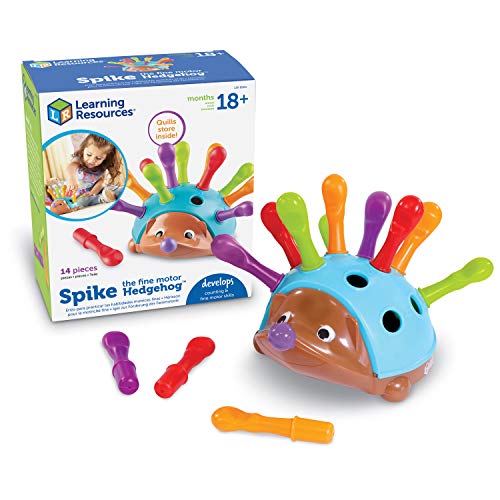
This toddler-friendly hedgehog invites little ones to remove and replace quills, strengthening hand muscles and improving hand-eye coordination. Suitable for ages 18 months and up, the toy grows with a child as it introduces color, counting, and pattern recognition. The easy-grip texture of the quills adds tactile stimulation, keeping attention focused during playtime while building essential fine motor skills.
hahaland 16 PCS My First Fruit Vegetable Color Sorting Play Food

This 16-piece soft play food set blends crinkle textures, rattles, and varied fabrics to spark sensory exploration. Inspired by Montessori principles, children squeeze, peel, and pour to strengthen fine motor control while learning colors and textures. The baskets and soft shapes support sorting and matching activities, motivating independent exploration and early problem-solving in a playful context.
SOCBTNSO Busy Cube Toy

This 6-in-1 cognitive cube bundles six learning activities into a compact, travel-friendly design. It strengthens hand-eye coordination, problem-solving, and concentration with varied textures and tactile tasks. The cube’s sturdy construction and compact size make it ideal for car rides or plane trips, keeping little hands engaged while supporting sensory development.
Montessori Toys Wooden Color Sorting Box

This natural beechwood color sorting box offers 12 discs in six vivid colors. The wooden construction and water-based finish provide a smooth, splinter-free surface for tiny hands. Children match discs to slots, promoting color recognition, fine motor precision, and early problem-solving. The portability supports play at home or on the go, making it a reliable option for ongoing practice of hand control.
Buying Guide
- Age-appropriateness: Choose toys labeled for 12–24 months to ensure safety and appropriate challenge. Look for rounded edges, non-toxic finishes, and durable construction.
- Fine motor focus: Prioritize activities that require grasping, pinching, stacking, squeezing, or threading to target finger strength and coordination.
- Sensorial variety: Mix textures, colors, and sounds to stimulate tactile and visual processing while maintaining interest and motivation to practice motor skills.
- Portability and storage: Compact, travel-ready toys support practice during trips and at daycare, with simple storage for quick cleanups.
- Skill progression: Select sets that offer scalable challenges, such as increasing sorting complexity or introducing new shapes and colors as the child grows.
- Safety and cleaning: Prefer machine-washable fabrics or easily wipe-clean components for frequent use with toddlers.
- Educational value: Look for toys that support multiple milestones—color recognition, shape matching, counting basics, and hand-eye coordination—without overwhelming the child.
- Noise considerations: If selecting toys with sounds, ensure volume is gentle and friendly to avoid overstimulation.