Finding engaging, age-appropriate learning devices can support early literacy, numeracy, and critical thinking. The following hand-picked picks emphasize interactive, kid-friendly design, built-in learning content, and user-friendly interfaces to help children explore the foundations of reading, writing, counting, and language skills.
| Product | Brand | Type | Key Benefit |
|---|---|---|---|
| LeapFrog LeapPad Academy Kids’ Learning Tablet, Green | LeapFrog | Tablet | 20 educational apps; LeapSearch kid-friendly web access |
| LeapFrog Mr Pencil’s Scribble Write and Read, Green | LeapFrog | Writing & Reading Toy | Guided writing; animated letter transformations |
| Airbition Talking Flash Cards | Airbition | Language Flash Cards | Vocabulary expansion; Montessori-style interaction |
| LeapFrog Touch and Learn eReader, Teal | LeapFrog | E-Reader | Phonics, read-along stories; interactive vocabulary |
| Spanish & English Bilingual Flash Cards | MAYAPHILOS | Language Flash Cards | Bilingual exposure; 510 sight words |
LeapFrog LeapPad Academy Kids’ Learning Tablet
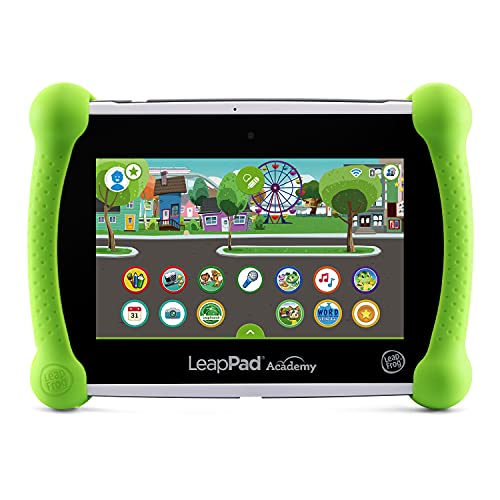
The LeapPad Academy offers a kid-friendly Android-based tablet experience with built-in safety features and age-appropriate content. It ships with 20 educational apps and creativity tools designed by LeapFrog learning experts. The device includes LeapSearch, a child-safe browser that directs kids to kid-friendly websites and videos. A standout feature is a free three-month trial of LeapFrog Academy, an interactive program that guides children on progressive learning adventures. This setup emphasizes foundational literacy and early STEM concepts through hands-on activities, games, and visual prompts, all packaged in a durable, child-friendly design.
LeapFrog Mr Pencil’s Scribble Write and Read

Mr Pencil guides children through writing uppercase and lowercase letters with step-by-step instructions. The pencil animation transforms letters into animated animals and other objects to reinforce letter shapes and sounds. The toy also supports tracing numbers along dotted lines, which helps with early numeracy skills. A customizable option lets you enter a child’s first, middle, and last name for practice writing their own name, blending literacy with personal relevance. This tool focuses on motor skills, handwriting formation, and early literacy in an approachable, playful format.
Speak & Spell Electronic Game

Speak & Spell invites kids to explore classic spelling and phonics through five play modes: Spell, Mystery, Say It, Secret Code, and Letter. The retro handheld design evokes 80s educational fun while offering modernized hardware for reliable play. With multiple difficulty levels, children can challenge themselves to improve spelling accuracy, word recall, and auditory-visual integration—key components of early literacy. The familiar interface supports independent exploration as a gateway to less structured learning opportunities.
Airbition Talking Flash Cards

This toddler Montessori learning device presents 224 illustrated cards with sounds and visuals to expand vocabulary and cognitive skills. The cards cover animals, vehicles, food, fruits, vegetables, and more, making it suitable for language development and early communication. The reader delivers content in a standard American accent, with animal sounds and a repeat function for practice. Its user-friendly design suits parents and teachers seeking a hands-on, screen-free approach to language learning and speech therapy supplementation.
Joyreal AAC Device for Autism

Joyreal presents an AAC device with 24 pre-installed phrases in a picture-and-color format, enabling straightforward communication for simple needs and expressions. The device includes six programmable buttons for customizing messages with the user’s own voice, enhancing personalized communication. Adjustable volume supports use in various environments, and the lightweight design with a carrying bag adds portability. This tool serves as a supportive option for nonverbal or minimally verbal children and adults, complementing broader literacy and language goals.
Spanish & English Bilingual Flash Cards
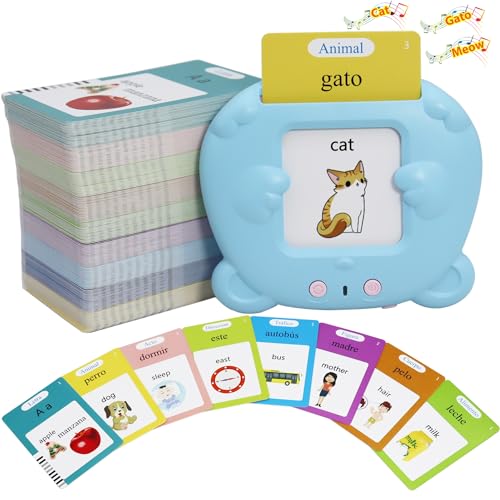
This bilingual set features 31 themed cards with Spanish and English words, plus a reader that speaks the words aloud. With 510 sight words across 255 double-sided cards, the kit supports both Spanish-dominant families and English learners. The design encourages parent-child interaction without screens, letting kids explore vocabulary across everyday contexts—food, animals, family, vehicles, and more. It’s a practical tool for building early language skills, memory, and pronunciation in a bilingual learning environment.
Buying Guide: Key Purchase Considerations
- Learning goals: Align devices with literacy, numeracy, or language development objectives. Tablets tend to support a broader curriculum, while flash cards emphasize vocabulary and pronunciation.
- Age suitability: Check age ranges and developmental milestones targeted by each product to ensure appropriate challenge without frustration.
- Screen time balance: Consider screen-free options (flash cards, AAC devices) for younger children or to reduce screen exposure while still promoting learning.
- Content control: Look for kid-safe environments, parental controls, and offline options to minimize exposure to unsuitable material.
- Language support: For bilingual households, prioritize tools offering English/Spanish content or dual-language features to reinforce crossover skills.
- Motor skills and handwriting: Tools like tracing and Scribble Write support handwriting practice and fine motor development.
- Portability and durability: For travel and everyday use, choose compact, durable devices with long battery life and simple interfaces.
- Therapeutic value: Some devices offer speech therapy or autism-friendly features; assess if specialized tools meet individual needs and supervision requirements.
- Content density: Balance between structured lessons and exploratory play; richer content can yield longer engagement and habit formation.
When selecting learning devices for kids, it helps to combine options that cover both guided instruction and independent exploration. The items above offer a spectrum from interactive eReaders and tablets to tactile flash cards and AAC devices, enabling a well-rounded approach to early education and language development.