For adults seeking an affordable, space-saving way to practice, learn, or compose, mini keyboard pianos offer an appealing mix of portability and features. This guide highlights five compact keyboards that suit adult beginners and hobbyists, balancing key feel, sound variety, and built-in learning aids. Each pick is evaluated for its portability, learning tools, and expansion potential, so you can choose the model that best fits your space and goals.
A quick summary table of the chosen products helps you compare at a glance:
- <strongAlesis Melody 32 — 32 mini keys, USB/MIDI, 300 sounds, 300 rhythms, built-in lessons.
- <strongRockJam 49 Key Keyboard Piano — 49 full-size keys, learning aids, sheet music stand, stickers, lesson content.
- <strongRockJam 49 Key USB Keyboard Piano — 49 keys, 200 tones, 200 rhythms, 50 demos, recording and playback.
- <strongMIZAYI 61 Key Keyboard — 61 keys, rechargeable, built-in mic, 100 tones, 100 rhythms, multiple play modes.
- <strongAkai MPK Mini MK3 — 25 mini keys, USB MIDI, 8 drum pads, 8 knobs, NKS integration.
Alesis Melody 32 — Electric Keyboard With 32 Mini Keys

The Alesis Melody 32 focuses on portability without sacrificing a broad sonic palette. Its 32 premium mini keys are ideal for quick practice sessions or travel-friendly practice. Power options include USB or four AA batteries, enabling playing anywhere. The keyboard provides 300 voices spanning acoustic piano, electric piano, strings, organ, synth, drums, and more, making it a versatile tool for exploring genres. Built-in speakers deliver room-filling sound, while the 1/8” stereo headphone output allows private practice, a helpful feature for apartment living or shared spaces. A robust playlist includes 40 demo songs and 300 built-in rhythms in accompaniment mode, and there’s a built-in recording feature to capture performances for later review.
Pros for adults include a compact footprint, wide voice selection, and ready-made practice content. A potential trade-off is the smaller key count, which may feel uncomfortably narrow for players accustomed to full-size keys. The unit’s portability and learning features can support daily practice and early music education goals, especially for quick warm-ups and concept exploration.
RockJam 49 Key Keyboard Piano With Learning Aids
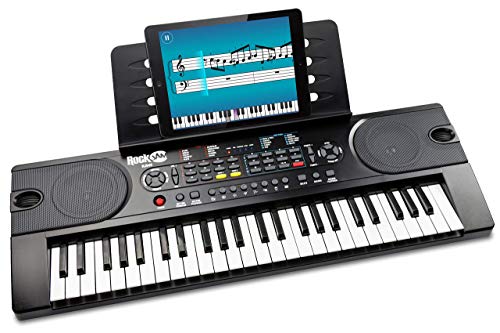
This RockJam bundle centers on a kid-friendly size yet remains accessible for adults who want a compact practice keyboard with instructional support. It includes 49 full-sized keys and a sheet music stand, aligning with beginners and casual learners who benefit from visual aids while playing. The included piano note stickers help new players locate notes quickly, enhancing memorization and note recognition. Simply Piano lessons provide a guided path from fundamentals to more advanced techniques, pairing well with self-guided sessions. The combination of portability, learning tools, and a straightforward layout makes it a practical choice for adults prioritizing structured learning in a small space.
Note that, while designed for learning, the emphasis is more on education than advanced performance features. The compact form factor supports travel or apartment living, but players seeking deeper control over sound design may want to consider models with more keys or richer effects.
RockJam 49 Key USB Keyboard Piano With Lessons & Keynote Stickers

This model emphasizes a balance of features that support intermediate learners and casual players. It delivers 49 keys and a vibrant feature set, including 200 tones, 200 rhythms, 50 demos, and a record-and-playback function for building muscle memory and performance recall. In-built stereo speakers offer substantial volume, while a headphone input allows private practice to avoid disturbing others. The presence of a recording capability helps users track progress over time, which is valuable for self-assessment and motivation. For adults seeking a feature-rich mini keyboard that remains budget-friendly, this is a compelling option.
61 Key Keyboard Piano With Built-In Speaker
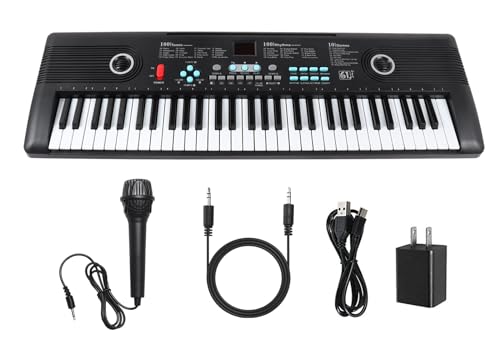
The MIZAYI 61-key keyboard targets beginners who want more keyboard real estate without stepping up to a full-size instrument. It features a rechargeable design, dual speakers, and a built-in microphone for sing-along practice, which can be a fun way to build confidence when learning to play and sing simultaneously. With 100 rhythms and 100 tones, users can experiment with different sounds and accompaniments, and 10 demo songs provide quick practice material. Multiple play modes, including One Key One Note and Follow Play, help new players explore melodies more intuitively, making it suitable for home use, classrooms, or gifts for aspiring musicians.
Akai MPK Mini MK3 — 25 Key USB MIDI Keyboard Controller

The Akai MPK Mini MK3 is a compact, USB-powered MIDI controller aimed at music production rather than standalone piano practice. It offers 25 velocity-sensitive mini keys, eight backlit drum pads, and eight knobs for hands-on control, making it a strong choice for adults who want to explore beat making, synth programming, and DAW workflows. Its Native Instruments NKS integration helps users control compatible software from a single device, streamlining production tasks. While it lacks built-in speakers and extensive onboard sounds, its portability and deep integration with software ecosystems appeal to producers and hobbyists who want a versatile creative tool for studio or on-the-go work.
Buying Guide
When choosing a mini keyboard piano for adults, consider these factors to match your goals and space:
- Key count and feel: If you primarily want a compact practice tool, 32 or 49 keys can be sufficient, but 61 keys offer more range for scales and melodies. Some models provide semi-weighted or velocity-sensitive keys, which more closely resemble a traditional piano experience.
- Sound variety vs. portability: A broader sound set is great for exploration, but it can come with more complex menus. If you value simple operation, prioritize essential tones and built-in lessons.
- Learning aids: Look for lesson content, note stickers, sheet music stands, and built-in demos if you’re building a routine or teaching yourself. For formal learning, consider models that pair with apps or software for structured progression.
- Connectivity: USB/MIDI compatibility expands how you can use the keyboard with software, iPads, or computers. Headphone outputs enable quiet practice, which is beneficial in shared living spaces.
- Power options: USB power is convenient for desktops and laptops; battery power aids portability, but may limit playtime between charges.
- Recording and playback: Built-in record features help track progress and review performances, a helpful feature for motivation and skill growth.
- Price-to-feature balance: For adults new to keyboards, prioritize models with learning aids and sufficient keys. If you’re mainly producing music, a MIDI controller with software integration may offer greater long-term value.
These considerations help you choose a model that suits your practice routine, space, and creative goals. For adults focusing on daily practice and foundational learning, a model with built-in lessons and a comfortable key count is typically most effective. For those leaning toward music production, MIDI-capable keyboards with software integration unlock broader creative possibilities.