Finding engaging, durable play tables for babies supports gross and fine motor skills, early language development, and imaginative play. The following five activity centers are well-suited for infants and toddlers, offering age-appropriate activities, adjustable play modes, and safe construction. Each option below highlights interactive features, learning themes, and growth potential to help caregivers choose the best fit for their child.
| Product | Brand | Key Learning Focus | Growth Stages |
|---|---|---|---|
| VTech Magic Star Learning Table | VTech | Bilingual (English/Spanish) activities; fine motor skills | Infant to toddler |
| Skip Hop Explore & More | Skip Hop | Music, cause-and-effect, sensory play | 4 months and up |
| LeapFrog Little Office Learning Center | LeapFrog | Early literacy and global awareness; interactive laptop role-play | Starting near 12 months |
| Dahuniu Baby Toy Activity Center | Dahuniu | Fine motor skills; colors, shapes, sounds | 6–18 months |
| Fisher-Price Laugh & Learn DJ Table | Fisher-Price | Music, number concepts, basic reading cues | 6–24 months |
VTech Magic Star Learning Table
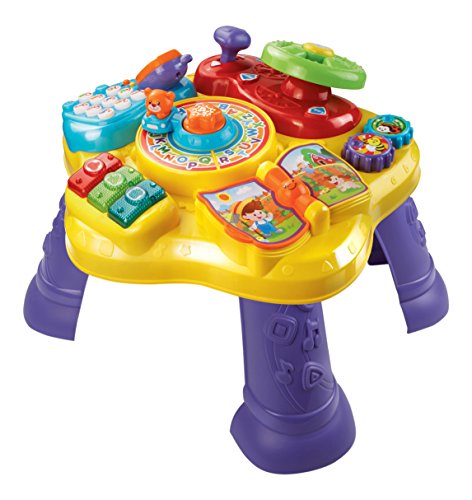
The VTech Magic Star Learning Table engages early learners with six bilingual activities in English and Spanish, encouraging exploration through themed zones. A steering wheel lets a bear travel around the table, while a flip-book page delivers nursery rhymes. Turning gears supports fine motor development, and light-up music buttons introduce colors and basic cause-and-effect concepts. This table emphasizes language exposure alongside tactile play, making it a solid option for households seeking bilingual play experiences.
Skip Hop Explore & More Activity Center
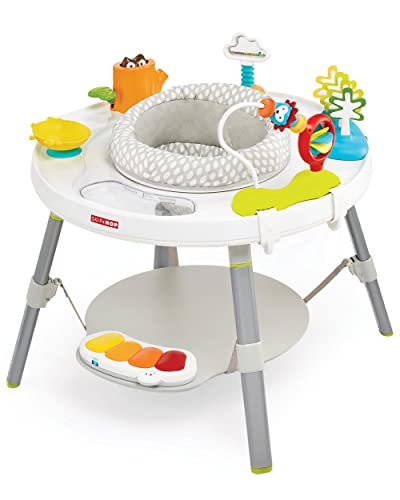
The Skip Hop Explore & More Activity Center grows with a child through three stages: Sit, Swivel, Bounce & Play, and later transitions to a toddler-friendly table. It features a light-up piano with three modes, a peek-a-boo owl that pops out, and clip-on toys that can be arranged to suit a малыш’ skills. With over 25 developmental activities, this center emphasizes musical play, motion-sensing interactions, and versatile positioning to support motor and cognitive development across early years.
LeapFrog Little Office Learning Center
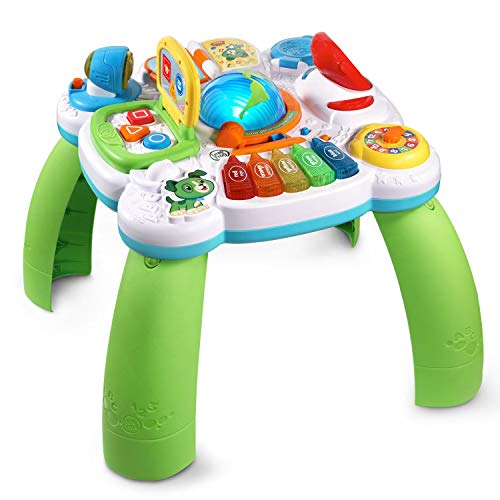
This first desk for little ones combines pretend office gear with educational content. A pretend laptop, phone, and globe introduce interactive play with 27 touch points. Modes for Explore, Learn, and Music deliver first words, greetings, and world music, while the screen reveals animals and shapes as children press buttons. The learning emphasis covers early literacy basics and global awareness through imaginative role play, helping kids understand everyday environments through interactive scenarios.
Dahuniu Baby Musical Activity Center

Designed for floor or table play, the Dahuniu activity center is packed with bright lights, classic tunes, and multi-instrumental activities. It helps babies learn numbers, shapes, colors, and sounds while supporting fine motor skills through interactive toys like gears and pretend phones. The unit offers two-level volume control to adapt to different environments, making it suitable for at-home use in living rooms or playrooms where noise levels matter.
Fisher-Price Laugh & Learn DJ Table (Musical)

The Fisher-Price Laugh & Learn DJ Table combines three piano play modes, multi-color lights, and over 100 songs, sounds, and learning phrases. With eight piano keys, a light-up disc, and a light-up number pad, this DJ table offers engaging, music-driven activities. The Smart Stages lessons evolve with the child, introducing colors, shapes, numbers, counting, opposites, the alphabet, and Spanish words. This option emphasizes musical exploration and early literacy alongside interactive play.
Buying Guide
Key purchase considerations help identify the best fit for your child and living space. First, safety and stability are essential; look for sturdy bases, rounded edges, and non-slip feet. Height adjustability and the ability to transition from floor to table use can extend the product’s usefulness as your child grows. Consider the learning focus: language exposure, music, fine motor skills, or a mix. Check noise levels and volume controls to suit sensitive environments. Durability and ease of cleaning matter for everyday use. Finally, assess age appropriateness and weight limits to ensure the center remains engaging as your child develops skills.
Comparing features across options helps balance variety with practicality. Bilingual or multilingual activities can provide early language exposure, while music-oriented centers encourage rhythm and auditory processing. Centers with movable parts and customizable toy placements support fine motor development and cognitive flexibility. For households seeking long-term use, models that adapt through multiple stages or transition to toddler tables offer the best value. In environments where space is a factor, compact designs with foldable components may be preferable.