Discover engaging, beginner-friendly STEM kits that nurture curiosity and build essential problem-solving skills. From electronics and robotics to geology and wooden construction, these kits offer hands-on activities designed for kids ages 6 through 12. Each option below is selected based on educational value, age suitability, and clear, structured instructional content to support independent play or guided family projects.
| Product | Brand | Key Strength |
|---|---|---|
| BeAndge STEM Kits for Kids Crafts | BeAndge | Comprehensive 5-piece build set including solar and wind cars, a robot, a tank, and a glider |
| Klutz Lego Gear Bots Science Kit | Klutz | LEGO Technic-based kinetic creatures with a 64-page guide |
| National Geographic Break Open 10 Geodes | Blue Marble | Real geodes with crystals to discover a geology-based treasure |
| Snap Circuits Classic SC-300 | Snap Circuits | Over 300 projects with a full color manual and modular components |
| Snap Circuits Jr. SC-100 | Snap Circuits | 101+ projects with a kid-friendly component set and clear instructions |
Choosing the right kit involves considering the child’s age, interests, and the level of parental involvement available. The selections above provide a mix of electronics, hands-on engineering, and natural sciences, offering scalable challenge levels to grow with a child’s skills. Each product promotes critical thinking, troubleshooting, and creative expression, while remaining accessible and safe for home use or classroom settings.
BeAndge STEM Kits For Kids Crafts

BeAndge offers a 5-set STEM kit collection designed for ages 8-12, featuring a solar-powered car, a wind-powered car, an obstacle avoidance robot, a transmission tank, and a glider. The bundled projects enable hands-on exploration of renewable energy concepts and basic robotics. Batteries are not included, which is typical for such kits, encouraging parental involvement for safe power management. The set is positioned as both a family activity and classroom project, with a gift-box presentation suitable for birthdays or holidays.
Klutz Lego Gear Bots Science Kit

Klutz Lego Gear Bots pairs LEGO Technic with papercraft elements to create eight kinetic creatures. The kit includes all required LEGO elements and a 64-page instruction book with STEM content on axles, cams, and cranks used in everyday machines. Step-by-step guidance supports independent building while offering opportunities for parents or teachers to discuss engineering concepts, energy transfer, and mechanical advantage as projects progress.
National Geographic Break Open 10 Geodes

This geodes-based kit from National Geographic combines hands-on geology with crystal discovery. Children crack open natural geodes to reveal sparkling crystals, making a tactile, suspenseful science activity. The set emphasizes natural variability in crystal formation and offers two display stands and goggles for a safe, immersive experience. It’s designed to appeal to budding geologists and science fair enthusiasts, fostering curiosity about mineralogy and earth science without requiring advanced tools.
Snap Circuits Classic SC-300
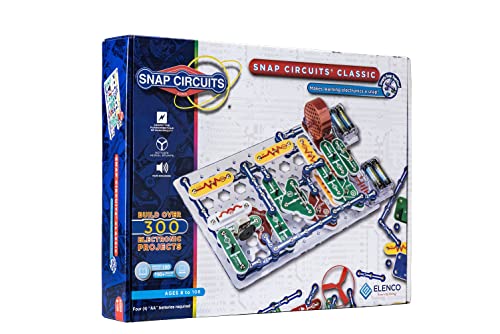
Snap Circuits Classic SC-300 is a robust electronics exploration kit with over 300 projects. The kit uses color-coded, modular parts and a full-color instruction manual to guide kids through activities such as AM radios, burglar alarms, and doorbells. Its safe, snap-together components promote steady experimentation, and the expansive project library supports ongoing learning. The kit’s design is well-suited for home use, classrooms, or group activities, enabling collaboration and shared problem-solving.
Snap Circuits Jr. SC-100

Snap Circuits Jr. SC-100 provides an approachable electronics experience with 101+ projects and 29 parts. The color-coded components simplify understanding of circuitry, and a kid-friendly project manual outlines practical builds that reinforce engineering fundamentals. The kit’s compact size makes it suitable for desks, travel, or classroom corners, while offering enough variety to sustain interest across multiple build activities.
National Geographic Magic Chemistry Set
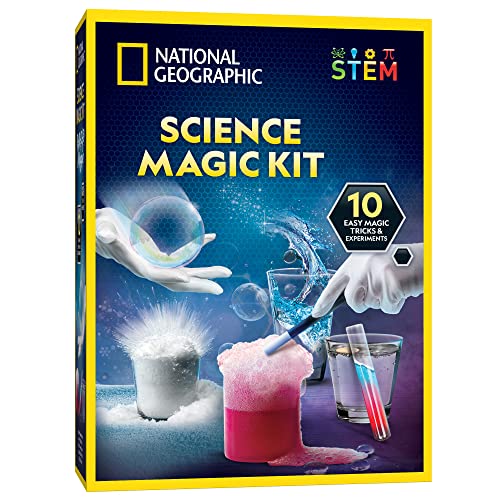
National Geographic Magic Chemistry Set blends science with magic-inspired demonstrations. The kit includes ten experiments that illustrate chemistry concepts in entertaining ways—such as color changes and floating coins—paired with a magic wand and gloves to enhance the performance aspect. The experiments are designed to be performed as tricks, offering an engaging frame for learning chemical reactions, safety practices, and the scientific method.
Buying Guide: Key Purchase Considerations
- Age appropriateness: Match complexity to the child’s developmental stage. Some kits target younger kids (6-8) with guided activities, while others suit older children (9-12) with more independent problem-solving.
- Learning goals: Decide whether you want electronics and robotics, geology, physics, or engineering. Look for kits with clear learning objectives and progressive challenges.
- Safety and supervision: Check required supervision levels and any small parts or tools. Parental involvement can enhance safety and learning.
- Instruction quality: Favor kits with step-by-step manuals, color guides, and diagrams. A well-structured guide supports self-directed exploration and reduces frustration.
- Scalability: Consider whether the kit offers multiple projects or expandable components so kids can continue learning beyond the initial activities.
- Durability and components: Assess the build quality and the longevity of parts. Reusable components and robust plastic or wood pieces provide lasting value.
- Giftability and storage: Gift-ready packaging or a sturdy storage case helps with organization and presentation for birthdays and holidays.
- Cost vs. value: Evaluate how many activities, projects, and hours of engagement the kit offers. A higher upfront cost can be justified by longer-term use and learning outcomes.
- Educational alignment: If you’re integrating into a classroom or homeschool plan, verify whether the kit aligns with science standards or fosters inquiry-based learning.
In choosing a STEM kit, balance immediate interest with long-term curiosity. The five selections above cover hands-on electronics, mechanical engineering, geology, and playful chemistry. Each product provides a structured path for skill development, while enabling exploration, experimentation, and creative problem-solving in a safe home environment.