Finding toys that engage toddlers ages 12 to 18 months can support early development while keeping playtime safe and enjoyable. The following selections emphasize fine motor skills, sensory exploration, and cause-and-effect learning. Each product below aligns with common milestones for this age range and includes features designed for little hands and curious minds.
| Product | Brand | Type |
|---|---|---|
| iPlay, iLearn Press to Go Car Toys for Toddlers 1-3 | iPlay, iLearn | Press & Go Car |
| Baby Montessori Sensory Toys for 0-6 6-12 Months | TOHIBEE | Sensory Teether & Toy |
| MINGKIDS Montessori Toys for 1 Year Old | MINGKIDS | Multi-Sensory Shape Puzzle |
| Learning Resources Spike The Fine Motor Hedgehog | Learning Resources | Fine Motor & Sorting |
| JUXUE Baby Spinning Stacking Toys | JUXUE | Stack & Spin Toy |
iPlay, iLearn Press to Go Car Toys

The Press to Go Car is designed with safety in mind, featuring rounded edges and smooth surfaces that suit babies and toddlers. Crafted from high-quality ABS material, it avoids small parts that could pose a choking risk, making it suitable for 12- to 18-month-olds who are exploring with their hands and mouths. Its simple “press to go” action requires no batteries, offering immediate reward and encouraging repeated play, which supports motor planning and hand strength.
Bright colors and friendly cartoon design stimulate visual tracking and curiosity. The friction-assisted movement encourages cause-and-effect understanding as a child learns that pressing the head makes the car zoom forward. This toy is ideal for solo play or parent-guided sessions that promote verbal cues, rhythm, and early pretend play. The compact size makes it easy to transport for travel, playdates, or daytime outings.
Baby Montessori Sensory Toys for 0-6 to 18 Months

This multi-sensory toy uses 12 bright colors and textured silicone elements to engage sight, touch, and hearing. The rattle ring, twisting ball, and rotating components invite grasping and reaching, supporting early fine motor development and sensory processing. The silicone teether portion provides relief for teething gums while keeping safety in focus. Lightweight construction makes it easy for little hands to manipulate, helping to build hand-eye coordination as babies explore with curiosity.
Designed for growing infants, the toy’s impact size fits tiny hands, encouraging independent exploration and social sharing moments with caregivers. The visual variety supports color recognition while the different textures promote tactile discrimination. It’s suitable for a range of developmental stages from 0 to 18 months, making it a versatile addition to a play corner or busy bag.
MINGKIDS Montessori Toys for 1 Year Old

This 6-piece set provides multi-sensory shape play to promote color and shape recognition, which suits toddlers around 12 to 18 months who are refining grasp and hand coordination. The toy frame uses high-quality ABS plastic with rounded corners for safety, and the blocks feature varied textures to enhance tactile exploration. As children stack, sort, and match shapes, they practice fine motor skills and early problem-solving abilities, building a foundation for more complex tasks ahead.
The design emphasizes ease of use for little hands, with clearly differentiated shapes and colors that help children identify patterns and sequences. Parents can guide early math concepts like sorting by color or shape, while kids explore cause-and-effect relationships through repeated manipulation. The toy evolves with the child, remaining relevant as development advances into the preschool years.
Learning Resources Spike The Fine Motor Hedgehog
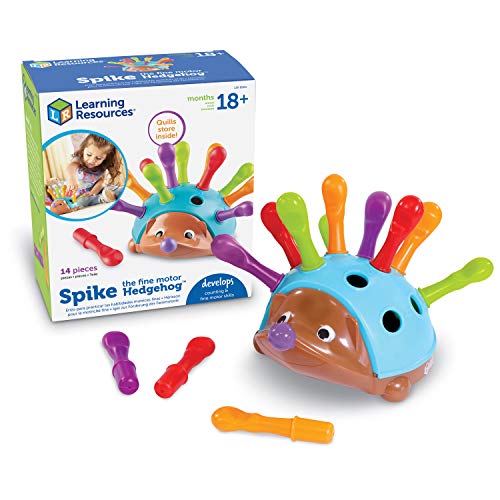
This fine motor toy is designed to grow with a child from 18 months upward, helping to strengthen hand muscles and improve hand-eye coordination. The hedgehog’s back holds colorful quills that children remove and replace, which stimulates tactile feedback and precision. As a child progresses, the toy introduces color matching, counting, and pattern recognition, offering extended play value beyond simple pushing or stacking.
The quills’ easy-grip texture is crafted to maintain a comfortable hold for small fingers, supporting prolonged use without fatigue. This versatility makes Spike The Hedgehog a meaningful early learning tool for families seeking open-ended play that can be subtly guided toward educational objectives. It also accommodates a range of learning styles, from sensory exploration to structured activities.
JUXUE Baby Spinning Stacking Toys
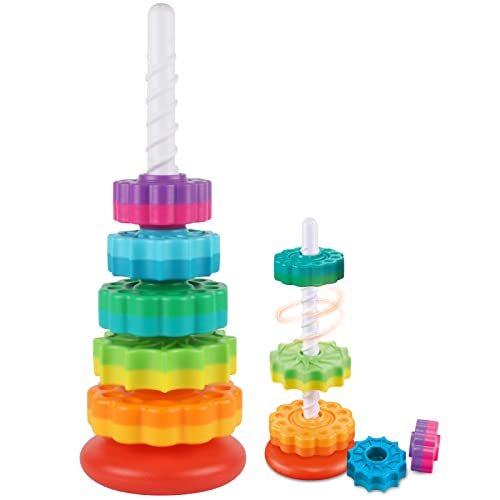
The JUXUE toy combines stacking, spinning, and color exploration, offering a dynamic play experience for toddlers. Its simple screw rod and rainbow-colored wheel design encourages children to stack discs by size or color and then spin the discs to observe momentum and rotation. This activity fosters hand-eye coordination and dexterity while enhancing cause-and-effect understanding as discs fall or spin differently depending on manipulation.
With multiple play modes, children can practice color recognition, sorting, and tactile exploration. The toy supports early cognitive development, spatial awareness, and fine motor skills as kids manipulate pieces and explore how changes in configuration alter the outcome of the toy’s motion. It’s well-suited for shared play, encouraging language development through description and storytelling during setup and results.
Fisher-Price Laugh & Learn Vacuum Play

This push-along toy vacuum includes music, lights, and educational phrases that introduce colors and counting while encouraging toddlers to push. The on/off switch activates vacuum sounds, while turning on the light-up canister adds sensory feedback. For the 12- to 18-month range, the combination of cause-and-effect play with verbal cues supports early language development and motor planning as children coordinate movement and sound cues.
Although designed for pretend play, the toy’s interactive features help sustain attention and curiosity. The rhythmic songs and phrases offer predictable patterns that can aid memory and sequencing. The durable build is suitable for rough-and-tumble toddler play, and its size is appropriate for both floor play and tabletop demonstrations during guided learning sessions.
Battat – Cause – And – Effect Pop-Up Pals
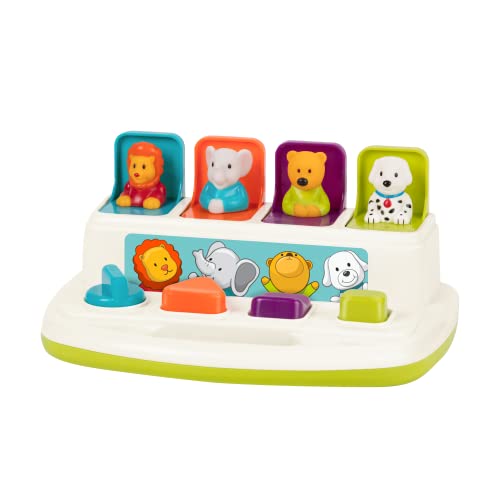
This cause-and-effect toy introduces color sorting and animal recognition through an interactive pop-up mechanism. Press a button to reveal a friendly animal, then explore related colors and shapes as additional buttons are engaged. The varied actions encourage fine motor control as toddlers press, turn, flip, and slide components to trigger surprises.
As knowledge of basic science concepts grows, children learn about sequence and prediction. The toy’s design supports cognitive development by presenting multiple responses to a single action, encouraging experimentation and exploration. It’s a versatile addition to a toy collection, suitable for both solo play and cooperative activities with caregivers or peers.
hahaland Cloth Fishing Game

This Montessori-inspired set includes a fishing pole, 22 pieces including 15 fish and 5 stackable buckets, and an ocean-themed mat that doubles as a storage bag. The cloth fishing game promotes counting, color sorting, and number recognition as toddlers catch fish and organize them. Velcro-based fish attachments offer a safe, tactile engagement without magnets, providing a secure grip for little hands and encouraging steady practice with hand-eye coordination.
Designed to be interactive and imaginative, this toy supports active exploration, early math concepts, and spatial awareness. Its portable design makes it easy to take on trips or keep in a play corner for ongoing practice with stacking, sorting, and fishing activities. The materials emphasize safety while delivering durable, kid-friendly play experiences, suitable for 12-to-18-month-olds and slightly older siblings.
Buying Guide: Key Purchase Considerations For 12- to 18-Month-Olds
- Safety first: Look for rounded edges, non-toxic materials, and no small parts that could pose choking risks. Verify that toys meet applicable safety standards for infants and toddlers.
- Fine motor development: Choose toys that encourage grasping, pinching, and hand-eye coordination, such as stacking, twisting, and pushing activities.
- Sensory engagement: Toys with varied textures, colors, sounds, and movements support sensory processing and curiosity.
- Cause-and-effect learning: Select items that respond to a child’s action with immediate feedback, reinforcing reasoning and predictive skills.
- Durability and care: Durable plastics or fabrics that are easy to clean help maintain play value in rough toddler usage.
- Age-appropriate complexity: Toys should be simple enough for early exploration but capable of scaling with the child’s growing skills.
- Portability and storage: Compact designs with easy storage options are ideal for homes with limited space or frequent travel.
- Educational value: Seek toys that offer multiple learning avenues (colors, shapes, counting, motor skills) without being overly prescriptive.
- Parental involvement: Items that invite guided play can enhance language development and bonding during learning sessions.