Finding safe, engaging toys that encourage early walking and motor development is essential for 12- to 24-month-olds. The following five products are selected for their balance of push-toy design, interactive features, and sturdy construction. Each item supports stepping practice, balance, and gross-motor skills while offering entertaining activities that keep little movers occupied.
Summary of chosen products
| Product | Brand | Key Benefit | URL |
|---|---|---|---|
| Fisher-Price Laugh & Learn Puppy Walker | Fisher-Price | 2 play modes; over 75 songs; sing-along learning | Product Page |
| VTech Sit-to-Stand Blue Walker | VTech | Detachable activity panel; musical keys; motor skills toys | Product Page |
| Radio Flyer Busy Buggy | Radio Flyer | Three modes: push walker, ride-on, sensory play; anti-tip safety | Product Page |
| SEREED Balance Bike for 1-2 Year Olds | SEREED | Indoor/outdoor use; no pedals; balance and coordination | Product Page |
| QDRAGON 3 in 1 Walker & Activity Center | QDRAGON | 3 modes; detachable entertainment table; developmental panels | Product Page |
Fisher-Price Laugh & Learn Puppy Walker

This musical infant walking toy offers two modes that grow with a child: sit-and-play and stand-and-walk. It features 3 Smart Stages levels with over 75 songs and phrases that teach the alphabet, shapes, colors, numbers, and even basic Spanish words. With seven hands-on activities, including a light-up piano keys and a nose, baby can explore sounds and cause-and-effect as they pull, push, and push themselves upright. The toy is designed to support early walking milestones while providing a friendly, engaging character—the puppy—for encouragement along the way.
VTech Sit-to-Stand Blue Walker
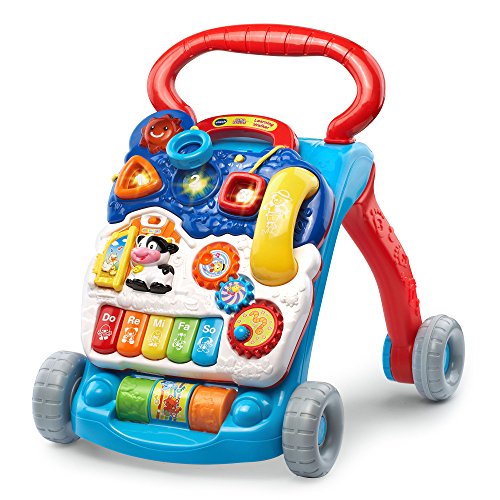
The blue Sit-to-Stand Learning Walker features a detachable activity panel that suits babies who can sit up, and can reattach for on-the-go play as they stand. It includes a five-key piano module that plays musical notes and a pretend telephone to encourage imaginative role-play. The walker’s design emphasizes motor development with shape sorters, light-up buttons, and colorful spinners, supporting early hand-eye coordination and dynamic movement as children practice stepping from sit to stand and explore the built-in activities.
Radio Flyer Busy Buggy

The Busy Buggy combines a push walker and a ride-on experience with 17 sensory activities to keep toddlers engaged. It supports walking confidence through push-to-walk play and evolves into a ride-on option for balance practice. With interlocking gears, sliding beads, a rotating turret, and a faux spare tire, this toy encourages imaginative play while strengthening motor skills. The anti-tip feature helps reduce tipping risk as little ones gain balance and control while moving forward.
SEREED Balance Bike For 1-2 Year Olds
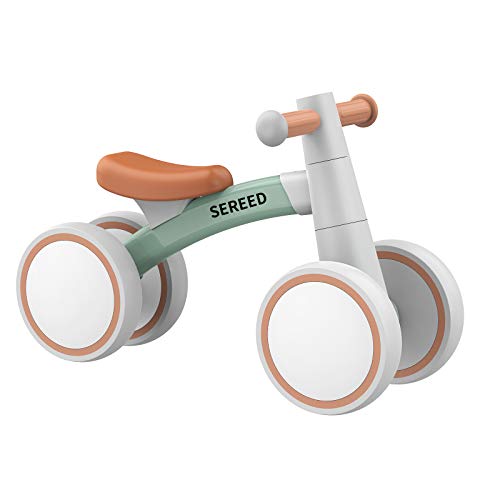
This four-wheeled balance bike is designed for ages 12–24 months and focuses on balance, steering, and coordination without pedals. A widened closed wheel minimizes foot clamping, while a 135-degree turning limit and gravity steering help prevent falls. The sturdy alloy frame, non-slip handles, and soft seat provide comfort for indoor and outdoor use, helping babies feel secure as they practice pushing, balancing, and gliding with confidence.
QDRAGON 3 in 1 Walker & Activity Center

The QDRAGON 3 in 1 design transitions from a sit-to-stand walker to an entertainment table and an activity center. It includes a detachable entertainment panel with features such as a turning cube, shape recognition blocks, a colorful gear, beads, and an elephant-shaped electronic piano. The triangular frame and four-point base enhance stability, while the water tank option allows adding weight to improve balance. This versatility supports cognitive development, hand-eye coordination, and motor skills as toddlers learn to walk, push, and explore.
Buying Guide: Key Purchase Considerations For Walking Toys
When selecting walking toys for a 1-year-old, parents should weigh safety, developmental benefits, and user experience. Consider the toy’s age suitability, stability, and materials. Look for non-slip bases, rounded edges, and robust construction to support frequent use on carpets and hard floors. Toys with adjustable play modes or sit-to-stand features can grow with a child’s abilities and keep them engaged for longer periods.
- Age suitability and growth potential: Choose toys that transition from sit-to-stand to walking assistance, enabling continued use as mobility improves.
- Stability and safety: Ensure a wide base, low center of gravity, and secure handholds. Anti-tip features reduce accidental toppling during early steps.
- Motor development opportunities: Look for elements that promote balance, stepping, and coordination—buttons, spinners, and pedals can motivate movement and exploration.
- Interactive learning vs. pure push toys: A mix of music, lights, and pretend play can stimulate cognitive development while encouraging physical activity.
- Materials and cleaning: Choose washable surfaces and durable plastics or wood. Easy cleaning is important for toys used by infants and toddlers.
- Portability and assembly: Consider lightweight designs and simple assembly for easy storage and quick setup in different rooms.
Comparative Perspectives
Push-toy walkers encourage upright balance and independent stepping, often featuring interactive panels that teach letters, numbers, or shapes. Balance bikes emphasize core stability and steering without pedals, making them suitable for indoor use and early balance training. Multi-mode toys offer flexibility, enabling longer play sessions as a child grows. Safety features, such as anti-tip designs and stable frames, are essential across all options. Parents should balance entertainment value with developmental outcomes to select the best fit for their child’s pace and environment.
Usage Tips For Maximizing Benefits
Supervise play during initial walking practice and gradually increase time as confidence grows. Place toys at an appropriate distance to encourage a few steps before reaching for the next activity. Rotate different toys to prevent boredom and support diverse motor skills development. Ensure the playing area is clear of obstacles and hazards, with ample space for safe exploration and movement.